Anila Baig Pioneering Visually Impaired Judo on The International Stage
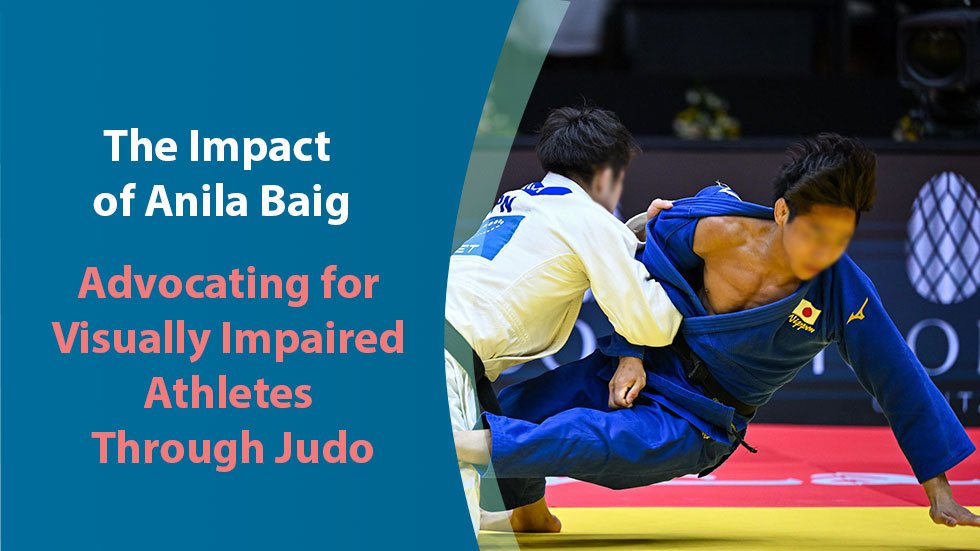
How Courage, Determination, and Adaptive Sports Are Creating New Opportunities for Visually Impaired Athletes
Sport has the power to challenge assumptions, build confidence, and create opportunities where barriers once seemed impossible to overcome. The journey of Anila Baig in visually impaired judo represents this power in a remarkable way. Her story highlights how determination, discipline, and access to the right opportunities can help visually impaired athletes pursue their ambitions on a larger stage. For athletes with visual impairments, participating in competitive sports can involve challenges that go beyond physical training. Access to suitable coaching, equipment, safe training environments, financial support, and opportunities to compete can make a significant difference. Anila Baig's journey in judo demonstrates why inclusive sports matter. Her progress from early competitions toward the international stage reflects the potential of athletes who are given the opportunity to develop their abilities and compete with confidence. Her story is not simply about winning competitions. It is about breaking stereotypes, encouraging participation, and showing what visually impaired athletes can achieve when talent is supported by determination and opportunity.
Anila Baig's Early Journey Into Judo
Anila Baig's story is rooted in determination and courage. Living with visual impairment presented challenges from an early age, but those challenges did not prevent her from pursuing opportunities to develop her abilities. Her introduction to judo during her school years became an important turning point. What began as an opportunity to participate in sport developed into a serious passion. Judo demanded concentration, physical fitness, discipline, technical understanding, and mental strength. For a visually impaired athlete, learning a combat sport can require additional adaptation. Understanding movement, positioning, balance, timing, and physical contact becomes particularly important. Training therefore requires an environment where athletes can learn safely while developing confidence. Baig's commitment to learning judo helped her progress as an athlete. Her early performances and participation in competitions demonstrated her potential and provided a foundation for the journey that followed. Her experience also highlights an important message: blindness or visual impairment should not prevent a person from discovering their abilities through sport.
Why Sports Opportunities Matter for Visually Impaired People
Sports can provide visually impaired children and young adults with much more than physical activity. Participation can help develop confidence, independence, discipline, communication skills, teamwork, and resilience. However, many visually impaired individuals still face barriers when trying to access sports training. Limited facilities, lack of specialized coaching, transportation difficulties, equipment costs, and limited awareness can prevent talented athletes from reaching their potential. This is why organizations working with visually impaired people play an important role in creating opportunities. Battle For Blindness Foundation's mission and vision focus on creating meaningful opportunities and support for visually impaired individuals. Want to help create more opportunities for visually impaired girls? Donate to Battle For Blindness Foundation. Your contribution can support programs that help visually impaired individuals move toward greater independence, confidence, and opportunity.
Breaking Barriers in Visually Impaired Judo
Anila Baig's rise in visually impaired judo represents the importance of persistence in adaptive sports. Competing at a high level requires years of preparation, physical conditioning, technical training, and mental resilience. Judo is particularly demanding because athletes must respond quickly to an opponent's movement through physical contact and positioning. For visually impaired competitors, developing these skills requires specialized approaches that allow them to understand movement and technique through touch, timing, and other sensory cues. Baig's participation on the international stage helped demonstrate that visual impairment does not eliminate the possibility of competing at a high level. Her journey has also helped draw attention to the importance of inclusive sporting opportunities. When athletes with disabilities receive access to training and competition, they can demonstrate abilities that are often overlooked. The significance of such achievements extends beyond one athlete. Every successful visually impaired athlete can become a source of encouragement for children who may otherwise believe that certain sports are beyond their reach.
Anila Baig and the Growth of Adaptive Sports
Adaptive sports are designed or modified to make athletic participation more accessible to people with disabilities. They create opportunities for athletes to train, compete, and develop skills in environments that recognize different physical and sensory needs. Visually impaired judo is an important example of how sport can become more inclusive without lowering the standards of athletic excellence. Athletes still require dedication, preparation, physical strength, strategy, and discipline. The difference is that training and competition are adapted to ensure that athletes with visual impairments can participate fairly and safely. Anila Baig's journey highlights why greater awareness of adaptive sports is important. Young people with visual impairments need to see examples of athletes who have pursued competitive sport and created meaningful achievements. Stories such as hers can encourage families, schools, coaches, and communities to view sport as an opportunity rather than a limitation. Organizations can support this development through dedicated sports training for visually impaired girls, helping young athletes develop confidence, physical skills, and discipline.
The Challenges Faced by Visually Impaired Athletes
Behind every sporting achievement is a period of training, setbacks, adaptation, and persistence. Visually impaired athletes can encounter additional challenges while developing their careers. These may include finding suitable coaching, accessing accessible sporting facilities, equipment, transportation, and participating in competitions. Training itself may also require specialized methods. Coaches need to understand how to communicate techniques effectively and create safe environments where athletes can learn through appropriate sensory cues. Financial challenges can create another barrier. Training fees, equipment, travel, accommodation, competition costs, and other expenses can become difficult for athletes and their families. This is why financial and community support can be so important. Your donation can help make opportunity more accessible. Support Battle For Blindness Foundation and help create a stronger environment for visually impaired children and young people to learn, train, and pursue their goals.
Why Anila Baig's Story Matters Beyond Judo
The significance of Anila Baig's journey extends beyond the sport itself. Her story challenges the idea that visual impairment should define what a person can accomplish. It demonstrates the importance of giving people opportunities to explore their interests and develop their talents. For a young visually impaired girl, seeing an athlete succeed in a demanding sport can have a powerful psychological impact. It can replace uncertainty with possibility. That is one reason representation matters. When visually impaired children see people with disabilities participating in sports, education, employment, technology, and other areas of life, they can begin to imagine similar possibilities for themselves. The journey of one athlete can therefore inspire many others.
Creating More Opportunities for Visually Impaired Girls
Stories of athletes such as Anila Baig also remind us that talent exists everywhere, but opportunity does not. A child may have exceptional athletic ability but lack access to training. Another may have academic potential but not have suitable learning resources. Someone else may be capable of becoming financially independent but lack assistive technology or vocational support. Supporting visually impaired children requires a broader approach that recognizes education and learning support, residential care, assistive technology, skills development, sports, employment preparation, and financial assistance as connected areas of need. Educational opportunities can be strengthened through initiatives such as scholarship support for visually impaired students, while technology can help improve accessibility and independent learning. For young people preparing for employment, employment support for visually impaired girls and preparation for government job examinations can help create pathways toward greater financial independence. Battle For Blindness Foundation works to support visually impaired girls through programs designed to encourage greater independence and opportunity. You can learn more about the organization's work through its story and journey. You can be part of that journey. Make a donation to Battle For Blindness Foundation and help support opportunities that can give visually impaired girls the confidence and resources to build a more independent future.
The Role of Sports in Building Confidence and Independence
For visually impaired children, sport can become an important part of personal development. Regular participation can help children develop:
- Physical fitness and coordination
- Confidence and self-esteem
- Discipline and consistency
- Teamwork and communication
- Decision-making skills
- Resilience after setbacks
- Greater independence
- A stronger sense of personal achievement
These benefits can extend beyond the playing field.
A child who learns to overcome challenges during sports training may become more confident when facing challenges in education, employment, social situations, and everyday life.
This is why access to inclusive sports for visually impaired children should be considered part of creating meaningful opportunities.
Anila Baig's Legacy in Visually Impaired Judo
Anila Baig's journey represents the broader potential of adaptive sports. Her story demonstrates that athletes with visual impairments can pursue demanding sporting disciplines, compete with determination, and inspire others through their achievements. Her legacy is not limited to medals or competition results. It also lies in the message her journey communicates to the next generation. A visually impaired child should be able to dream about becoming an athlete, student, professional, entrepreneur, artist, or leader without assuming that disability automatically limits those possibilities. Creating those opportunities requires collective effort. Families, schools, coaches, nonprofits, communities, donors, and policymakers all have a role to play in making inclusion more meaningful. You can learn more about the people working behind these initiatives through the Battle For Blindness Foundation team.
How You Can Support Visually Impaired Children
Supporting visually impaired children does not always require a large contribution. Consistent support, awareness, volunteering, and advocacy can all help create change. Donations can help nonprofit organizations continue programs that support education, training, assistive resources, residential care, sports development, and other essential needs. There are also specific initiatives that address practical needs. These include walking cane distribution, Braille learning and writing initiatives, laptop distribution for blind students, and grocery support for blind individuals. Support can also extend to social and personal development through initiatives such as the matrimony initiative for blind individuals. If Anila Baig's journey inspires you, consider extending that inspiration into action. Donate to Battle For Blindness Foundation and help support programs that give visually impaired girls access to resources, training, education, and opportunities for greater independence.
Conclusion
Anila Baig's journey in visually impaired judo is a powerful example of courage, perseverance, and the importance of opportunity. Her experience shows that visual impairment does not have to define the limits of a person's ambitions. With determination, appropriate training, encouragement, and access to opportunities, visually impaired athletes can pursue competitive sports and inspire others along the way. The wider lesson is equally important. Every visually impaired child deserves the opportunity to discover their strengths and develop their potential. Whether through education, sports, technology, skills training, or financial support, creating those opportunities requires people willing to contribute. By supporting organizations working with visually impaired children, donors can help turn possibility into opportunity and encouragement into meaningful change.
Frequently Asked Questions About Visually Impaired Judo and Anila Baig
1. Who is Anila Baig?
Anila Baig is presented as a pioneering athlete in visually impaired judo whose journey highlights determination, adaptive sports, and the potential of visually impaired athletes to compete at higher levels.
2. What is visually impaired judo?
Visually impaired judo is a form of competitive judo adapted for athletes with visual impairments. Competitors rely heavily on physical contact, positioning, timing, technique, and sensory awareness during training and competition.
3. Can blind people participate in judo?
Yes. Visually impaired athletes can participate in judo through appropriate adaptations, specialized coaching, accessible training environments, and competition structures designed for athletes with visual impairments.
4. What challenges do visually impaired athletes face?
Common challenges can include limited access to specialized coaching, accessible facilities, equipment, transportation, competition opportunities, and financial resources for training and travel.
5. Why are adaptive sports important for visually impaired children?
Adaptive sports can help visually impaired children develop physical fitness, confidence, discipline, teamwork, independence, and resilience while giving them opportunities to discover their abilities.
6. How can sports help blind children become more independent?
Sports can help children improve physical coordination, confidence, decision-making, communication, discipline, and problem-solving skills. These abilities can support greater independence in everyday life.
7. What is the importance of inclusive sports?
Inclusive sports provide people with disabilities opportunities to participate, compete, develop skills, build confidence, and challenge stereotypes about disability.
8. How can I support visually impaired children in India?
You can support visually impaired children by donating to credible organizations, volunteering, supporting accessible education and sports programs, providing assistive resources, or helping raise awareness about inclusion.
9. How can I donate to Battle For Blindness Foundation?
You can visit the Battle For Blindness Foundation donation page to learn about ways to contribute toward programs supporting visually impaired girls.
10. Where can I read more real stories about visually impaired people?
You can explore Real stories or case studies to learn about experiences and journeys connected with the organization's work.
Support the Journey Toward Independence
Every child deserves the opportunity to learn, participate, dream, and build an independent future. Your support can help create opportunities for visually impaired girls who need access to education, resources, training, and encouragement. Donate today to Battle For Blindness Foundation and help turn potential into opportunity. Real stories or case studies: Stories of Change
Support the Visually Impaired
People to make them Independent

Every little contribution you make will be a little flicker of light in the lives of visually impaired girls who dream of a brighter future.
Donate now

In case you have donated directly through UPI, Bank transfer, through cheque kindly WhatsApp your details on +91-8383933493

Every Contribution will be utilized with 100% transparency. The beneficiary photographs will be sent to you with an 80G Tax Benefit Certificate

Battle For Blindness Foundation committed to 93% go directly towards projects that directly benefit the Abandoned blind girls

