Totka Keur: Leading Senegal’s National Goalball Team to International Glory
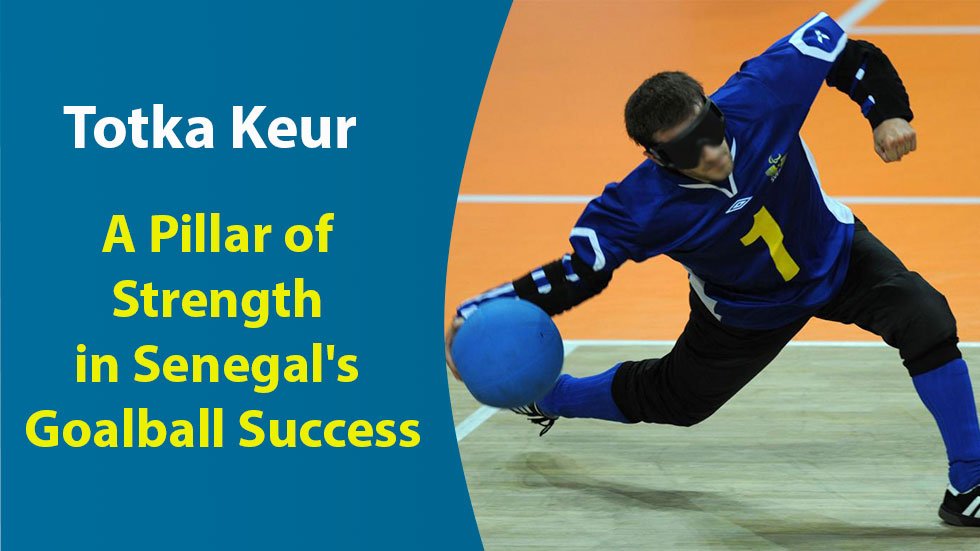
A Story of Leadership, Resilience, and the Power of Opportunity in Para Sports
Totka Keur's journey in goalball represents the determination and resilience that define many successful visually impaired athletes. As a leading figure associated with Senegal's national goalball team, his story highlights the potential of adaptive sports to create confidence, leadership, and opportunities for athletes with visual impairments. Goalball is more than a competitive sport. For visually impaired athletes, it can provide a pathway to physical fitness, teamwork, independence, and international recognition. Stories such as Totka Keur's also remind us why young people with visual impairments need access to appropriate coaching, equipment, training facilities, and supportive communities. You can help create similar opportunities for visually impaired girls. Donate to Battle For Blindness Foundation and support initiatives that promote education, sports, independence, and skills development.
Who Is Totka Keur?
Totka Keur is associated with Senegal's national goalball team and represents the dedication required to compete in adaptive sports at an international level. Goalball demands a unique combination of physical ability, concentration, communication, spatial awareness, and teamwork. For athletes competing internationally, years of preparation are required to develop these skills and perform consistently under pressure. Keur's story is particularly meaningful because it represents the wider development of para sports in Africa and the importance of creating competitive opportunities for visually impaired athletes.
Understanding Goalball
Goalball is a team sport specifically designed for athletes with visual impairments. Unlike many conventional sports, players cannot rely on sight to track the ball. Instead, they depend heavily on sound and spatial awareness. The goalball contains bells that produce an audible sound as it moves. Players listen carefully to determine the ball's direction and then attempt to block it with their bodies. A goalball match requires:
- Quick reactions
- Excellent listening skills
- Spatial awareness
- Body coordination
- Concentration
- Communication
- Teamwork
- Mental resilience
These requirements make goalball a demanding sport that combines physical strength with exceptional sensory awareness.
From Participation to High-Level Competition
Becoming an international athlete does not happen overnight. Players must develop their skills through regular training and competition. They need to learn how to understand the movement of the ball, communicate with teammates, maintain defensive positions, and make quick decisions. For athletes such as Totka Keur, progression within the sport represents years of commitment. The journey from discovering goalball to becoming part of a national team requires patience, discipline, and a willingness to improve after every training session and competition.
The Importance of Leadership in Goalball
Goalball is fundamentally a team sport. Players must trust one another and communicate continuously during a match. Because athletes compete with their vision blocked, clear communication and an understanding of teammates' positions become especially important. Leadership can therefore make a significant difference. A strong team leader can help players remain focused, maintain confidence, understand tactical decisions, and respond calmly during difficult moments. Keur's association with Senegal's national team highlights the importance of leadership in developing a competitive goalball program.
Representing Senegal on the International Stage
Representing a country in international para sports is a significant achievement. For Senegalese athletes, competing internationally can provide an opportunity to showcase their skills while increasing awareness of visually impaired sports within the country and beyond. International competition also creates connections between athletes from different nations. These events demonstrate that visually impaired athletes can compete at a high level when they receive appropriate training and opportunities. For Totka Keur, representing Senegal is therefore about more than individual achievement. It also contributes to the visibility of goalball and the broader para-sports movement.
The Physical and Mental Demands of Goalball
Goalball requires athletes to combine physical preparation with mental focus. Players must listen for the sound of the ball, identify its direction, position their bodies correctly, and react quickly. At the same time, they must remain aware of the game situation and communicate with teammates. Some of the key demands include:
- Fast defensive reactions
- Accurate body positioning
- Strong listening ability
- Concentration throughout the match
- Communication under pressure
- Physical conditioning
- Tactical awareness
- Confidence and mental resilience
The ability to perform these tasks consistently is what separates recreational participation from elite competition.
Overcoming Barriers Through Para Sports
Visually impaired athletes can face barriers that extend beyond the sporting field. Access to specialized facilities, coaching, equipment, transportation, and funding can be limited. Athletes may also encounter misconceptions about disability that can discourage participation. Para sports help challenge these perceptions. When athletes compete successfully, they demonstrate that visual impairment does not eliminate talent, ambition, or the ability to contribute to a team. Keur's story can therefore be viewed as part of a larger movement toward greater inclusion in sports. Your contribution can help create more opportunities for visually impaired children and young women. Donate to Battle For Blindness Foundation and help support sports, education, technology, and personal development.
Why Sports Matter for Visually Impaired Girls
The benefits of sports extend far beyond medals and competitions. For visually impaired girls, participating in sports can provide an opportunity to develop confidence and discover abilities that may otherwise remain unexplored. Sports can help young women develop:
- Self-confidence
- Physical fitness
- Discipline
- Teamwork
- Communication
- Leadership
- Goal-setting
- Resilience
- Independence
A girl who learns to compete in a structured sporting environment can also become more comfortable with challenges in education, employment, and everyday life.
Your support can help provide these opportunities. Donate to Battle For Blindness Foundation and help visually impaired girls access sports training and other essential support.
The Need for Accessible Sports Training
Talent can exist anywhere, but opportunity is not always equally available. A visually impaired child may have a passion for sport but lack access to a suitable coach or facility. Families may also struggle with transportation costs, equipment expenses, or a lack of information about available programs. This is why accessible and structured sports training for visually impaired girls is important. Providing opportunities at an early age can help children discover their interests and develop confidence. For some, that first opportunity could eventually become the beginning of a competitive sporting career.
Education and Sports Should Grow Together
Sports are an important part of empowerment, but they should be combined with education. Visually impaired girls need access to quality educational support so they can continue learning and prepare for their futures. Financial barriers can sometimes prevent students from continuing their education. Scholarship support can help eligible students pursue their educational goals. When education and sports are supported together, young women can develop academically, physically, and socially.
Assistive Technology Can Expand Opportunities
Technology has become an important tool for people with visual impairments. Screen readers, accessible software, smartphones, computers, and other digital tools can make education and communication easier. Assistive technology initiatives can help visually impaired students access information more independently. Similarly, laptop distribution for blind students can support online learning, digital education, research, and communication. Technology can therefore complement sports and education by helping young people build practical skills for their future.
Preparing Young Women for Employment
True empowerment extends beyond education and sports. Visually impaired girls also need opportunities to develop professional skills and prepare for employment. Employment support for visually impaired girls can help young women build workplace skills and work toward greater financial independence. Students interested in public-sector careers can also benefit from government job examination preparation. A supportive residential facility can also provide a structured environment for education, development, and independence when such support is required.
Battle For Blindness Foundation: Supporting Potential
The story of athletes such as Totka Keur demonstrates why opportunities matter. Battle For Blindness Foundation works to support visually impaired girls through initiatives focused on education, sports, assistive technology, employment, and independence. The foundation's mission and vision focus on creating meaningful opportunities for visually impaired individuals. You can learn more about the foundation's story and team to understand the people and purpose behind its work. Its work includes practical initiatives such as walking cane distribution, Braille learning and writing, grocery support, and laptop distribution. The organization also supports social inclusion through initiatives such as the matrimony initiative for blind individuals. You can explore more campaigns and initiatives to understand how different forms of support can contribute to greater independence. A donation can help turn opportunity into action. Donate to Battle For Blindness Foundation and help visually impaired girls access education, sports, technology, and skills development.
Creating a More Inclusive Future
The success of para-athletes can change the way society views disability. When a visually impaired athlete represents their country, competes against international opponents, or leads a team, they demonstrate what is possible. But creating an inclusive sporting environment requires more than celebrating successful athletes. Young people need access to opportunities before they can become champions. They need coaches who believe in their potential. They need families and communities that encourage participation. They need accessible facilities and appropriate equipment. They need financial support when resources are limited. This is why supporting grassroots programs is so important.
Turning Inspiration Into Opportunity
Totka Keur's journey provides an opportunity to think about what happens when determination meets access. A young visually impaired girl may have athletic potential that has not yet been discovered. Another may have a passion for education but lack the technology needed to study independently. Someone else may need support preparing for employment. Each person has different goals and different challenges. Comprehensive support can help create pathways toward greater confidence and independence. If stories of para-athletes inspire you, consider turning that inspiration into meaningful support. Donate today and help create opportunities for visually impaired girls to learn, train, and build their futures.
Why Every Opportunity Matters
One opportunity can become a turning point. A sports program can help a girl discover her athletic ability. Educational support can help a student continue her studies. A scholarship can make higher education more accessible. Assistive technology can open the door to digital learning. Employment preparation can help a young woman work toward financial independence. These opportunities are connected. When communities invest in visually impaired girls, they help create an environment where potential can develop into confidence, skills, and achievement.
Conclusion
Totka Keur's journey with Senegal's national goalball team represents the determination, discipline, teamwork, and resilience required to compete in adaptive sports. His story also highlights the broader importance of goalball as a platform for visually impaired athletes to develop confidence, leadership, and competitive skills. Para sports can challenge stereotypes and demonstrate that visual impairment does not determine the limits of a person's potential. For visually impaired girls, access to sports can be the beginning of a much larger journey. Combined with education, assistive technology, scholarships, and employment support, these opportunities can help young women build confidence and move toward greater independence. Support the next generation of visually impaired girls. Donate to Battle For Blindness Foundation and help create opportunities in sports, education, technology, and skills development.
Frequently Asked Questions About Totka Keur and Goalball
1. Who is Totka Keur?
Totka Keur is associated with Senegal's national goalball team and is presented as an athlete contributing to Senegal's presence in international adaptive sports.
2. What sport is Totka Keur associated with?
Totka Keur is associated with goalball, a team sport specifically designed for athletes with visual impairments.
3. What is goalball?
Goalball is a team sport in which players use sound to track a bell-filled ball and attempt to score against the opposing team while defending their own goal.
4. Why do goalball players wear eye shades?
Players wear opaque eye shades so that competitors participate under consistent visual conditions and must rely primarily on hearing and spatial awareness.
5. What skills are important in goalball?
Important goalball skills include concentration, listening, quick reactions, spatial awareness, coordination, communication, defensive positioning, teamwork, and mental resilience.
6. Why is international goalball important?
International goalball provides visually impaired athletes with opportunities to compete at a high level, represent their countries, develop sporting careers, and increase awareness of para sports.
7. How can goalball benefit visually impaired children?
Goalball can help children develop physical fitness, confidence, teamwork, communication, discipline, concentration, resilience, and independence.
8. Why are sports important for visually impaired girls?
Sports can help visually impaired girls discover their abilities, build confidence, improve physical fitness, develop teamwork and leadership skills, and become more independent.
9. How can I support visually impaired girls?
You can support visually impaired girls through donations, sports training, education, scholarships, assistive technology, employment support, volunteering, and awareness.
10. How can I donate to Battle For Blindness Foundation?
You can visit the Battle For Blindness Foundation donation page to contribute toward initiatives supporting visually impaired girls.
Support the Future of Visually Impaired Girls
Every visually impaired girl deserves the opportunity to discover her abilities, develop confidence, and work toward a more independent future. Stories from the world of para sports show what determination and opportunity can make possible. The next generation of visually impaired girls also deserves opportunities to explore sports, continue their education, access technology, and prepare for meaningful careers. Your support can help make those opportunities possible. Donate to Battle For Blindness Foundation and help turn potential into opportunity. Real stories or case studies: Stories of Change
Support the Visually Impaired
People to make them Independent

Every little contribution you make will be a little flicker of light in the lives of visually impaired girls who dream of a brighter future.
Donate now

In case you have donated directly through UPI, Bank transfer, through cheque kindly WhatsApp your details on +91-8383933493

Every Contribution will be utilized with 100% transparency. The beneficiary photographs will be sent to you with an 80G Tax Benefit Certificate

Battle For Blindness Foundation committed to 93% go directly towards projects that directly benefit the Abandoned blind girls

