Timothy Adolph: USA’s Visionary Force in Alpine Skiing
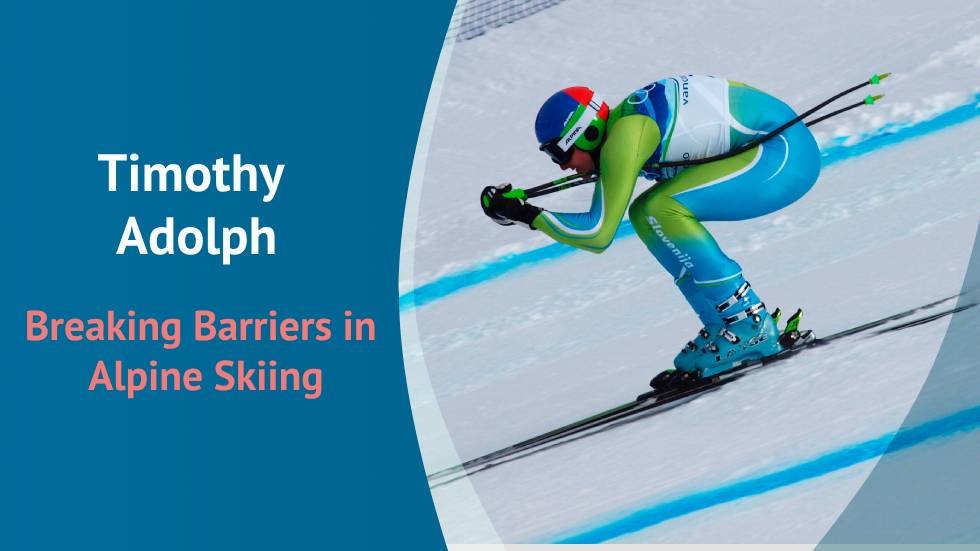
How a Visually Impaired Athlete Turned Courage, Precision, and Teamwork Into Sporting Excellence
Timothy Adolph’s journey in alpine skiing is an inspiring example of how determination and opportunity can help visually impaired athletes pursue demanding sporting goals. His story reflects the courage required to compete on snow-covered slopes where speed, balance, precision, and quick decision-making are essential. Alpine skiing is already a physically and mentally demanding sport. For a visually impaired athlete, it requires additional preparation, communication, trust, and adaptation. Success depends not only on the skier’s physical ability but also on the relationship between the athlete and guide. Timothy Adolph’s experience shows why accessible sports opportunities matter. When visually impaired athletes receive the right training and support, they can challenge expectations, develop confidence, and compete at a high level. His journey also offers an important message for visually impaired girls. Their future should not be limited by assumptions about what they can or cannot do. With access to sports, education, technology, and supportive communities, they can discover their own strengths and pursue ambitious goals. You can help create these opportunities for visually impaired girls. Donate to Battle For Blindness Foundation and support programs that promote education, sports, independence, and personal development.
Who Is Timothy Adolph?
Timothy Adolph is a visually impaired American alpine skier who has pursued competitive adaptive skiing. His journey represents the determination required to develop skills in a sport where precision and timing are essential. Alpine skiing involves navigating a course at high speed while maintaining control over the body and skis. Athletes must respond to changes in terrain, manage turns, maintain balance, and make rapid decisions. For visually impaired skiers, these challenges can require additional support from guides and specialized communication techniques. The result is a unique partnership between athlete and guide. Both individuals must understand one another and work together with exceptional timing.
What Makes Alpine Skiing So Challenging?
Alpine skiing combines speed, strength, balance, coordination, and concentration. Competitive skiers may travel down steep slopes at high speeds while navigating a course marked by gates. A small error in positioning or timing can affect the entire run. Athletes therefore spend countless hours developing technique and physical conditioning. They must also learn how to remain calm under pressure. For visually impaired athletes, there is another important factor: information normally provided visually must be communicated through other methods. This makes adaptive alpine skiing an impressive demonstration of human adaptability.
Skiing With a Guide
One of the most important elements of competitive skiing for visually impaired athletes is the relationship between the skier and guide. The guide helps communicate information about the course and direction of travel. Communication must be fast and accurate. At high speed, there may be very little time to process instructions. The skier needs to trust the guide. The guide needs to understand the skier’s abilities and reactions. This relationship develops through extensive practice. The pair must train together repeatedly so that communication becomes natural. It is a powerful reminder that achievement is often not about working alone. Sometimes, success depends on building strong partnerships.
The Importance of Trust
Trust is fundamental in adaptive alpine skiing. A visually impaired skier cannot depend on conventional visual cues in the same way as a sighted athlete. Instead, the athlete must trust the information provided by the guide and respond quickly. That trust is built over time. Training sessions allow athletes and guides to understand each other’s communication styles. They learn how to respond to unexpected situations. They develop a rhythm. Eventually, the partnership can become highly coordinated. Timothy Adolph’s journey illustrates the importance of this relationship in adaptive sports.
Physical Preparation for Alpine Skiing
Competitive alpine skiing requires significant physical conditioning. Athletes need strong legs, a stable core, balance, flexibility, and endurance. Strength training can help athletes maintain control during demanding runs. Balance exercises can improve stability. Cardiovascular conditioning can support overall endurance. Athletes also need recovery strategies to manage the physical demands of training and competition. For visually impaired athletes, physical preparation is only one part of the process. They must also become comfortable navigating ski environments and responding to auditory or tactile information.
Mental Preparation Matters Too
Physical fitness alone cannot guarantee success. Competitive skiing requires mental strength. Athletes need to manage fear, pressure, fatigue, and disappointment. They must focus on the course rather than becoming distracted by the speed or difficulty of the environment. For visually impaired athletes, concentration becomes especially important. They must process information from their guide while maintaining physical control. A moment of hesitation can affect a run. Mental preparation therefore becomes a key component of performance.
Overcoming Fear Through Preparation
Skiing at speed can be intimidating. For an athlete with visual impairment, the psychological challenge can be even greater. However, preparation can help reduce uncertainty. Repeated practice allows athletes to become familiar with movements and techniques. They learn how their skis respond. They learn how to manage turns. They learn how to react to different terrain. As skills improve, confidence can grow. This process demonstrates an important lesson for young people with disabilities: confidence does not always come before action. Sometimes, confidence develops because a person is given the opportunity to try.
Why Adaptive Sports Matter
Adaptive sports create opportunities for people with disabilities to participate in physical activities and competitive athletics. They can help break down social barriers and challenge misconceptions about disability. For visually impaired girls, sports can provide valuable experiences that extend far beyond competition. Participation can encourage:
- Physical fitness
- Self-confidence
- Discipline
- Teamwork
- Communication
- Leadership
- Resilience
- Independence
Access to sports training for visually impaired girls can therefore become an important part of a broader empowerment journey.
Your support can help make inclusive sports opportunities possible. Donate to Battle For Blindness Foundation and help visually impaired girls gain access to training, resources, and opportunities to develop their potential.
Representation Can Change Expectations
When young people see athletes with disabilities competing successfully, it can change their understanding of what is possible. A visually impaired girl may see a skier competing on an international stage and realize that disability does not automatically mean giving up on physical activities. Role models can provide motivation. They can encourage families to support participation. They can also motivate communities to create more accessible programs. Representation matters because children often need to see possibilities before they can imagine themselves pursuing them. Timothy Adolph’s story therefore has significance beyond skiing. It contributes to a broader conversation about inclusion and opportunity.
Education and Sports Together
Athletic development should not come at the expense of education. Visually impaired girls need opportunities to learn, develop skills, and prepare for future careers while also being able to participate in sports. Educational support and initiatives can help students continue their academic journey. Scholarship support can help address financial barriers that may prevent students from continuing their education. When sports and education are supported together, young women can develop both confidence and knowledge.
Assistive Technology and Accessibility
Technology can significantly improve access to education and information for people with visual impairments. Screen readers, accessible computers, smartphones, digital learning platforms, and other assistive tools can support greater independence. Through assistive technology initiatives, visually impaired individuals can gain access to resources that help them study, communicate, and develop skills. Laptop distribution for blind students can also help students participate in digital education. Access to technology can make it easier for visually impaired students to pursue education and develop skills that are increasingly important in the modern workplace.
Preparing for Employment and Independence
Long-term empowerment requires more than education and sports. Visually impaired girls also need opportunities to develop professional skills. Employment support for visually impaired girls can help young women prepare for workplace opportunities. For those interested in public-sector careers, preparation for government job examinations can provide an additional pathway toward employment. A supportive residential facility can also give students an environment where education, training, and personal development can continue.
Battle For Blindness Foundation and Its Work
Timothy Adolph’s journey demonstrates why access to opportunity matters. Battle For Blindness Foundation works to support visually impaired girls through education, sports, assistive technology, scholarships, employment support, and other initiatives. The foundation's mission and vision focus on creating meaningful opportunities and supporting visually impaired individuals toward greater independence. You can learn more about the foundation through its story and team. Its initiatives include walking cane distribution, Braille learning and writing support, and grocery support. The foundation also supports access to technology through laptop distribution and social inclusion through its matrimony initiative. You can explore the foundation's campaigns and initiatives to understand more about its work. The foundation also shares its statistics and achievements, testimonials, and gallery. A contribution can help turn potential into opportunity. Donate to Battle For Blindness Foundation and help visually impaired girls access education, sports, technology, and skills development.
From Sporting Opportunity to Personal Growth
The benefits of sports can continue long after a competition ends. An athlete who learns discipline through training can apply that discipline to education. Someone who learns teamwork can use those communication skills in professional settings. A person who develops confidence through competition may become more comfortable navigating other areas of life. This is why inclusive sports programs can have a lasting impact. The goal is not necessarily to make every visually impaired girl a professional athlete. The goal is to give her the opportunity to participate and discover what she can achieve.
The Importance of Accessible Training
A sports program is only useful if athletes can access it. Training facilities need to consider accessibility. Coaches need to understand the needs of visually impaired athletes. Equipment needs to be appropriate. Transportation may also be important. Families need to feel confident that their children will be supported safely. Removing these barriers can make participation more realistic for young girls who want to explore sports.
Creating Opportunities Before Success
Elite athletes often become role models after achieving success. But every successful athlete started as a beginner. Before an international competition, there was a first training session. Before a medal, there were mistakes. Before confidence, there may have been uncertainty. This is why early support matters. A visually impaired girl should not have to prove that she will become an elite athlete before she receives an opportunity. She should be given the chance to explore her abilities simply because she deserves that opportunity.
Turning Inspiration Into Action
Timothy Adolph’s journey in alpine skiing demonstrates what can happen when determination meets opportunity. His story encourages us to look beyond assumptions about disability. A visually impaired athlete can learn new techniques, work with a guide, overcome fear, develop physical strength, and compete in demanding environments. The same philosophy can be applied to the next generation of visually impaired girls. They deserve opportunities to learn. They deserve opportunities to participate in sports. They deserve access to technology. They deserve educational support. They deserve career opportunities. If Timothy Adolph’s journey inspires you, turn that inspiration into action. Donate to Battle For Blindness Foundation and help create opportunities for visually impaired girls to build confidence, skills, and independence.
Conclusion
Timothy Adolph’s journey as a visually impaired alpine skier demonstrates the importance of courage, preparation, trust, and perseverance. Alpine skiing requires exceptional physical control and mental focus. For visually impaired athletes, it also requires strong communication and trust between the athlete and guide. His story is a reminder that disability does not have to determine the boundaries of a person's ambition. For visually impaired girls, access to sports can provide much more than physical activity. It can create opportunities to develop confidence, teamwork, discipline, resilience, and independence. Combined with education, assistive technology, scholarships, employment support, and other resources, sports can become one part of a larger journey toward empowerment. Help create those opportunities for the next generation. Donate to Battle For Blindness Foundation and support visually impaired girls as they work toward stronger and more independent futures.
Frequently Asked Questions About Timothy Adolph and Alpine Skiing
1. Who is Timothy Adolph?
Timothy Adolph is a visually impaired American alpine skier who has participated in adaptive skiing and competitive sporting activities.
2. What is adaptive alpine skiing?
Adaptive alpine skiing modifies or adapts skiing practices, equipment, or competition arrangements to allow athletes with disabilities to participate.
3. How do visually impaired alpine skiers navigate the course?
Visually impaired skiers can work with guides who communicate important information about direction, course positioning, and upcoming turns.
4. Why is the relationship between a skier and guide important?
The athlete and guide need strong trust and communication because decisions must often be made quickly while traveling at high speeds.
5. What skills are important in alpine skiing?
Alpine skiing requires balance, strength, coordination, concentration, technical ability, endurance, and mental resilience.
6. Can visually impaired girls participate in skiing and other sports?
Yes. With appropriate training, accessibility, coaching, safety measures, and support, visually impaired girls can participate in many sports.
7. How can sports benefit visually impaired girls?
Sports can help develop physical fitness, confidence, discipline, teamwork, communication, resilience, leadership, and independence.
8. How does assistive technology support visually impaired students?
Tools such as screen readers, accessible computers, smartphones, and digital learning platforms can improve access to education and information.
9. How can I support visually impaired girls?
You can support them through donations, sports training, education, scholarships, assistive technology, employment initiatives, and other inclusion-focused programs.
10. How can I donate to Battle For Blindness Foundation?
You can visit the Battle For Blindness Foundation donation page to support initiatives that empower visually impaired girls.
Support the Future of Visually Impaired Girls
Timothy Adolph’s story shows how opportunity, preparation, and determination can help an athlete overcome significant challenges. For a visually impaired girl, her own journey may begin with something much simpler: access to a sports program, an accessible computer, a scholarship, educational support, or someone who believes in her potential. Every opportunity can become a starting point. Your support can help create those starting points. Donate to Battle For Blindness Foundation and help visually impaired girls build confidence, skills, and greater independence.
Explore More From Battle For Blindness Foundation
Discover more stories and resources about visual impairment, para sports, education, and empowerment. Read real stories and case studies to learn how support can create meaningful change. You can also explore the foundation's testimonials and gallery. To learn more about the foundation or discuss ways to support its work, visit the contact page. Real stories or case studies: Stories of Change
Support the Visually Impaired
People to make them Independent

Every little contribution you make will be a little flicker of light in the lives of visually impaired girls who dream of a brighter future.
Donate now

In case you have donated directly through UPI, Bank transfer, through cheque kindly WhatsApp your details on +91-8383933493

Every Contribution will be utilized with 100% transparency. The beneficiary photographs will be sent to you with an 80G Tax Benefit Certificate

Battle For Blindness Foundation committed to 93% go directly towards projects that directly benefit the Abandoned blind girls

