The Legacy of Jefinho: How Brazil’s Top Blind Footballer Became a World Champion
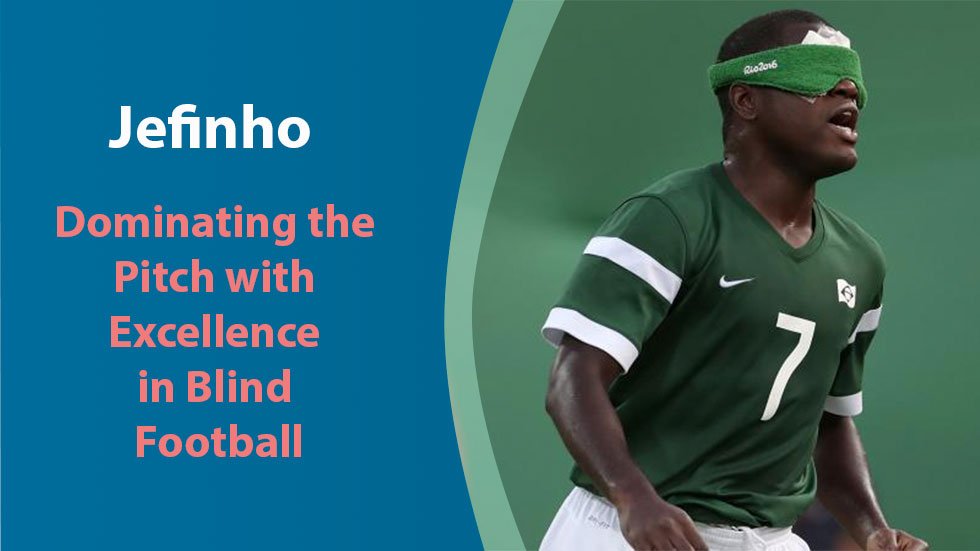
How Talent, Teamwork, and Determination Helped a Blind Football Star Reach the Global Stage
Blind football is a powerful example of how athletes with visual impairments can compete at the highest level when they have access to training, coaching, teamwork, and opportunity. The sport demands exceptional concentration, communication, physical ability, and trust between players.
The story of Jefinho, one of Brazil's celebrated blind footballers, demonstrates how dedication and talent can develop into international success. His journey and achievements have helped bring greater attention to blind football while inspiring people with visual impairments to explore their own potential.
For visually impaired children and girls, stories of successful athletes can be especially meaningful. They can show that disability does not have to determine the limits of ambition.
Support Battle For Blindness Foundation today and help create opportunities for visually impaired girls through sports, education, assistive technology, and skills development.
Who Is Jefinho?
Jefinho is a Brazilian blind footballer recognized for his achievements in international competition. His career has helped demonstrate the high level of skill, athleticism, and determination that visually impaired athletes can develop.
Blind football requires players to approach the game differently from sighted footballers. Players depend heavily on hearing, communication, spatial awareness, concentration, balance, and technical ability.
The ball used in blind football produces sound, helping players identify its location. Verbal communication is also important throughout the game, allowing players to understand their surroundings and coordinate with teammates.
These demands make blind football a highly specialized sport. Success requires athletes to develop their physical abilities while also learning how to use sound and communication effectively.
Jefinho's career represents what can happen when talent is supported by consistent training, competitive opportunities, and determination.
Understanding Blind Football
Blind football is an adapted form of football created for athletes with visual impairments.
The game requires players to listen carefully and respond quickly. Instead of relying primarily on sight, athletes use sound, communication, movement, and spatial awareness to understand what is happening around them.
Important skills include:
- Ball control
- Spatial awareness
- Speed and agility
- Balance
- Concentration
- Communication
- Teamwork
- Tactical awareness
- Physical fitness
- Mental resilience
The combination of these skills makes blind football both challenging and exciting.
It also demonstrates why accessible sports opportunities matter. When visually impaired children receive appropriate training and encouragement, they can discover abilities they may not otherwise have had an opportunity to develop.
Jefinho's Rise in Blind Football
Becoming an elite athlete does not happen overnight.
Jefinho's journey reflects the importance of dedication, practice, competitive experience, and a willingness to keep improving.
Blind football players must develop technical skills while learning how to communicate effectively with teammates. They must understand where the ball is, anticipate movement, react quickly, and remain focused throughout the match.
These abilities require repeated practice.
For young athletes with visual impairments, having access to appropriate coaching and training environments can make a significant difference. Without those opportunities, talented children may never discover how far their abilities can take them.
Jefinho's story therefore represents more than individual achievement. It also highlights the importance of creating opportunities for the next generation of visually impaired athletes.
This is why sports training for visually impaired girls can be an important part of helping young athletes discover their abilities and develop confidence.
What Makes Blind Football So Challenging?
Blind football demands exceptional concentration.
Players must listen for the ball while also processing verbal instructions and responding to teammates and opponents. They must make decisions quickly without relying on conventional visual information.
Physical fitness is equally important.
Players need speed, strength, balance, agility, endurance, and the ability to change direction quickly. They also need the mental resilience to remain focused when matches become physically demanding.
Communication is another critical element.
A strong team depends on players trusting one another and communicating clearly. This creates an environment where listening and cooperation become essential parts of athletic success.
Jefinho's achievements illustrate how athletes can master these challenges through years of preparation and competitive experience.
The Power of Teamwork and Communication
One of the most important lessons from blind football is the power of teamwork.
Players need to trust their teammates because communication plays such an important role during a match.
Clear instructions and constant awareness help players understand what is happening around them.
These skills extend beyond sports.
For visually impaired girls, learning to communicate, cooperate, listen, and work toward a shared goal can support personal development and future participation in education and employment.
Sports can therefore provide lessons that remain valuable long after a match ends.
Jefinho's World Champion Legacy
Becoming a world champion requires years of preparation, discipline, and competitive experience.
International blind football brings together highly skilled teams and athletes from around the world. Competing successfully requires physical fitness, technical ability, tactical understanding, communication, teamwork, and the ability to perform under pressure.
Jefinho's achievements have helped establish his legacy within blind football and have contributed to greater recognition of the sport.
His success also sends an important message to people with disabilities: with appropriate opportunities and support, athletes can compete at the highest levels of international sport.
Why Jefinho's Story Matters to Young People With Visual Impairments
The impact of an athlete can extend beyond medals.
When visually impaired children see someone like Jefinho competing successfully, they may begin to imagine possibilities for themselves.
A young person who previously thought sport was inaccessible may become interested in trying a game or joining a training program.
This is why representation matters.
Successful athletes can challenge stereotypes and demonstrate that visual impairment does not automatically prevent someone from pursuing ambitious goals.
For visually impaired girls in particular, positive role models can encourage greater confidence in exploring sports, education, careers, and leadership opportunities.
How Sports Can Empower Visually Impaired Girls
Sports can support many areas of personal development.
For visually impaired girls, structured sports participation can help develop:
- Confidence
- Physical fitness
- Discipline
- Communication
- Teamwork
- Resilience
- Decision-making
- Goal-setting
- Independence
Sports also give children opportunities to experience progress.
Working toward a goal, practicing a skill, dealing with setbacks, and celebrating improvement can teach lessons that apply to many areas of life.
A child who learns to overcome challenges through sport may become more confident when facing challenges in school, work, and everyday life.
Your donation can help make these opportunities available. Support Battle For Blindness Foundation and help visually impaired girls access sports training, education, technology, and personal development programs.
Barriers Faced by Visually Impaired Athletes
Stories of successful athletes can sometimes make the journey appear easier than it really is.
Many visually impaired athletes may face barriers such as:
- Limited access to specialized coaching
- Inaccessible sports facilities
- Lack of adapted equipment
- Transportation difficulties
- Limited competition opportunities
- Financial constraints
- Insufficient training resources
- Lack of awareness about available sports
These challenges can be especially difficult for children.
A talented child may have the ability to become an athlete but never get the chance to discover that ability.
Accessible grassroots programs can help change this by giving children opportunities to try sports, develop skills, and decide whether they want to pursue competitive athletics.
Supporting Sports and Education Together
Sports are important, but they should not come at the expense of education.
Visually impaired girls need educational opportunities that can help them prepare for higher education, employment, and independent living.
Educational support can help students access learning resources and continue their studies.
Scholarship support can help reduce financial barriers that may otherwise prevent students from pursuing further education.
Assistive technology can further improve educational access. Assistive technology initiatives can help visually impaired students access information, digital learning platforms, and educational resources.
When sports and education are supported together, children can develop both physical confidence and academic skills.
The Importance of Assistive Technology
Technology can help reduce some of the barriers faced by people with visual impairments.
Assistive technology can support reading, studying, research, communication, and digital learning.
For visually impaired students, access to suitable technology can make studying, researching, communicating, and completing assignments more manageable.
For young people, these skills can also contribute to future employment opportunities.
However, access to a device alone is not enough. Students may need training and guidance to use assistive technology effectively.
Laptop distribution for blind students and other technology-focused initiatives can help improve access to digital learning resources.
Supporting both technology and training can therefore help create greater independence.
Preparing Visually Impaired Girls for Employment
Long-term empowerment should extend beyond childhood.
Visually impaired girls and young women need opportunities to develop professional skills and prepare for meaningful employment.
Employment support for visually impaired girls can help young women build workplace skills and work toward financial independence.
For students interested in government careers, preparation for government job examinations can provide additional support as they work toward competitive opportunities.
Residential support can also provide a stable and structured environment for children and young women who need ongoing assistance.
These forms of support can work together to create a long-term pathway from childhood development toward greater independence.
Real Stories Can Inspire Change
Stories of athletes and other individuals who have overcome barriers can encourage young people with disabilities to think about what they may be able to achieve.
Explore more real stories and case studies to learn how support and opportunity can contribute to meaningful change in the lives of people with visual impairments.
Battle For Blindness Foundation: Creating Opportunities
Jefinho's story highlights an important principle: potential needs opportunity to become achievement.
Battle For Blindness Foundation works to create opportunities for visually impaired girls through education, sports training, assistive technology, scholarships, employment support, and other initiatives.
Learn more about the foundation's story and work and explore its mission and vision.
The foundation's team supports initiatives designed to address different challenges faced by visually impaired girls.
Its practical campaigns include walking cane distribution, Braille learning and writing initiatives, and grocery support for blind individuals.
Other initiatives can address broader areas of social participation, including a matrimony initiative for blind individuals.
Together, these initiatives demonstrate how support can address immediate needs while also helping build pathways toward greater independence.
Your contribution can help support this work. Donate to Battle For Blindness Foundation and help create opportunities for visually impaired girls to learn, develop skills, participate, and move toward greater independence.
Turning Inspiration Into Action
Jefinho's legacy shows what can happen when talent is combined with training, teamwork, and opportunity.
But his story should also encourage us to think about children who have not yet received their first opportunity.
A donation can help organizations continue programs designed to address practical barriers and create pathways for visually impaired girls.
People can also support inclusion through volunteering, awareness, community participation, and encouraging children with disabilities to explore their abilities.
If Jefinho's journey inspires you, turn that inspiration into action. Donate to Battle For Blindness Foundation and help create opportunities for visually impaired girls to learn, train, develop skills, and pursue greater independence.
Why Every Opportunity Matters
For a visually impaired child, one opportunity can become an important turning point.
Access to a sports program may reveal an athletic ability.
Access to education may open a pathway toward higher learning.
Access to technology may make independent study easier.
A scholarship may help a student continue their education.
Employment preparation may help a young woman develop professional skills.
Each form of support can contribute to a larger journey toward independence.
When communities invest in opportunity, they can help children build confidence, discover their abilities, and participate more fully in society.
Conclusion
Jefinho's legacy as a Brazilian blind football champion demonstrates the power of talent, teamwork, discipline, and determination.
His journey shows that athletes with visual impairments can develop exceptional skills and compete successfully on the international stage.
More importantly, his story can inspire visually impaired children to explore their own abilities and consider possibilities that may once have seemed out of reach.
Sports can help build confidence and resilience, while education, assistive technology, scholarships, and employment support can create a broader pathway toward independence.
When children receive the right opportunities and support, visual impairment does not have to define the limits of their future.
Support the journey. Donate to Battle For Blindness Foundation and help create opportunities for visually impaired girls to learn, participate, develop skills, and move toward greater independence.
Frequently Asked Questions About Jefinho and Blind Football
1. Who is Jefinho?
Jefinho is a Brazilian blind football player known for his achievements in international blind football and his contribution to Brazil's success in the sport.
2. What is blind football?
Blind football is an adapted form of football designed for athletes with visual impairments. Players rely on a sound-emitting ball, communication, hearing, and spatial awareness during matches.
3. Why is blind football challenging?
Blind football requires players to combine hearing, concentration, physical fitness, ball control, communication, spatial awareness, and tactical decision-making without relying on conventional vision.
4. What skills are important in blind football?
Important skills include ball control, speed, balance, concentration, spatial awareness, communication, teamwork, physical fitness, and tactical awareness.
5. Why is Jefinho an important role model?
Jefinho's international achievements demonstrate the abilities of athletes with visual impairments and can inspire young people to explore sports and pursue ambitious goals.
6. How can sports benefit visually impaired girls?
Sports can help visually impaired girls develop confidence, discipline, physical fitness, communication, teamwork, resilience, goal-setting skills, and greater independence.
7. What challenges do visually impaired athletes face?
They may face barriers involving specialized coaching, accessible facilities, adapted equipment, transportation, competition opportunities, financial resources, and access to training.
8. How can assistive technology help visually impaired children?
Assistive technology can help children access educational content, digital information, communication tools, and learning resources more independently.
9. How can I support visually impaired girls?
You can support visually impaired girls through donations, volunteering, sports programs, educational initiatives, scholarships, assistive technology, employment preparation, and awareness.
10. How can I donate to Battle For Blindness Foundation?
You can visit the Battle For Blindness Foundation donation page to learn how you can contribute toward programs supporting visually impaired girls.
You can also explore the foundation's campaigns and initiatives to understand the different areas where support can make a difference.
Support the Future of Visually Impaired Girls
Every child deserves the opportunity to discover their abilities and build a future with confidence.
Jefinho's journey demonstrates how determination, teamwork, training, and opportunity can help athletes with visual impairments reach extraordinary levels of achievement.
For visually impaired girls, similar opportunities can begin with access to sports, education, technology, training, encouragement, and financial support.
Your contribution can help address barriers that may otherwise prevent children from exploring their potential.
Donate today to Battle For Blindness Foundation and help turn potential into opportunity.
Author name: Battle for Blind Foundation
Last updated date: August 20, 2026
Real stories or case studies: Stories of Change
Support the Visually Impaired
People to make them Independent

Every little contribution you make will be a little flicker of light in the lives of visually impaired girls who dream of a brighter future.
Donate now

In case you have donated directly through UPI, Bank transfer, through cheque kindly WhatsApp your details on +91-8383933493

Every Contribution will be utilized with 100% transparency. The beneficiary photographs will be sent to you with an 80G Tax Benefit Certificate

Battle For Blindness Foundation committed to 93% go directly towards projects that directly benefit the Abandoned blind girls

