Ryuji Kajiki: Japan’s Goalball Star Making Waves on the International Stage
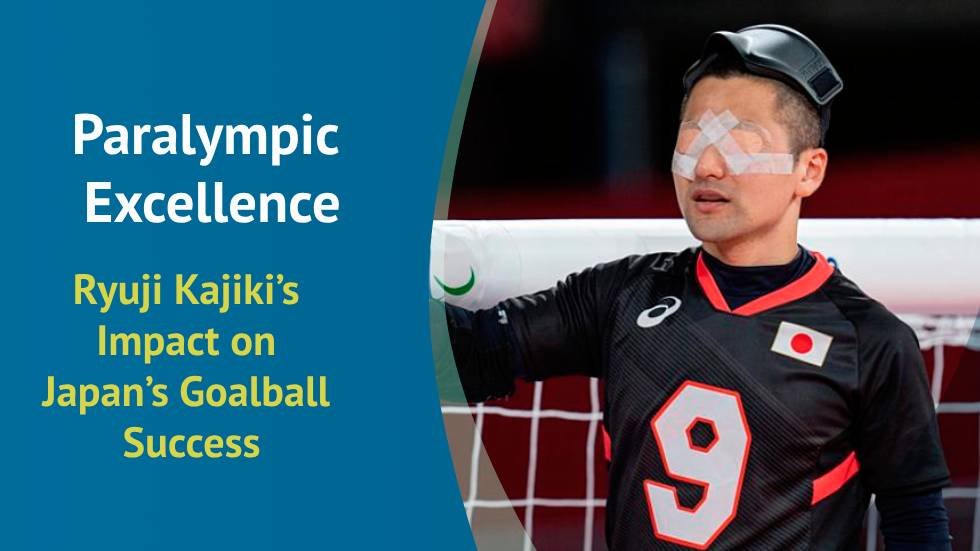
From Visual Impairment to International Goalball, a Story of Teamwork, Resilience, and Determination
Ryuji Kajiki's journey in goalball is a powerful example of how determination, opportunity, and teamwork can help athletes with visual impairments reach the international stage. For Kajiki, goalball became more than a sport. It provided an opportunity to develop athletic ability, build confidence, work with teammates, and compete at the highest level. His journey also highlights an important message for visually impaired children and young people: when the right opportunities and support are available, disability does not have to define the limits of ambition. You can help create similar opportunities for visually impaired girls. Donate to Battle For Blindness Foundation and support programs that provide sports training, education, assistive technology, and skills development.
Who Is Ryuji Kajiki?
Ryuji Kajiki is a Japanese goalball athlete who has represented Japan in international competitions. His journey began with the challenges associated with visual impairment. During his school years, he was introduced to goalball, a sport specifically designed for athletes with visual impairments. The sport gave Kajiki an opportunity to discover his athletic abilities while becoming part of a team. Over time, his dedication to training and competition helped him progress from an aspiring player to an international-level athlete. His development demonstrates the importance of giving children and young people with visual impairments opportunities to participate in sports.
Discovering Goalball
Goalball is a unique team sport designed for athletes with visual impairments. Players wear opaque eye shades so that athletes compete primarily through hearing and spatial awareness. The ball contains bells, allowing players to locate it through sound. The objective is to roll the ball across the opponent's court and score while defenders attempt to block it with their bodies. Goalball requires a combination of:
- Quick reactions
- Concentration
- Spatial awareness
- Body positioning
- Coordination
- Communication
- Teamwork
- Mental strength
For Kajiki, learning goalball provided a way to develop these abilities while competing alongside other visually impaired athletes.
From School Sport to Competitive Athletics
Being introduced to a sport is only the beginning. Developing into a competitive athlete requires consistent practice, coaching, physical preparation, and the willingness to learn from mistakes. Kajiki gradually developed his abilities through training and competition. As his skills improved, he gained experience in increasingly demanding competitions. This progression illustrates why early access to sports can be so valuable. A child who is given the chance to try a sport may discover an ability that could eventually become a lifelong passion or competitive career.
Developing His Skills as a Goalball Player
Goalball requires athletes to make rapid decisions based primarily on sound. Players need to understand where the ball is, anticipate its direction, position themselves correctly, and react quickly. Kajiki's development as a player involved strengthening important skills such as:
- Defensive positioning
- Quick reactions
- Timing
- Coordination
- Concentration
- Communication
- Teamwork
These abilities require repeated practice.
At international level, even small mistakes can change the outcome of a match.
The ability to remain focused under pressure is therefore essential.
Joining Japan's National Goalball Team
Kajiki's dedication eventually led him to Japan's national goalball team. Representing a country at international level is a significant achievement. It means competing against highly trained athletes from around the world while managing the expectations associated with elite competition. For Kajiki, joining the national team represented the culmination of years of development. It also gave him an opportunity to contribute to Japan's goalball program and inspire other athletes with visual impairments.
Competing on the International Stage
International goalball competitions demand physical preparation, tactical awareness, communication, and mental resilience. Teams must work together throughout every match. Players need to understand their roles and trust their teammates. For visually impaired athletes, communication is particularly important because they cannot rely on conventional visual cues. Kajiki's international career demonstrates the importance of developing strong team relationships alongside individual skills.
The Paralympic Goalball Experience
The Paralympic Games represent the highest level of international competition for many para-athletes. Competing at the Paralympic level requires years of preparation. Athletes must maintain their physical condition, refine their technical skills, manage pressure, and prepare for opponents from different countries. Kajiki's participation in the Paralympic environment reflects the significant progress he made from his early introduction to goalball. His journey demonstrates how sustained effort can transform an initial opportunity into international achievement.
What Makes Goalball So Challenging?
Goalball may look simple to people watching it for the first time, but the sport requires exceptional concentration and awareness. Players must rely on sound rather than sight to locate the ball. They need to listen for subtle auditory signals while simultaneously tracking the movement of the game. Some of the major challenges include:
- Tracking the sound of the ball
- Reacting quickly to fast-moving throws
- Maintaining correct defensive positioning
- Communicating with teammates
- Anticipating the direction of the ball
- Maintaining concentration throughout a match
- Managing pressure during important competitions
These demands make goalball a physically and mentally challenging sport.
Kajiki's success demonstrates the level of preparation required to compete internationally.
The Importance of Teamwork
Goalball is not an individual sport. Every player has a role, and successful teams must communicate effectively. Players need to understand one another's movements and trust their teammates. Kajiki's journey highlights how teamwork can become a source of strength for athletes with visual impairments. The lessons learned through team sports can also extend beyond competition. They can help young people develop communication, cooperation, responsibility, and leadership skills.
Building Confidence Through Sport
For visually impaired children, sports can provide more than physical activity. Participation can help develop confidence and independence. A young person who learns to navigate a sports environment may become more confident about exploring other areas of life. Sports can help visually impaired girls develop:
- Self-confidence
- Physical fitness
- Discipline
- Communication skills
- Teamwork
- Resilience
- Decision-making
- Goal-setting
- Independence
These skills can support education, employment, relationships, and everyday activities.
Your support can help provide similar opportunities. Donate to Battle For Blindness Foundation and help visually impaired girls access sports training and personal development programs.
Barriers to Sports Participation for Visually Impaired Children
Not every visually impaired child has access to sports. Families may face challenges related to finances, transportation, facilities, equipment, coaching, or awareness. Common barriers include:
- Limited access to accessible sports facilities
- Few specialized coaching opportunities
- Financial constraints
- Transportation challenges
- Lack of adapted equipment
- Limited opportunities to participate in competitions
- Social misconceptions about disability
These barriers can prevent talented children from discovering their abilities.
Creating accessible sporting opportunities can help change this.
Why Inclusive Sports Programs Matter
Inclusive sports programs provide children with disabilities a chance to participate rather than simply observe. For visually impaired girls, structured sports programs can create safe environments where they can learn new skills, interact with peers, develop confidence, and discover their interests. The goal does not have to be producing elite athletes. Even recreational participation can have meaningful benefits. For some children, however, early exposure can become the first step toward competitive sport. Kajiki's journey demonstrates what can happen when an initial opportunity develops into a long-term sporting pathway.
Supporting Sports Alongside Education
Sports should be part of a broader approach to empowerment. Visually impaired girls also need access to quality educational support and learning resources. Education can help students build the knowledge and skills required for future opportunities. Scholarship support can help reduce financial barriers for students pursuing further education. When education and sports are supported together, young women can develop both academic skills and personal confidence.
Assistive Technology and Accessibility
Technology can make education and communication more accessible for people with visual impairments. Screen readers, accessible mobile devices, digital learning platforms, and computers can help students access information independently. Assistive technology initiatives can help provide access to tools that support learning and communication. Similarly, laptop distribution for blind students can support digital learning, online education, research, and communication. Technology can therefore play an important role in helping visually impaired students participate more fully in education.
Preparing for Employment and Independence
Empowerment should continue beyond school and sports. Visually impaired girls and young women need opportunities to prepare for meaningful employment. Employment support for visually impaired girls can help young women develop workplace skills and move toward greater economic independence. For students interested in public-sector careers, government job examination preparation can help them work toward competitive opportunities. For those requiring structured support, a residential facility can provide an environment that supports education and personal development.
Battle For Blindness Foundation: Creating Opportunities
Ryuji Kajiki's journey shows how opportunity can help transform potential into achievement. Battle For Blindness Foundation works to create opportunities for visually impaired girls through sports training, education, assistive technology, scholarships, employment support, and practical initiatives. The foundation's mission and vision focus on creating meaningful opportunities and supporting visually impaired individuals toward greater independence. You can also learn more about the foundation's story and team to understand the people and purpose behind its work. Its initiatives include walking cane distribution, Braille learning and writing, grocery support for blind individuals, and laptop distribution. The foundation also supports social participation through initiatives such as the matrimony initiative for blind individuals. Explore more campaigns and initiatives supporting people with visual impairments. These programs address both immediate needs and longer-term opportunities. Your donation can help support this work. Donate to Battle For Blindness Foundation and help visually impaired girls access education, sports, technology, and skills development.
Turning Inspiration Into Action
Ryuji Kajiki's story encourages us to look beyond disability and recognize potential. But inspiration needs to be supported by opportunity. A visually impaired girl may have an interest in sport but need access to training. Another student may need a scholarship or assistive technology. Someone preparing for adulthood may need employment support. Different individuals have different needs. Supporting organizations that provide comprehensive opportunities can help create an environment where visually impaired girls can develop their abilities and work toward greater independence. If Ryuji Kajiki's journey inspires you, turn that inspiration into action. Donate today and help create opportunities for visually impaired girls to learn, train, and build confidence.
Why Every Opportunity Matters
One opportunity can become a turning point. A sports program can reveal an athlete. Educational support can help a student continue learning. A scholarship can make higher education more accessible. Assistive technology can improve access to information. Employment preparation can help a young woman move toward financial independence. These opportunities are connected. When communities invest in visually impaired girls, they help create an environment where potential can become confidence, skills, and achievement.
Conclusion
Ryuji Kajiki's journey from discovering goalball during his school years to representing Japan on the international stage is a powerful story of determination, teamwork, resilience, and opportunity. His experience demonstrates the unique demands of goalball and the level of concentration, coordination, communication, and mental strength required to compete internationally. But his story carries a message beyond sport. It reminds us that visually impaired children deserve opportunities to explore their interests and discover what they can achieve. For visually impaired girls, access to sports can be the beginning of a much larger journey. Combined with education, assistive technology, scholarships, and employment support, these opportunities can help build confidence and prepare young women for more independent futures. Support the next generation of visually impaired girls. Donate to Battle For Blindness Foundation and help create opportunities in sports, education, technology, and skills development.
Frequently Asked Questions About Ryuji Kajiki
1. Who is Ryuji Kajiki?
Ryuji Kajiki is a Japanese goalball athlete who has represented Japan in international goalball competitions.
2. What sport does Ryuji Kajiki play?
Ryuji Kajiki competes in goalball, a team sport specifically designed for athletes with visual impairments.
3. How does goalball work?
Goalball is played by teams that attempt to roll a ball containing bells into the opposing team's goal. Players rely primarily on sound and spatial awareness to locate and defend against the ball.
4. Why do goalball players wear eye shades?
Players wear opaque eye shades to ensure that athletes compete under the same visual conditions and rely on hearing and other senses rather than sight.
5. What skills are important in goalball?
Important skills include quick reactions, spatial awareness, concentration, coordination, defensive positioning, communication, teamwork, and mental resilience.
6. Has Ryuji Kajiki represented Japan internationally?
Yes. His career includes representation of Japan in international goalball competition and participation in the Paralympic environment.
7. How can goalball benefit visually impaired children?
Goalball can help children develop physical fitness, confidence, communication, teamwork, concentration, discipline, and resilience.
8. Why are sports important for visually impaired girls?
Sports can help visually impaired girls develop confidence, independence, physical fitness, teamwork, decision-making, and other skills that can support their education and future careers.
9. How can I support visually impaired girls?
You can support visually impaired girls through donations, sports training, education, scholarships, assistive technology, employment support, volunteering, and awareness.
10. How can I donate to Battle For Blindness Foundation?
You can visit the Battle For Blindness Foundation donation page to contribute toward programs supporting visually impaired girls.
Support the Future of Visually Impaired Girls
Every visually impaired girl deserves the opportunity to discover her abilities, build confidence, and work toward a more independent future. Ryuji Kajiki's story demonstrates what determination, training, teamwork, and opportunity can make possible. His journey reminds us that visual impairment does not have to define the limits of someone's ambition. The next generation of visually impaired girls also deserves opportunities to explore sports, continue their education, access technology, and prepare for meaningful careers. Your support can help make those opportunities possible. Donate to Battle For Blindness Foundation and help turn potential into opportunity. Real stories or case studies: Stories of Change
Support the Visually Impaired
People to make them Independent

Every little contribution you make will be a little flicker of light in the lives of visually impaired girls who dream of a brighter future.
Donate now

In case you have donated directly through UPI, Bank transfer, through cheque kindly WhatsApp your details on +91-8383933493

Every Contribution will be utilized with 100% transparency. The beneficiary photographs will be sent to you with an 80G Tax Benefit Certificate

Battle For Blindness Foundation committed to 93% go directly towards projects that directly benefit the Abandoned blind girls

