Rising Star Sonal Patels Impact in International Para Table Tennis
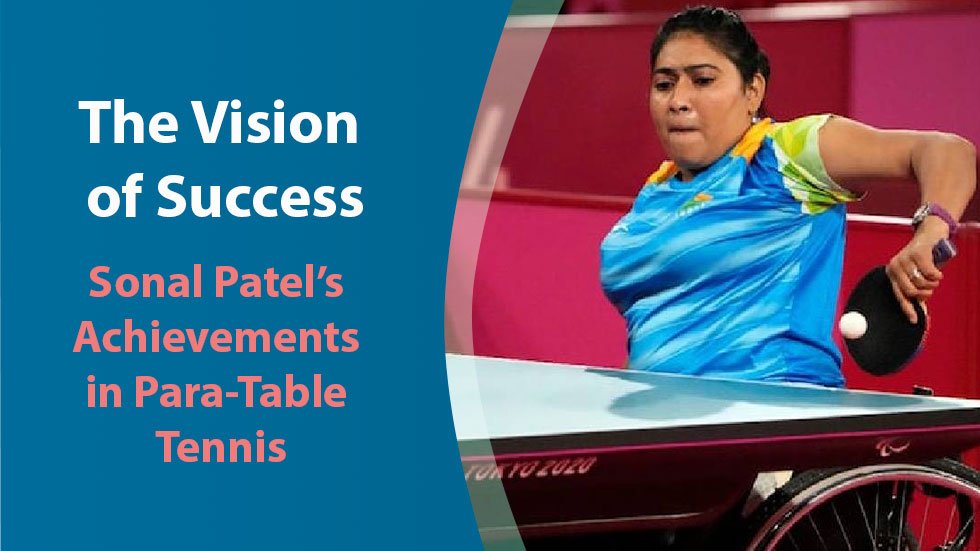
How Determination, Discipline, and Inclusive Sports Can Create Opportunities for Athletes With Disabilities
Sport can be a powerful way to build confidence, develop discipline, and challenge assumptions about disability. For athletes with disabilities, access to appropriate training, coaching, equipment, and competition can open doors that might otherwise remain closed. The journey of Sonal Patel in international para table tennis reflects the importance of these opportunities. Her story highlights determination, perseverance, discipline, and the commitment required to develop as a competitive athlete. Her journey also carries a broader message. Talent exists among people with disabilities in every community, but talent alone is not always enough. Access to training, resources, encouragement, and supportive environments can determine whether that potential has an opportunity to grow. For visually impaired girls, creating these opportunities can be particularly meaningful. Support Battle For Blindness Foundation and help provide opportunities that can support education, sports, skills development, and greater independence.
Sonal Patel's Journey Into Para Table Tennis
Sonal Patel's journey demonstrates how participation in sport can become an important part of personal development for athletes with disabilities. Para table tennis provides athletes with opportunities to develop technical ability, concentration, coordination, strategic thinking, and mental resilience. Competitive success requires regular practice, physical preparation, discipline, and the willingness to learn from setbacks. For athletes entering para sports, the journey can involve adapting to different training environments and learning how to compete against opponents with different styles and abilities. Patel's progress in para table tennis reflects the importance of giving athletes the opportunity to develop their skills in an environment that values ability rather than focusing only on disability.
From Training to International Competition
Reaching the international level in any sport requires years of preparation. Athletes must develop their technique, improve physical conditioning, strengthen mental focus, and learn to perform under competitive pressure. For Sonal Patel, para table tennis became a platform through which she could pursue competitive goals and represent the potential of athletes with disabilities. International para table tennis can expose athletes to different playing styles, competition environments, and levels of pressure. Each competition can provide valuable experience and an opportunity to identify areas for improvement. This progression also demonstrates why sports training for visually impaired girls can be an important part of creating confidence and independence. When children and young people receive access to sports training, they can discover abilities that may otherwise remain hidden.
Why Para Table Tennis Matters
Para table tennis is more than a competitive sport. It is an opportunity for athletes with disabilities to demonstrate skill, discipline, strategy, and determination. Competitive para sports also help challenge stereotypes. When athletes compete at national and international levels, they demonstrate that disability does not prevent people from pursuing demanding goals. For young people watching these athletes, representation can be particularly powerful. Seeing a successful athlete with a disability can help a child imagine possibilities for their own future. However, inspiration needs to be supported by opportunity. Young athletes need access to coaches, accessible facilities, appropriate equipment, transportation, competition opportunities, and encouragement. Your support can help create those opportunities. Donate to Battle For Blindness Foundation and help support initiatives that can provide visually impaired girls with access to resources and opportunities for personal development.
Sonal Patel's Impact Beyond the Table
An athlete's impact is not measured only through medals or tournament results. Athletes can also influence society by raising awareness, encouraging younger participants, and demonstrating the value of perseverance. Sonal Patel's journey contributes to the wider visibility of para table tennis and athletes with disabilities. Her story can encourage families to consider sport as an important part of a child's development rather than seeing disability as a reason to avoid physical activity. Sports participation can help children develop confidence, communication skills, discipline, physical fitness, and resilience. For visually impaired girls, these benefits can become even more meaningful when combined with accessible education, assistive technology, and other forms of support.
Challenges Faced by Para Athletes
Competitive sport is demanding for every athlete, but athletes with disabilities may encounter additional barriers. These can include limited access to specialized coaching, accessible facilities, suitable equipment, transportation, competition opportunities, and financial resources. International competitions can introduce additional requirements, including travel, accommodation, equipment transportation, training arrangements, and competition preparation. Behind every appearance at a major competition is therefore a significant amount of preparation and commitment. Recognizing these challenges helps us understand that sporting achievements are rarely achieved by athletes alone. Families, coaches, organizations, communities, and supporters can all play an important role.
How Inclusive Sports Build Confidence
Inclusive sports can provide children and young people with valuable skills that extend beyond the playing environment.
- Confidence and self-esteem
- Physical fitness and coordination
- Discipline and consistency
- Communication and teamwork
- Problem-solving skills
- Resilience and perseverance
- Decision-making abilities
- Greater independence
These skills can support children in education, employment, social situations, and everyday activities.
Sport can also teach children how to respond to setbacks. Losing a match or struggling with a particular skill does not have to mean giving up. It can become an opportunity to learn, adapt, and improve.
Supporting Visually Impaired Girls Beyond Sports
Sonal Patel's story provides an opportunity to look at the wider needs of children and young people with disabilities. A child may have sporting ability but also need accessible educational resources. Another may require assistive technology to study independently. Someone else may need vocational guidance or employment preparation to build a career. This is why supporting visually impaired girls requires a comprehensive approach. Educational support, scholarship support, assistive technology initiatives, employment support, and residential support can each address different needs throughout a young person's development. For students preparing for future careers, government job examination preparation can provide an additional pathway toward employment and independence. These forms of support can help visually impaired girls build skills, confidence, and greater self-reliance. You can contribute to this journey. Make a donation to Battle For Blindness Foundation and help support opportunities that can make education, sports, technology, and skills development more accessible.
The Role of Assistive Technology in Independence
Technology can play an important role in improving accessibility for people with visual impairments. Assistive technology can help students access educational materials, communicate, use digital platforms, and complete everyday tasks more independently. For visually impaired students, access to computers and other accessible devices can also support education and professional skill development. Initiatives such as laptop distribution for blind students can help address some of these practical barriers. Technology works best when combined with education, training, and appropriate guidance. Together, these resources can help individuals participate more independently in education and society.
From Sporting Achievement to Social Awareness
Sonal Patel's journey demonstrates how individual sporting achievements can contribute to a broader conversation about disability inclusion. When athletes with disabilities receive visibility, they can challenge stereotypes and encourage communities to think differently about accessibility. The impact can extend beyond sports. Greater awareness can encourage investment in accessible facilities, inclusive education, adaptive sports, assistive technology, and employment opportunities. Inclusion is therefore not limited to the sporting arena. It requires opportunities across education, employment, technology, social participation, and daily life. Battle For Blindness Foundation works to create opportunities for visually impaired girls through different support initiatives. You can learn more about the organization's story and work and explore its mission and vision. You can also learn more about the people working behind these initiatives through the organization's team.
Turning Inspiration Into Action
Stories of successful para athletes can inspire people, but meaningful change also requires action. Donations can help organizations continue programs that address practical challenges faced by visually impaired children and young adults. Support can contribute to education, sports training, assistive resources, residential support, scholarships, and employment preparation. Battle For Blindness Foundation also works through practical campaigns such as walking cane distribution, Braille learning and writing initiatives, and grocery support for blind individuals. Other initiatives, including a matrimony initiative for blind individuals, demonstrate how support can extend beyond education and basic needs toward broader social inclusion. If Sonal Patel's journey inspires you, turn that inspiration into action. Donate to Battle For Blindness Foundation and help create opportunities for visually impaired girls to learn, develop skills, participate, and move toward greater independence.
Why Every Opportunity Matters
A sporting opportunity may begin with something as simple as access to a coach or a suitable place to train. Its impact, however, can extend much further. A child who develops confidence through sport may become more willing to participate in school. A student who receives assistive technology may gain greater independence in learning. A young woman who receives employment support may gain skills that help her pursue a career. These outcomes are connected. When children receive appropriate support at the right time, they have a stronger foundation for building their future. Supporting visually impaired girls is therefore not only about meeting immediate needs. It is about creating pathways toward education, confidence, skills, independence, and opportunity.
Conclusion
Sonal Patel's journey in international para table tennis is a reminder of what determination, discipline, and opportunity can make possible. Her story highlights the importance of inclusive sports and demonstrates how athletes with disabilities can challenge assumptions, develop their abilities, and inspire others. But the wider lesson goes beyond table tennis. Every visually impaired child deserves the opportunity to learn, participate, develop skills, and imagine a future without unnecessary barriers. Education, sports, assistive technology, scholarships, residential support, and employment preparation can all play a role in creating that future. When individuals and communities choose to support these opportunities, they help create an environment where potential can become achievement. Support the journey. Donate to Battle For Blindness Foundation and help provide visually impaired girls with opportunities that can support confidence, education, skills, and greater independence.
Frequently Asked Questions About Sonal Patel and Para Table Tennis
1. Who is Sonal Patel?
Sonal Patel is a para table tennis athlete whose journey highlights determination, competitive sport, inclusion, and the potential of athletes with disabilities.
2. What is para table tennis?
Para table tennis is an adapted form of table tennis that enables athletes with different disabilities to compete under classification systems designed to support fair competition.
3. Why is para table tennis important?
Para table tennis provides athletes with disabilities an opportunity to compete, develop physical and mental skills, build confidence, and participate in an inclusive sporting environment.
4. What challenges do para athletes face?
Para athletes may face barriers involving accessible facilities, specialized coaching, equipment, transportation, competition costs, travel, and opportunities to train and compete.
5. How can sports benefit visually impaired girls?
Sports can help visually impaired girls develop confidence, physical fitness, discipline, teamwork, communication, resilience, and greater independence.
6. Why is representation important for children with disabilities?
Seeing successful athletes with disabilities can help children understand that disability does not necessarily limit their ambitions and can encourage them to explore their own interests and abilities.
7. How can assistive technology help visually impaired students?
Assistive technology can provide greater access to digital information, educational resources, communication tools, and other activities, helping students learn and work more independently.
8. How can I support visually impaired girls in India?
You can support visually impaired girls through donations, volunteering, awareness initiatives, education support, sports programs, assistive technology, scholarships, and employment development.
9. What initiatives can donations support?
Donations can help support areas such as education, sports training, assistive technology, residential support, scholarships, employment preparation, and practical campaigns designed to address everyday needs. You can explore the foundation's campaigns and initiatives to learn more about the different areas of support.
10. How can I donate to Battle For Blindness Foundation?
You can visit the Battle For Blindness Foundation donation page to learn how you can contribute toward programs supporting visually impaired girls.
Support the Future of Visually Impaired Girls
Every child deserves the opportunity to discover their strengths and build a future with confidence. Sonal Patel's journey in para table tennis shows how access to opportunity can help athletes move beyond limitations and pursue ambitious goals. For visually impaired girls, similar opportunities can begin with education, sports, technology, training, encouragement, and financial support. Your contribution can help organizations continue creating these opportunities and addressing the practical barriers that visually impaired girls may face. Donate today to Battle For Blindness Foundation and help turn potential into opportunity. Real stories or case studies: Stories of Change
Support the Visually Impaired
People to make them Independent

Every little contribution you make will be a little flicker of light in the lives of visually impaired girls who dream of a brighter future.
Donate now

In case you have donated directly through UPI, Bank transfer, through cheque kindly WhatsApp your details on +91-8383933493

Every Contribution will be utilized with 100% transparency. The beneficiary photographs will be sent to you with an 80G Tax Benefit Certificate

Battle For Blindness Foundation committed to 93% go directly towards projects that directly benefit the Abandoned blind girls

