Racing Against the Odds: Oksana Boturchuk’s Journey to Paralympic Glory
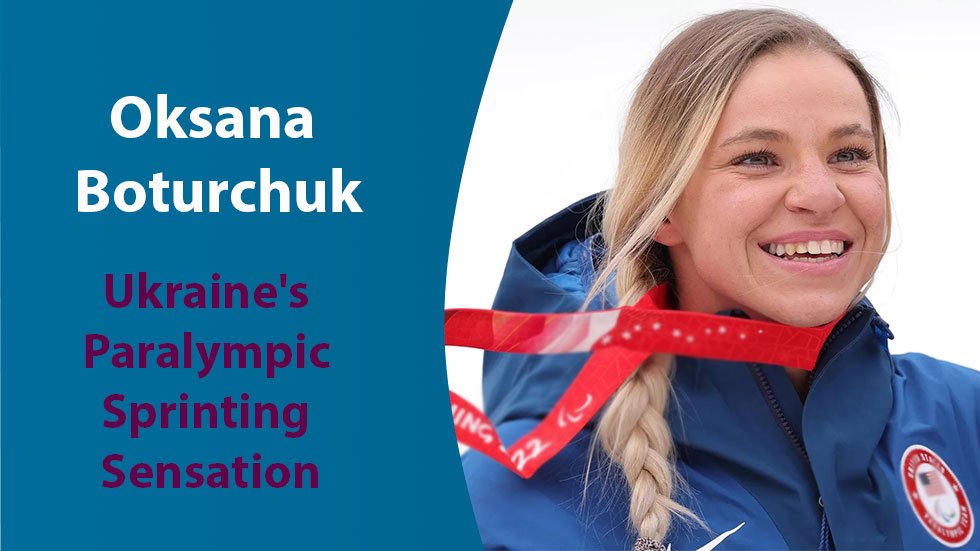
From Vision Loss to Paralympic Success, the Inspiring Story of a Ukrainian Sprint Champion
In the world of para athletics, some stories stand out because they represent more than medals. Oksana Boturchuk’s journey is one of resilience, determination, and an unwavering belief in what is possible. A visually impaired Ukrainian athlete, Boturchuk has established herself as a leading name in Paralympic sprinting. Competing in T12 events, she has demonstrated remarkable ability in the 100m and 200m, overcoming challenges while competing against some of the world’s best athletes. Her journey shows that disability does not have to determine the limits of a person's ambition. It also highlights the importance of access to coaching, training, encouragement, and opportunities for athletes with visual impairments. For visually impaired girls, stories like Oksana Boturchuk’s can provide something equally important: the belief that their own dreams are worth pursuing. You can help create opportunities for visually impaired girls to discover their potential. Donate to Battle For Blindness Foundation and support initiatives focused on sports, education, technology, and independence.
Who Is Oksana Boturchuk?
Oksana Boturchuk is a Ukrainian visually impaired athlete known for her achievements in Paralympic sprinting. She competes in the T12 classification, which is part of the para-athletics system for athletes with visual impairments. Sprinting at an elite level requires exceptional physical conditioning, concentration, coordination, and the ability to maintain technique under intense competitive pressure. Boturchuk’s career demonstrates how determination and structured training can help an athlete transform challenges into opportunities. Her story is not simply about running faster. It is about continuing to move forward despite circumstances that could have changed the direction of her life.
Overcoming the Challenge of Visual Impairment
A change in vision can affect almost every aspect of daily life. For an aspiring athlete, it can create additional challenges in training, navigating facilities, understanding surroundings, and developing techniques that other competitors may learn differently. Boturchuk chose not to allow visual impairment to end her sporting ambitions. Instead, she adapted. Her journey required her to develop confidence, work with coaches, refine her running technique, and build the physical and mental strength needed for elite competition. This process illustrates an important principle in para sports: athletes are not defined by their disabilities. With appropriate support and opportunities, they can develop extraordinary abilities.
Finding Her Strength on the Track
Running requires more than speed. Elite sprinters need explosive power, efficient technique, rhythm, concentration, endurance, and the ability to perform under pressure. For a visually impaired athlete, additional adaptation may be necessary. Timing and rhythm become especially important. Athletes also rely heavily on guidance and communication when training and competing. Boturchuk developed these skills through dedication and repeated practice. Her progress demonstrates how consistent training can turn potential into competitive ability.
The Rise of a Paralympic Sprinter
Boturchuk's hard work eventually brought recognition in the world of para athletics. She competed in national-level competitions before earning the opportunity to represent Ukraine internationally. The transition from national competition to the Paralympic stage represents a significant achievement for any athlete. It requires years of preparation, competition experience, physical conditioning, and mental resilience. For Boturchuk, the opportunity to compete at the Paralympic Games represented the realization of a long-held ambition.
Oksana Boturchuk at the Tokyo 2020 Paralympics
At the Tokyo 2020 Paralympic Games, Boturchuk competed in the T12 100m and 200m events. Her performances resulted in a silver medal in the 100m and a bronze medal in the 200m, adding to her Paralympic achievements and reinforcing her position among elite visually impaired sprinters. These medals represent much more than finishing positions. They reflect years of preparation, discipline, sacrifice, and the ability to perform under the immense pressure of an international sporting event. Her success also helped bring greater visibility to para athletics and the abilities of visually impaired competitors.
What Makes Sprinting So Challenging for Visually Impaired Athletes?
Sprinting is one of the most technically demanding athletic events. A race can be decided by fractions of a second, leaving little room for hesitation. Visually impaired sprinters may need to develop additional skills involving:
- Timing
- Rhythm
- Spatial awareness
- Communication
- Coordination
- Balance
- Explosive strength
- Mental focus
The athlete must remain committed to the race while trusting their preparation and guidance.
This combination of physical ability and mental concentration makes visually impaired sprinting especially demanding.
The Power of Resilience
One of the most inspiring aspects of Boturchuk’s story is her resilience. Athletes experience setbacks throughout their careers. Injuries, difficult competitions, changes in training, and personal challenges can all affect progress. Successful athletes learn to respond rather than give up. Boturchuk’s career demonstrates this mindset. Her achievements show that progress is often built through thousands of small decisions to continue training, continue learning, and continue believing in the goal.
Becoming an Inspiration for Young Athletes
Boturchuk’s impact extends beyond her medal record. Her journey can inspire young people with disabilities to view sport as a possibility rather than something that is out of reach. Representation matters. When children see athletes with disabilities competing at the highest level, they can begin to imagine themselves participating in sports, education, employment, and other areas of life. For visually impaired girls, seeing successful women in para sports can be especially powerful. It can encourage them to develop confidence and challenge expectations about what they can achieve.
Why Sports Matter for Visually Impaired Girls
Sports can play an important role in the development of visually impaired girls. Participation can help young women develop:
- Confidence
- Physical fitness
- Discipline
- Teamwork
- Leadership
- Communication
- Goal-setting
- Resilience
- Independence
Sports can also provide opportunities to build friendships and become part of a supportive community.
Access to structured sports training for visually impaired girls can therefore become an important part of long-term development.
Your contribution can help provide these opportunities. Donate to Battle For Blindness Foundation and help visually impaired girls access training, education, and resources that can support their future.
The Importance of Accessible Training
Talent alone is not enough to create a champion. Athletes need access to coaches, facilities, equipment, transportation, competition opportunities, and ongoing support. For visually impaired athletes, accessibility becomes even more important. Training environments need to be designed so athletes can participate safely and confidently. Without these opportunities, a talented young athlete may never get the chance to discover what she can achieve. Supporting accessible sporting programs can help close this gap.
Education and Athletics Can Work Together
A successful future should not depend on choosing between education and sport. Visually impaired girls need both. Quality educational support can help students continue their studies, while sports can strengthen confidence, discipline, physical fitness, and leadership. Financial challenges can sometimes interrupt education. Scholarship support can help students pursue their academic goals. When education and sports are supported together, young women have a stronger foundation for future opportunities.
Assistive Technology and Independence
Technology can transform access to education and information for people with visual impairments. Screen readers, accessible applications, smartphones, computers, and other tools can make digital learning more accessible. Assistive technology initiatives can help visually impaired students become more independent in their studies and daily activities. Similarly, laptop distribution for blind students can support online learning, research, communication, and digital skill development. These resources can complement education and sports by helping young women prepare for broader opportunities.
Preparing for Employment and Independence
Athletic success is inspiring, but long-term empowerment also requires opportunities beyond sport. Visually impaired girls need pathways toward employment and financial independence. Employment support for visually impaired girls can help young women develop professional skills and prepare for the workplace. Those interested in government careers can benefit from preparation for government job examinations. A supportive residential facility can also provide a structured environment for education, development, and independence.
Battle For Blindness Foundation: Supporting Potential
Oksana Boturchuk’s story demonstrates what determination and opportunity can achieve. Battle For Blindness Foundation works to create opportunities for visually impaired girls through sports, education, assistive technology, scholarships, employment support, and other initiatives. The foundation's mission and vision focus on creating meaningful opportunities and supporting visually impaired individuals toward greater independence. You can learn more about the foundation through its story and team. Its work includes practical initiatives such as walking cane distribution, Braille learning and writing, grocery support, and laptop distribution. The foundation also promotes social inclusion through initiatives such as the matrimony initiative for blind individuals. You can explore more campaigns and initiatives to understand how different forms of support can contribute to greater independence. The foundation also shares statistics and achievements to provide insight into its work and progress. You can also read testimonials and view the organization's gallery to learn more about its activities and the people it supports. Your donation can help turn potential into opportunity. Support Battle For Blindness Foundation and help visually impaired girls access education, sports, technology, and skills development.
Beyond the Finish Line
The impact of a para-athlete does not end when a race finishes. Athletes such as Boturchuk can influence how society understands disability. Their achievements challenge stereotypes and demonstrate that visual impairment does not prevent people from competing, leading, learning, or contributing to society. For a young visually impaired girl, the image of a successful athlete can be a source of motivation. It can encourage her to participate in sports. It can encourage her to continue her education. It can help her believe that professional opportunities are possible. That is the broader value of representation.
Creating More Opportunities for the Next Generation
Every champion starts somewhere. For one young girl, it may begin with her first sports training session. For another, it may begin with access to a Braille learning program. For someone else, it may start with a laptop that allows her to study independently. These opportunities may appear small, but together they can change the direction of a person's life. Supporting visually impaired girls means investing in their potential before their achievements are visible to the world.
Turning Inspiration Into Action
Oksana Boturchuk’s story reminds us that resilience becomes more powerful when it is supported by opportunity. Her journey from visual impairment to Paralympic success was shaped by determination, training, and access to competitive sport. The same principle can apply to visually impaired girls today. They deserve opportunities to explore their abilities, develop skills, and build confidence. If Boturchuk’s journey inspires you, turn that inspiration into action. Donate today and help create opportunities for visually impaired girls to learn, train, and build more independent futures.
Conclusion
Oksana Boturchuk’s journey to Paralympic glory is a powerful example of resilience, determination, and sporting excellence. As a visually impaired Ukrainian athlete competing in T12 sprint events, she has demonstrated that challenges do not have to define a person's future. Her silver medal in the 100m and bronze medal in the 200m at the Tokyo 2020 Paralympic Games represent the result of years of preparation and commitment. But perhaps her greatest impact extends beyond the medals. Her story can encourage young people with disabilities to believe in their abilities and pursue opportunities that may once have seemed impossible. For visually impaired girls, access to sports can be the beginning of a much larger journey. Combined with education, assistive technology, scholarships, and employment support, these opportunities can help young women develop confidence and work toward greater independence. Support the next generation of visually impaired girls. Donate to Battle For Blindness Foundation and help turn potential into opportunity.
Frequently Asked Questions About Oksana Boturchuk
1. Who is Oksana Boturchuk?
Oksana Boturchuk is a Ukrainian visually impaired para-athlete known for her achievements in Paralympic sprinting.
2. What events does Oksana Boturchuk compete in?
She competes in T12 para-athletics sprint events, including the 100m and 200m.
3. What is the T12 classification?
T12 is a classification within para athletics for athletes with visual impairments who compete under the sport's classification system.
4. What medals did Oksana Boturchuk win at Tokyo 2020?
She won a silver medal in the 100m and a bronze medal in the 200m at the Tokyo 2020 Paralympic Games.
5. Why is Oksana Boturchuk an inspiration?
Her journey demonstrates resilience, dedication, and the ability to achieve at the highest level of para athletics despite visual impairment.
6. What challenges can visually impaired sprinters face?
They may face challenges involving accessibility, training environments, spatial awareness, communication, guidance, equipment, and access to competitive opportunities.
7. How can sports benefit visually impaired girls?
Sports can help visually impaired girls build confidence, physical fitness, discipline, teamwork, leadership, resilience, communication skills, and independence.
8. Why is representation important for visually impaired children?
Seeing successful athletes with disabilities can help children understand that disability does not necessarily limit their ability to pursue ambitious goals.
9. How can I support visually impaired girls?
You can support visually impaired girls through donations, sports training, education, scholarships, assistive technology, employment programs, volunteering, and awareness.
10. How can I donate to Battle For Blindness Foundation?
You can visit the Battle For Blindness Foundation donation page to contribute toward programs supporting visually impaired girls.
Support the Future of Visually Impaired Girls
Every visually impaired girl deserves an opportunity to discover her abilities. She deserves access to education, technology, sports, skills training, and the encouragement needed to pursue her ambitions. Oksana Boturchuk’s journey shows what can happen when determination is combined with opportunity. The next champion could be waiting for that same opportunity today. Your support can help make it possible. Donate to Battle For Blindness Foundation and help turn potential into confidence, skills, and opportunity.
Explore More From Battle For Blindness Foundation
Discover more stories and resources about visual impairment, para sports, education, and empowerment. Learn more about the foundation's work through its real stories and stories of change. If you would like to learn more about the foundation or discuss ways to support its work, visit the contact page. stories or case studies: Stories of Change
Support the Visually Impaired
People to make them Independent

Every little contribution you make will be a little flicker of light in the lives of visually impaired girls who dream of a brighter future.
Donate now

In case you have donated directly through UPI, Bank transfer, through cheque kindly WhatsApp your details on +91-8383933493

Every Contribution will be utilized with 100% transparency. The beneficiary photographs will be sent to you with an 80G Tax Benefit Certificate

Battle For Blindness Foundation committed to 93% go directly towards projects that directly benefit the Abandoned blind girls

