Mohammad Iqbal: The Unsung Hero of India’s Blind Cricket World Cup Wins
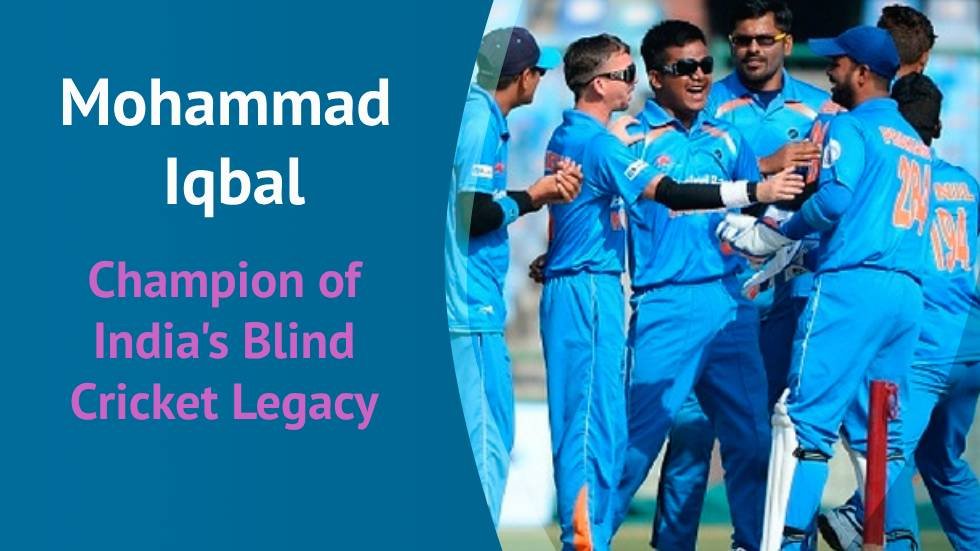
From Limited Resources to International Cricket, a Story of Determination, Teamwork, and Inclusion
When people talk about cricket heroes, the conversation often focuses on players who receive widespread media attention, major endorsements, and national recognition. But some of the most meaningful sporting stories belong to athletes who achieved greatness without the same level of visibility. Mohammad Iqbal is one such figure in India's blind cricket journey. According to the original Battle For Blindness Foundation article, Iqbal lost his vision because of a hereditary condition but continued pursuing his passion for cricket. He developed his skills despite limited resources and eventually became an important member of the Indian Blind Cricket Team. His story represents much more than cricket. It reflects perseverance, teamwork, leadership, and the importance of giving visually impaired athletes opportunities to participate and compete. For young visually impaired girls, stories like Mohammad Iqbal's can provide an important reminder that disability does not have to define a person's ambitions. With the right support, training, education, and encouragement, talent can develop into confidence and achievement. You can help create similar opportunities for visually impaired girls. Donate to Battle For Blindness Foundation and support initiatives that help young women build skills, confidence, and greater independence.
Who Is Mohammad Iqbal?
Mohammad Iqbal is a significant figure in India's blind cricket history. His journey began despite the challenges associated with visual impairment and limited access to resources. According to the original article, Iqbal lost his vision because of a hereditary condition. Rather than allowing this challenge to end his interest in cricket, he continued playing and developing his abilities. With encouragement from his family and friends, he developed his passion for competition. His dedication eventually led him toward elite blind cricket, where his abilities as a batsman and all-rounder became valuable to the team. His journey demonstrates how the right environment can help a person discover strengths that may not have been apparent during a difficult period of adjustment.
Overcoming Challenges Through Cricket
Growing up with visual impairment can involve challenges in education, mobility, social participation, and access to recreational activities. For aspiring athletes, limited access to appropriate facilities, coaching, equipment, and competitive opportunities can create additional barriers. Iqbal faced many of these difficulties while developing his passion for cricket. Instead of giving up, he continued practicing and improving. His journey demonstrates an important lesson for young athletes: talent needs opportunity. A person may have tremendous potential, but without access to training and encouragement, that potential may remain undiscovered.
The Beginning of His Blind Cricket Journey
Iqbal's journey in organized blind cricket began in the early 2000s when he joined the national setup. His skills as a batsman and all-rounder helped him earn recognition within the Indian Blind Cricket Team. His ability to contribute in different situations made him an important part of the team. Blind cricket requires players to develop skills while adapting to a sporting environment designed around visual impairment. Players need strong communication, concentration, coordination, and an understanding of their teammates. Iqbal's development in this environment demonstrated his ability to combine individual skill with team strategy.
What Makes Blind Cricket Different?
Blind cricket is adapted to make cricket accessible to players with different levels of visual impairment. The game requires players to rely on communication, sound, physical awareness, and teamwork. These adaptations do not make the sport less competitive. Instead, they create a different sporting environment in which players must develop specialized skills. For visually impaired athletes, cricket can provide opportunities to build:
- Confidence
- Teamwork
- Communication skills
- Physical fitness
- Discipline
- Leadership
- Decision-making skills
- Resilience
These benefits can extend well beyond the cricket field.
Mohammad Iqbal and India's Blind Cricket Success
Iqbal became an important contributor to India's success in international blind cricket. The original article highlights his role in India's Blind Cricket World Cup victories, particularly in 2011 and 2018. His performances and strategic contribution helped India compete successfully at the highest level of blind cricket. These achievements are important because they demonstrate the competitive ability of visually impaired athletes. India's success also helped bring greater attention to blind cricket and the athletes who dedicate themselves to the sport.
His Contribution to the 2018 World Cup
The 2018 Blind Cricket World Cup was an especially significant chapter in Iqbal's career. According to the original article, he contributed with the bat while also providing leadership and guidance to younger players. His experience helped strengthen team unity and contributed to important victories during the tournament. Leadership in sport is not always about being the most visible player. Sometimes it means supporting teammates, maintaining focus under pressure, sharing experience, and helping younger athletes understand what it takes to compete at the highest level. Iqbal's contribution demonstrates the value of experienced players within a team.
The Importance of Teamwork in Blind Cricket
Cricket is a team sport, but blind cricket places particular importance on communication and trust. Players need to understand one another and work together effectively. Every player has a role. A batsman needs to concentrate on timing and scoring. Bowlers need to maintain accuracy. Fielders need to communicate and react quickly. Team leaders must make decisions while keeping everyone focused. Iqbal's contribution demonstrates how individual ability becomes more powerful when combined with teamwork.
More Than Records and Trophies
Winning a World Cup is an extraordinary achievement, but the impact of blind cricket extends beyond trophies. Every successful visually impaired athlete challenges assumptions about disability. When an athlete competes internationally, they demonstrate that visual impairment does not eliminate ambition, competitiveness, or professional potential. These stories can change how communities view people with disabilities. They can also encourage parents and children to consider opportunities that they may previously have thought were unavailable.
Inspiring Young Visually Impaired Athletes
One of the most important aspects of Iqbal's legacy is the inspiration his journey can provide to younger athletes. A visually impaired child may initially believe that sport is not meant for them. Seeing successful blind cricket players can change that perception. It can show them that:
- They can participate in competitive sports.
- They can develop athletic skills.
- They can become part of a team.
- They can represent their community or country.
- They can pursue ambitious goals.
This is why representation in sport matters.
Why Sports Opportunities Matter for Visually Impaired Girls
The benefits of sport should not be limited to boys or established athletes. Visually impaired girls also deserve opportunities to discover their abilities through sports. Participation can help young women develop physical confidence while also building valuable life skills. Access to sports training for visually impaired girls can help provide structured opportunities for training, teamwork, and personal development. Sports can help girls develop:
- Self-confidence
- Physical fitness
- Leadership
- Discipline
- Communication
- Resilience
- Teamwork
- Independence
Your support can help make these opportunities possible. Donate to Battle For Blindness Foundation and help visually impaired girls access sports, training, and development opportunities.
Education and Sports Should Grow Together
Sport can open doors, but education remains equally important for long-term independence. Visually impaired girls need access to quality learning environments and appropriate educational resources. Educational support can help students continue their studies and build knowledge for future opportunities. Financial barriers can also prevent students from continuing their education. Scholarship support can help make higher education and continued learning more accessible. When education and sports are developed together, young women can build both confidence and practical skills for their future.
Assistive Technology Can Create New Possibilities
Modern technology can make education, communication, and information more accessible to people with visual impairments. Screen readers, accessible software, smartphones, computers, and other assistive tools can help students learn more independently. Assistive technology initiatives can provide access to resources that support education and everyday activities. Access to a computer can be particularly valuable. Laptop distribution for blind students can help young people participate in digital education and develop computer skills. Technology can become another important bridge between potential and opportunity.
Supporting Future Employment
True empowerment should extend beyond education and sports. Visually impaired girls also need opportunities to develop professional skills and prepare for meaningful employment. Employment support for visually impaired girls can help young women develop workplace skills and prepare for career opportunities. For those interested in public-sector careers, government job examination preparation can provide another pathway toward professional independence. A supportive residential facility can also provide an environment where education, training, and personal development can take place together.
Battle For Blindness Foundation: Creating Opportunities
Mohammad Iqbal's journey demonstrates what can happen when determination meets opportunity. Battle For Blindness Foundation works to create opportunities for visually impaired girls through education, sports, assistive technology, scholarships, employment support, and other initiatives. The foundation's mission and vision focus on creating meaningful opportunities for visually impaired individuals and supporting their journey toward greater independence. You can learn more about the foundation through its story and team. Its practical initiatives include walking cane distribution, Braille learning and writing support, grocery support, and laptop distribution. The foundation also promotes social inclusion through initiatives such as the matrimony initiative for blind individuals. You can explore its campaigns and initiatives to learn more about the different areas where support can make a difference. The foundation also shares its statistics and achievements, testimonials, and gallery. A donation can help turn potential into opportunity. Support Battle For Blindness Foundation and help provide visually impaired girls with access to sports, education, technology, and skills development.
Building Confidence Through Opportunity
A successful athlete's journey rarely happens alone. Behind every achievement are opportunities to train, people who provide encouragement, and environments where the athlete can develop. The same is true for visually impaired girls. A girl with athletic potential needs access to training. A student may need a scholarship or assistive technology. A young woman preparing for a career may need professional guidance. Each form of support can become an important part of her journey toward independence.
The Legacy of an Unsung Hero
Mohammad Iqbal's story is a reminder that sporting heroes are not always the most famous names. Some athletes make their greatest contribution through consistency, teamwork, leadership, and commitment. His role in India's blind cricket success demonstrates the importance of recognizing athletes who have helped build the sport and inspire future generations. His legacy is particularly meaningful because it represents the potential within the visually impaired community.
Turning Inspiration Into Action
The story of Mohammad Iqbal should inspire more than admiration. It should encourage action. If visually impaired athletes can represent their country on the international stage, young visually impaired girls should also have the opportunity to discover their own talents. They deserve access to sports. They deserve education. They deserve technology. They deserve skills training. And they deserve the opportunity to build independent futures. If Mohammad Iqbal's journey inspires you, turn that inspiration into meaningful support. Donate today and help create opportunities for visually impaired girls to learn, train, and grow.
Conclusion
Mohammad Iqbal's journey is a powerful example of determination, teamwork, and resilience. From developing his passion for cricket despite visual impairment to becoming an important member of India's blind cricket team, his story demonstrates what can happen when talent is given the opportunity to grow. His contributions to India's Blind Cricket World Cup victories, particularly in 2011 and 2018, represent an important part of the country's blind cricket story. But his greatest legacy may be the inspiration he provides to other visually impaired athletes. His story reminds us that ability should never be overlooked simply because a person has a disability. For visually impaired girls, access to sports, education, assistive technology, scholarships, and employment support can create the foundation for a more confident and independent future. Support the next generation of visually impaired girls. Donate to Battle For Blindness Foundation and help turn potential into opportunity.
Frequently Asked Questions About Mohammad Iqbal and Blind Cricket
1. Who is Mohammad Iqbal?
Mohammad Iqbal is a significant figure in India's blind cricket community who contributed to the country's international success in blind cricket.
2. How did Mohammad Iqbal lose his vision?
According to the Battle For Blindness Foundation's original article, Iqbal lost his vision because of a hereditary condition.
3. When did Mohammad Iqbal join India's blind cricket setup?
The original article states that his journey in organized blind cricket began in the early 2000s when he joined the national team.
4. What role did Mohammad Iqbal play in blind cricket?
He was known for his abilities as a batsman and all-rounder and also contributed leadership and strategic guidance to the team.
5. Which Blind Cricket World Cups did Mohammad Iqbal contribute to?
The original article highlights his contributions to India's victories in the 2011 and 2018 Blind Cricket World Cups.
6. Why is blind cricket important?
Blind cricket provides visually impaired athletes with an opportunity to compete, develop skills, build confidence, and represent their teams at national and international levels.
7. What can young visually impaired girls gain from sports?
Sports can help visually impaired girls develop confidence, fitness, teamwork, leadership, discipline, communication skills, resilience, and independence.
8. How can education support visually impaired girls?
Educational support can help visually impaired girls continue their studies, develop professional skills, and prepare for greater independence.
9. How can I support visually impaired girls?
You can support them through donations, sports programs, education, scholarships, assistive technology, employment support, and other initiatives.
10. How can I donate to Battle For Blindness Foundation?
You can visit the Battle For Blindness Foundation donation page to contribute toward programs supporting visually impaired girls.
Support the Future of Visually Impaired Girls
Every visually impaired girl deserves an opportunity to discover her abilities. Mohammad Iqbal's journey demonstrates how opportunity, determination, and support can help visually impaired athletes achieve remarkable goals. The next generation deserves the same chance. Your contribution can help support access to education, sports, technology, skills development, and other resources that can help visually impaired girls build more independent lives. Donate to Battle For Blindness Foundation and help create the opportunities that can turn potential into achievement.
Explore More From Battle For Blindness Foundation
Discover more stories and resources about visual impairment, para sports, education, and empowerment. Learn more about the foundation's work through its real stories and stories of change. If you would like to learn more about the foundation or discuss ways to support its work, visit the contact page. Real stories or case studies: Stories of Change
Support the Visually Impaired
People to make them Independent

Every little contribution you make will be a little flicker of light in the lives of visually impaired girls who dream of a brighter future.
Donate now

In case you have donated directly through UPI, Bank transfer, through cheque kindly WhatsApp your details on +91-8383933493

Every Contribution will be utilized with 100% transparency. The beneficiary photographs will be sent to you with an 80G Tax Benefit Certificate

Battle For Blindness Foundation committed to 93% go directly towards projects that directly benefit the Abandoned blind girls

