Millie Knight: Conquering the Slopes and Winning Medals for Team UK
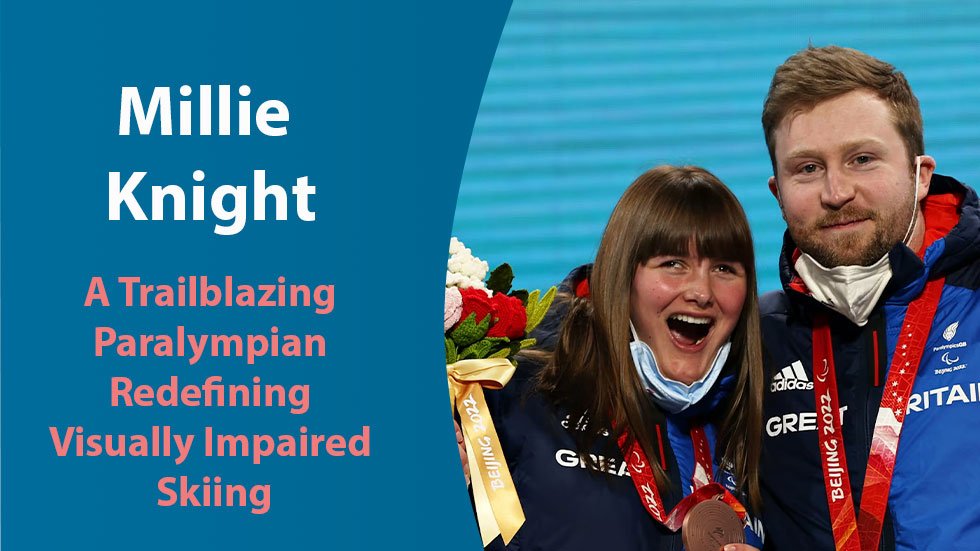
How Courage, Trust, and Determination Helped a Visually Impaired Skier Reach the Paralympic Podium
For many people, skiing represents freedom, adventure, and the excitement of moving through challenging terrain. For elite para athletes, however, skiing demands exceptional physical preparation, technical ability, concentration, and mental resilience. For visually impaired athletes, competitive skiing also requires a high level of trust and communication. Millie Knight, one of Great Britain's successful visually impaired alpine skiers, has demonstrated how determination, preparation, and teamwork can help an athlete compete at the highest level. Her journey is not simply about medals. It is also about challenging perceptions of disability, demonstrating the importance of sporting opportunities, and inspiring young people with visual impairments to believe in their own potential. You can help create similar opportunities for visually impaired girls by supporting access to sports, education, assistive technology, and skills development.
Who Is Millie Knight?
Millie Knight is a British visually impaired para alpine skier who has represented Great Britain at major international competitions. Her career has made her an important figure in para alpine skiing. Competing on snow-covered slopes at elite level requires speed, balance, precision, physical strength, and the ability to make rapid decisions. For visually impaired skiers, the challenge is even more complex because they depend on a sighted guide to navigate the course. The relationship between skier and guide is therefore fundamental. Both athletes must communicate effectively and develop a high level of trust so they can move through the course safely and efficiently. Knight's career demonstrates what can be achieved when athletic talent is combined with determination, preparation, and the right support system.
What Is Para Alpine Skiing?
Para alpine skiing is a competitive winter sport for athletes with physical or visual impairments. Athletes compete in disciplines such as downhill, slalom, giant slalom, super-G, and super combined events, depending on their classification and competition program. For visually impaired skiers, the guide plays a critical role. The guide skis ahead of the athlete and provides information about the course using voice communication. The skier must listen carefully and respond quickly while maintaining speed and control. This requires:
- Excellent balance
- Physical strength
- Technical skiing ability
- Fast reactions
- Concentration
- Trust
- Communication
- Mental resilience
- Strong coordination
The sport is a powerful demonstration of how adaptation and teamwork can create opportunities for athletes with disabilities to compete at the highest level.
Millie Knight's Journey Into Competitive Skiing
Knight's journey reflects the importance of perseverance and early sporting opportunity. Developing into an elite para alpine skier requires years of training. Athletes must continually improve their technique while developing strength, endurance, balance, and confidence. Competitive skiing also requires athletes to learn how to handle pressure. A single mistake can affect a race, particularly when athletes are moving at high speeds down technically challenging courses. For visually impaired athletes, communication with the guide adds another layer of complexity. The skier must trust the guide's instructions and react quickly to information about turns, terrain, speed, and course direction. Knight's achievements show how repeated training and competition experience can help athletes develop the confidence required for elite performance.
The Importance of Trust Between a Skier and Guide
One of the most fascinating aspects of visually impaired skiing is the relationship between the athlete and the guide. Unlike many sports, where an athlete can independently see the playing environment, a visually impaired skier may depend on the guide's verbal instructions to understand the course. This means communication must be precise and timely. The skier must trust the guide completely, particularly when traveling at high speed. At the same time, the guide must understand the skier's abilities, technique, and reactions. This partnership demonstrates how collaboration can overcome barriers. It also provides an important lesson for young people: independence does not always mean doing everything alone. Sometimes, achieving an ambitious goal requires learning how to trust, communicate, and work effectively with others.
The Physical Demands of Para Alpine Skiing
Competitive alpine skiing is physically demanding. Athletes need strong legs and core muscles, excellent balance, flexibility, endurance, and fast reactions. They must maintain control while navigating steep slopes, sharp turns, changing terrain, and high speeds. Training can involve strength conditioning, technical skiing, cardiovascular fitness, balance exercises, and mental preparation. Recovery is also important because athletes place significant physical demands on their bodies. For visually impaired athletes, these physical requirements are combined with the need to process auditory information quickly and maintain communication with the guide. Millie Knight's success highlights the level of preparation required to compete at this standard.
Winning Medals for Team UK
Representing Great Britain on the international stage is a significant achievement. Major para sporting events bring together athletes who have spent years preparing for the opportunity to compete. For Millie Knight, international competition provided a platform to demonstrate her skiing ability and compete for medals. Her achievements have helped increase visibility for para alpine skiing and demonstrate the capabilities of visually impaired athletes. Every medal represents more than the result of a single race. Behind an elite performance are years of training, coaching, travel, competition experience, preparation, recovery, teamwork, and determination.
Why Millie Knight's Story Matters
Knight's achievements have significance beyond the ski slopes. For visually impaired children, seeing athletes with disabilities succeed can change how they view their own possibilities. A young girl who sees a visually impaired athlete competing internationally may begin to think differently about what she can accomplish. She may become interested in sport, education, technology, leadership, or other opportunities. This is why representation matters. Role models can challenge stereotypes and encourage children to focus on their abilities rather than the assumptions others may have about disability.
How Sports Can Empower Visually Impaired Girls
Sports can be an important tool for empowerment. Participation in structured sporting activities can help visually impaired girls develop:
- Confidence
- Physical fitness
- Discipline
- Communication skills
- Teamwork
- Resilience
- Goal-setting abilities
- Decision-making skills
- Independence
Sports also create opportunities for children to experience achievement.
When a child learns a new skill or reaches a personal goal, that experience can strengthen their confidence.
The lessons learned through sport can extend into education, employment, relationships, and everyday life.
Your contribution can help make these opportunities possible. Donate to Battle For Blindness Foundation and help visually impaired girls access sports training and other programs that support their development.
Barriers Faced by Visually Impaired Athletes
Behind the achievements of elite athletes are often significant challenges. Visually impaired athletes may face barriers related to:
- Access to specialized coaching
- Accessible sporting facilities
- Suitable equipment
- Transportation
- Competition opportunities
- Training expenses
- Travel costs
- Limited awareness of adaptive sports
These challenges can be particularly difficult for children who are just beginning to explore sports.
A talented child may never discover their ability if they do not have access to a suitable program.
Creating accessible sports opportunities at the grassroots level can therefore play an important role in identifying and developing future athletes.
The Connection Between Sports and Education
Sports should be part of a broader approach to empowerment. Visually impaired girls also need access to education and learning resources that can help them build independent futures. Educational support can help students continue their studies, while scholarships can reduce financial barriers. Assistive technology can make educational content more accessible, allowing students to read, research, communicate, and learn more independently. When sports and education are supported together, young people can develop both academic skills and personal confidence.
Assistive Technology and Greater Independence
Technology has changed the way many visually impaired people learn and communicate. Screen readers, accessible smartphones, digital learning platforms, and other assistive technologies can provide greater access to information. For students, these tools can support research, assignments, communication, and online education. Access to suitable devices can also help young people develop digital skills that may become valuable in future employment. However, technology works best when individuals also receive appropriate training. Combining devices with education and practical training can create stronger pathways toward independence. Laptop distribution for blind students can also help provide access to digital learning resources.
Preparing for Employment
Empowerment should continue beyond education and sports. Visually impaired girls and young women need opportunities to develop professional skills and prepare for meaningful employment. Employment support for visually impaired girls can help young women understand workplace expectations, develop relevant skills, and work toward financial independence. For those interested in government careers, government job examination preparation can help students pursue competitive professional opportunities. Residential support can also be important for children and young women who require a structured and supportive environment. Together, these forms of support can help create a long-term pathway from childhood development toward greater independence.
Battle For Blindness Foundation: Creating Opportunities
Millie Knight's journey highlights a simple but powerful idea: ability can grow when people receive opportunity, training, and support. Battle For Blindness Foundation works to create opportunities for visually impaired girls through education, sports training, assistive technology, scholarships, employment support, and practical initiatives. Learn more about the foundation's story and work and explore its mission and vision. The foundation's team supports initiatives designed to address the different challenges faced by visually impaired girls. Practical campaigns include walking cane distribution, Braille learning and writing initiatives, and grocery support for blind individuals. Other initiatives can address broader areas of social participation, including a matrimony initiative for blind individuals. Together, these initiatives demonstrate how support can address immediate needs while also helping build pathways toward greater independence. Your donation can help support this wider journey. Donate to Battle For Blindness Foundation and help provide visually impaired girls with opportunities to learn, participate, develop skills, and move toward greater independence.
Turning Inspiration Into Action
Millie Knight's story is inspiring because it shows what determination and opportunity can achieve. But her journey should also encourage us to think about young people who have not yet received the opportunity to discover their own abilities. Donations can help organizations continue programs that address practical barriers and create pathways for visually impaired girls. Support can also come through volunteering, awareness, community participation, and encouraging inclusive opportunities. If Millie Knight's journey inspires you, turn that inspiration into action. Donate to Battle For Blindness Foundation and help create opportunities for visually impaired girls to learn, train, develop skills, and build confidence.
Why Every Opportunity Matters
For a visually impaired child, one opportunity can become a meaningful turning point. A sports program can reveal an athletic ability. Educational support can help a student continue learning. A scholarship can reduce financial barriers. Assistive technology can make independent study easier. Employment preparation can help a young woman develop professional skills. These opportunities are connected. When children receive appropriate support at the right time, they can develop the confidence and skills needed to move toward a more independent future.
Conclusion
Millie Knight's journey in para alpine skiing represents determination, courage, teamwork, trust, and resilience. Her success demonstrates that visual impairment does not have to prevent an athlete from competing on the international stage. Her partnership with her guide also shows how communication and trust can help athletes overcome barriers and pursue ambitious goals. For visually impaired girls, stories like Knight's can provide inspiration and demonstrate that there are possibilities beyond the limitations society may sometimes place on disability. But inspiration becomes more powerful when it is supported by opportunity. Access to sports, education, technology, scholarships, and skills development can help young girls discover their strengths and prepare for more independent futures. When children receive the right opportunities and support, visual impairment does not have to define the limits of their future. Support the journey. Donate to Battle For Blindness Foundation and help create opportunities that allow visually impaired girls to learn, participate, develop skills, and pursue their goals.
Frequently Asked Questions About Millie Knight and Para Alpine Skiing
1. Who is Millie Knight?
Millie Knight is a British visually impaired para alpine skier who has represented Great Britain at major international competitions and achieved success in elite para skiing.
2. What sport does Millie Knight compete in?
Millie Knight competes in para alpine skiing, including disciplines that require speed, technical ability, balance, and precise navigation of ski courses.
3. How do visually impaired skiers navigate a course?
Visually impaired skiers can work with a sighted guide who skis ahead and provides verbal information about the course, allowing the athlete to navigate turns and terrain.
4. Why is communication important in para alpine skiing?
Communication is essential because the skier needs accurate and timely information from the guide while traveling at high speed through a course.
5. What skills are required for para alpine skiing?
Para alpine skiing requires physical strength, balance, coordination, speed, technical skiing ability, concentration, communication, and mental resilience.
6. How can sports benefit visually impaired girls?
Sports can help visually impaired girls develop confidence, discipline, physical fitness, teamwork, communication, resilience, goal-setting skills, and independence.
7. What challenges do visually impaired athletes face?
They may face barriers involving specialized coaching, accessible facilities, equipment, transportation, training opportunities, competition access, and financial resources.
8. How can assistive technology help visually impaired children?
Assistive technology can help children access educational resources, digital information, communication tools, and learning platforms more independently.
9. How can I support visually impaired girls?
You can support visually impaired girls through donations, sports programs, educational initiatives, scholarships, assistive technology, employment preparation, volunteering, and awareness.
10. How can I donate to Battle For Blindness Foundation?
You can visit the Battle For Blindness Foundation donation page to learn how you can contribute toward programs supporting visually impaired girls.
Support the Future of Visually Impaired Girls
Every child deserves the opportunity to discover her abilities, develop confidence, and build a future with greater independence. Millie Knight's journey demonstrates how training, trust, determination, and opportunity can help visually impaired athletes reach extraordinary levels of achievement. For visually impaired girls, similar opportunities can begin with access to sports, education, technology, training, encouragement, and financial support. Your contribution can help address barriers that may otherwise prevent children from exploring their potential. Donate today to Battle For Blindness Foundation and help turn potential into opportunity. Real stories or case studies: Stories of Change
Support the Visually Impaired
People to make them Independent

Every little contribution you make will be a little flicker of light in the lives of visually impaired girls who dream of a brighter future.
Donate now

In case you have donated directly through UPI, Bank transfer, through cheque kindly WhatsApp your details on +91-8383933493

Every Contribution will be utilized with 100% transparency. The beneficiary photographs will be sent to you with an 80G Tax Benefit Certificate

Battle For Blindness Foundation committed to 93% go directly towards projects that directly benefit the Abandoned blind girls

