Melissa Tapper: Australia’s Dual Olympian and Paralympian Table Tennis Star
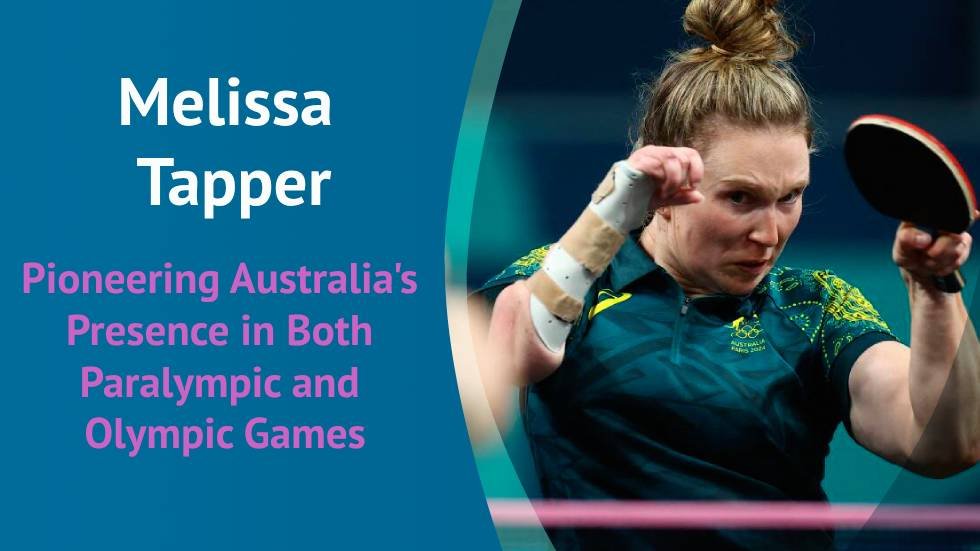
How Determination, Adaptability, and Sporting Excellence Made Melissa Tapper a Global Inspiration
Melissa Tapper’s story is one of the most inspiring examples of determination in Australian sport. As an athlete who has competed at both the Olympic and Paralympic Games, she has achieved something remarkably rare. Her journey in table tennis demonstrates that disability does not have to determine the limits of an athlete’s ambition. Through dedication, adaptability, and years of training, Tapper became a leading Australian table tennis player and an important voice for inclusion in sport.
Her story is especially meaningful for visually impaired girls who are discovering sport and learning to believe in their own abilities. It shows what can happen when talent is supported with opportunity, coaching, encouragement, and persistence. You can help create similar opportunities for visually impaired girls. Donate to Battle For Blindness Foundation and support programs that promote sports, education, technology, and independence.
Who Is Melissa Tapper?
Melissa Tapper is an Australian table tennis player and para-athlete who has represented Australia at both the Olympic and Paralympic Games. She has competed in able-bodied and para table tennis, making her one of Australia's notable athletes to compete at both sporting events. Her achievement is significant because competing at the Olympic Games requires an exceptionally high level of sporting ability, while reaching the Paralympic stage requires years of dedicated preparation and classification-specific competition. Tapper has successfully navigated both environments. Her career shows how athletes can challenge traditional boundaries between mainstream and para sport.
Living With a Disability and Finding Her Sporting Path
Tapper was born with Erb's palsy, a condition affecting the nerves controlling movement in the arm. Rather than allowing this physical challenge to prevent her from pursuing competitive sport, she found a way to adapt. Table tennis became an important part of her sporting journey. The sport requires fast reactions, coordination, concentration, movement, and tactical decision-making. Athletes must constantly adapt to the position of the ball and the actions of their opponents. Tapper developed the skills needed to compete at an elite level while adapting her technique to her physical circumstances. Her journey demonstrates an important principle in disability sport: athletes do not necessarily need to compete without limitations. They need the opportunity to find ways to work with their individual abilities.
Discovering Table Tennis
Table tennis provided Tapper with an environment where technical skill and strategic thinking could become strengths. As she developed, her competitive abilities became increasingly evident. The sport gave her an opportunity to test herself against strong opponents and develop the discipline required for high-level competition. Over time, her commitment to training helped her progress from a promising player into an international competitor. This development did not happen overnight. Elite sport requires repeated practice, physical preparation, tactical understanding, mental resilience, and the ability to learn from both victories and defeats. Tapper's career reflects that long-term commitment.
Becoming an Elite Australian Athlete
As Tapper's table tennis career progressed, she began competing at higher levels. Her performances eventually earned her opportunities to represent Australia internationally. Competing internationally is a major achievement for any athlete. For a para-athlete, the journey can involve additional considerations related to classification, accessibility, equipment, travel, training, and competition preparation. Tapper successfully navigated these challenges while continuing to develop as an athlete. Her rise demonstrates how consistent training and the right support system can help athletes reach levels they may once have considered impossible.
Making History at the Olympic and Paralympic Games
One of the most remarkable chapters of Melissa Tapper's career came at the Rio 2016 Olympic and Paralympic Games. She competed in table tennis at the Olympic Games before returning to compete at the Paralympics. This made Tapper one of the rare athletes to compete at both the Olympic and Paralympic Games. Her participation represented a significant achievement in Australian sport and helped demonstrate the possibilities created when athletes are given the opportunity to compete across sporting environments. The achievement also challenged conventional perceptions about disability and elite competition.
The Significance of Competing at Both Games
Competing at both the Olympics and Paralympics requires exceptional preparation. The two competitions operate under different systems, and athletes must be ready to perform against different competitive fields. For Tapper, participating in both demonstrated her versatility as an athlete. Her journey also helped bring attention to the relationship between mainstream and para sport. Rather than seeing disability sport as separate from elite sport, her career shows that talented athletes can compete successfully in multiple environments. This message is particularly powerful for young people with disabilities.
Winning Paralympic Bronze
Tapper's Paralympic career reached another important milestone when she won a bronze medal at the Rio 2016 Paralympic Games. The medal represented years of training and determination. Standing on a Paralympic podium is an extraordinary achievement, but the journey behind the medal is equally important. Every training session, competition, setback, recovery, and technical adjustment contributed to that moment. Her medal also provided visibility for para table tennis and demonstrated the high level of skill present within Paralympic sport.
What Makes Table Tennis So Challenging?
Table tennis may appear simple when watched casually, but elite competition requires extraordinary precision.
Players need:
- Fast reaction times
- Hand-eye coordination
- Balance
- Agility
- Concentration
- Strategic thinking
- Quick decision-making
- Mental resilience
For athletes with disabilities, additional adaptations may be necessary depending on their individual circumstances. The ability to adapt technique while maintaining competitive performance is one of the qualities that makes para-athletes particularly impressive. Tapper's career demonstrates how adaptation can become a strength rather than a limitation.
The Power of Adaptability
One of the most valuable lessons from Melissa Tapper's journey is the importance of adaptability. An athlete may not always be able to follow the exact same path as another competitor. Different physical abilities may require different techniques. Different circumstances may require different training approaches. The goal is not to eliminate every challenge. The goal is to find effective ways to move forward. Tapper's success demonstrates this mindset. Her journey can encourage young athletes to focus on what they can develop rather than allowing limitations to define their expectations.
A Role Model for Young Athletes
Successful athletes often become role models because their achievements provide something that statistics cannot. They provide possibility.
For a visually impaired girl who has never seen someone like herself compete at a high level, seeing a successful para-athlete can change her understanding of what is possible.
A story like Tapper's can encourage young athletes to:
- Try a new sport
- Set ambitious goals
- Develop confidence
- Continue learning after setbacks
- Believe in their abilities
- Seek opportunities rather than limitations
Representation can therefore have an impact far beyond the sporting arena.
Why Sports Opportunities Matter for Visually Impaired Girls
Sports can be an important part of personal development for visually impaired girls. Participation can improve physical fitness while also helping young women develop confidence, teamwork, discipline, communication, and leadership. Access to sports training for visually impaired girls can provide structured opportunities to discover abilities and develop competitive skills. Sports can also create social connections and help young women become more comfortable participating in community activities. Your contribution can help create these opportunities. Donate to Battle For Blindness Foundation and help visually impaired girls access sports training and other essential support.
Education and Sports Can Build a Stronger Future
Athletic development should not come at the expense of education. Visually impaired girls need access to both. Educational support can help students continue their studies, build knowledge, and prepare for future careers. For students facing financial challenges, scholarship support can help reduce barriers to continued education. When education and sports are developed together, young women can build a more balanced foundation for independence.
Assistive Technology and Accessibility
Technology can make a significant difference in the lives of people with visual impairments. Accessible computers, smartphones, screen readers, digital learning platforms, and other tools can improve access to information and education. Through assistive technology initiatives, visually impaired students can gain access to tools that support learning and independence. Laptop distribution programs can also help students participate in digital education and develop technology skills that can become valuable for future employment. Accessibility is not simply about providing equipment. It is about creating an environment where people can use their abilities more independently.
Preparing Visually Impaired Girls for Employment
Long-term empowerment should extend beyond education and sport. Visually impaired girls also need opportunities to develop professional skills and prepare for employment. Employment support for visually impaired girls can help young women build workplace skills and prepare for professional opportunities. For those interested in government careers, government job examination preparation can provide another pathway toward financial independence. A supportive residential facility can also provide a structured environment where education, training, and personal development can take place together.
Battle For Blindness Foundation: Supporting Potential
Melissa Tapper's story demonstrates what can happen when talent meets opportunity. Battle For Blindness Foundation works to create opportunities for visually impaired girls through sports, education, assistive technology, scholarships, employment support, and other initiatives. The foundation's mission and vision focus on creating meaningful opportunities and supporting visually impaired individuals toward greater independence. You can learn more about the foundation through its story and team. Its practical initiatives include walking cane distribution, Braille learning and writing support, grocery support, and laptop distribution. The foundation also promotes social inclusion through its matrimony initiative for blind individuals. You can explore the foundation's campaigns and initiatives to learn about the different areas where support can make a difference. The foundation also shares its statistics and achievements, testimonials, and gallery. A donation can help transform potential into opportunity. Support Battle For Blindness Foundation and help provide visually impaired girls with access to sports, education, technology, and skills development.
Beyond Medals and Sporting Records
Melissa Tapper's legacy is about more than a Paralympic medal. Her participation in both the Olympic and Paralympic Games helped demonstrate that athletes with disabilities can compete at the highest levels of international sport. Her story also challenges the idea that disability and elite performance are incompatible. For young people with disabilities, this message can be powerful. It tells them that they should not automatically reduce their ambitions because of their circumstances. Instead, they can explore their abilities, identify the right support, and work toward meaningful goals.
Creating Opportunities Before Success Happens
Every successful athlete starts as someone with potential. Before the medals, there is training. Before the records, there is practice. Before international competition, there are countless smaller opportunities. This is why supporting young visually impaired girls matters. They should not have to wait until they become successful to receive support. They need access to opportunities early enough to discover what they can do. A sports program can help identify talent. Education can build knowledge. Assistive technology can improve independence. Scholarships can remove financial barriers. Employment training can prepare young women for professional life. Together, these opportunities can create a stronger path toward independence.
Turning Inspiration Into Action
Melissa Tapper's journey is a reminder that limitations do not have to determine ambition. Her success as an Australian athlete, her appearance at both the Olympic and Paralympic Games, and her Paralympic medal demonstrate what dedication and opportunity can achieve. The next generation of visually impaired girls deserves opportunities to discover their own strengths. They deserve the chance to participate, learn, compete, and build their futures. If Melissa Tapper's story inspires you, turn that inspiration into action. Donate today and help create opportunities for visually impaired girls to learn, train, and grow.
Conclusion
Melissa Tapper's journey is a powerful example of determination, adaptability, and sporting excellence. From living with Erb's palsy to becoming a successful table tennis player, she demonstrated that physical challenges do not have to prevent an athlete from pursuing ambitious goals. Her participation at both the Olympic and Paralympic Games made her journey especially remarkable, while her Paralympic bronze medal highlighted her ability to compete successfully at the international level. But her impact goes beyond sporting achievements.
Tapper's story can inspire young people with disabilities to believe that opportunities exist and that their ambitions are worth pursuing. For visually impaired girls, access to sports, education, assistive technology, scholarships, and employment support can help build the confidence and skills needed for more independent futures. Support the next generation of visually impaired girls. Donate to Battle For Blindness Foundation and help turn potential into opportunity.
Frequently Asked Questions About Melissa Tapper
1. Who is Melissa Tapper?
Melissa Tapper is an Australian table tennis player and para-athlete who has competed at both the Olympic and Paralympic Games.
2. What disability does Melissa Tapper have?
Melissa Tapper was born with Erb's palsy, a condition affecting the nerves that control movement in the arm.
3. What sport does Melissa Tapper compete in?
She competes in table tennis, including both mainstream and para table tennis competitions.
4. Did Melissa Tapper compete at the Olympics?
Yes. Tapper represented Australia at the Rio 2016 Olympic Games.
5. Did Melissa Tapper compete at the Paralympics?
Yes. She also competed at the Rio 2016 Paralympic Games.
6. What medal did Melissa Tapper win at the Paralympics?
Tapper won a bronze medal at the Rio 2016 Paralympic Games.
7. Why is Melissa Tapper's Olympic and Paralympic participation significant?
Competing at both the Olympic and Paralympic Games is an unusual achievement and demonstrates her ability to compete at an exceptionally high level across sporting environments.
8. How can sports benefit visually impaired girls?
Sports can help visually impaired girls develop physical fitness, confidence, teamwork, discipline, communication, leadership, resilience, and independence.
9. How can I support visually impaired girls?
You can support them through donations, sports training, education, scholarships, assistive technology, employment programs, volunteering, and awareness initiatives.
10. How can I donate to Battle For Blindness Foundation?
You can visit the Battle For Blindness Foundation donation page to contribute toward programs supporting visually impaired girls.
Support the Future of Visually Impaired Girls
Every visually impaired girl deserves the opportunity to discover her abilities and pursue her ambitions. Melissa Tapper's story shows what can happen when determination is combined with opportunity. The next champion may be a young girl who simply needs access to training, education, technology, and someone willing to believe in her potential. Your support can help make that opportunity possible. Donate to Battle For Blindness Foundation and help visually impaired girls build confidence, skills, and more independent futures.
Explore More From Battle For Blindness Foundation
Discover more stories and resources about visual impairment, para sports, education, and empowerment. Learn more about the foundation's work through its real stories and stories of change. You can also view the foundation's testimonials and gallery to learn more about its work. If you would like to learn more about the foundation or discuss ways to support its work, visit the contact page. Real stories or case studies: Stories of Change
Support the Visually Impaired
People to make them Independent

Every little contribution you make will be a little flicker of light in the lives of visually impaired girls who dream of a brighter future.
Donate now

In case you have donated directly through UPI, Bank transfer, through cheque kindly WhatsApp your details on +91-8383933493

Every Contribution will be utilized with 100% transparency. The beneficiary photographs will be sent to you with an 80G Tax Benefit Certificate

Battle For Blindness Foundation committed to 93% go directly towards projects that directly benefit the Abandoned blind girls

