Khudadadi Khudadadi: Afghanistan’s Powerlifting Pioneer in Para Sports
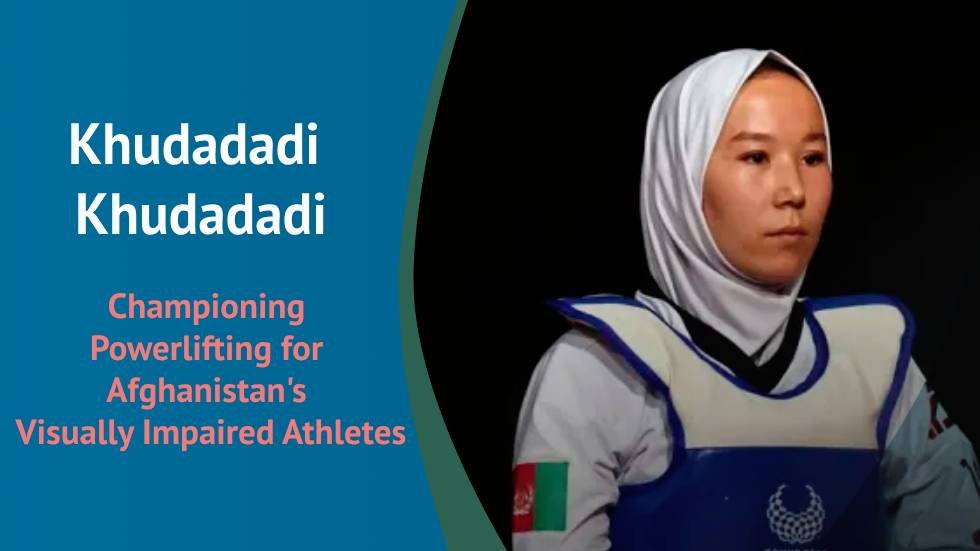
A Story of Courage, Determination, and the Power of Inclusive Sports
Para sports can change lives by giving athletes with disabilities a platform to demonstrate strength, discipline, and determination. For women and girls with disabilities, participation in sport can also challenge social expectations and create a stronger sense of confidence and independence. The story of Khudadadi Khudadadi, an Afghan para-sports athlete, represents these possibilities. Her journey in powerlifting highlights the determination required to pursue competitive sport while navigating the barriers that athletes with disabilities can face. Her story is about more than physical strength. It is about perseverance, opportunity, representation, and the importance of creating environments where people with disabilities can develop their abilities. For visually impaired girls in particular, access to education, sports, assistive technology, and supportive communities can help create pathways toward a more independent future. Support Battle For Blindness Foundation and help create meaningful opportunities for visually impaired girls through education, skills development, sports, and essential support.
Who Is Khudadadi Khudadadi?
Khudadadi Khudadadi's story is closely connected with the development of para sports and the representation of athletes with disabilities. As an Afghan athlete pursuing powerlifting, she entered a sporting environment that demands physical strength, discipline, technical preparation, and mental resilience. Powerlifting requires athletes to develop strength through structured training while maintaining proper technique and consistency. For a para athlete, that journey can involve additional adaptations and challenges. Khudadadi's pursuit of competitive sport demonstrates the importance of giving athletes with disabilities opportunities to participate, train, and compete.
The Journey Into Para Powerlifting
Entering para powerlifting requires commitment. Athletes must build strength progressively, learn technical movements, follow training programs, and prepare mentally for competition. For athletes with disabilities, finding suitable training facilities and coaches can sometimes be a significant challenge. Access to appropriate equipment, transportation, competition opportunities, and financial support can also influence an athlete's ability to continue developing. Khudadadi's journey illustrates how determination can help an athlete continue pursuing a demanding sporting discipline despite barriers. Her experience also highlights why adaptive sports matter. When sporting environments become more accessible, athletes with disabilities gain opportunities to discover their abilities and compete with confidence.
Breaking Barriers Through Strength
Powerlifting is a sport that places strength and technique at its center. Athletes must develop both physical capability and mental discipline to perform successfully. For Khudadadi, pursuing powerlifting represents more than athletic development. It also provides an opportunity to challenge perceptions about disability and demonstrate what athletes with disabilities can accomplish. Women with disabilities can face multiple layers of barriers when trying to participate in sport. Limited access to facilities, social expectations, financial challenges, and lack of awareness can make participation more difficult. When women athletes overcome these barriers, their achievements can encourage others to consider opportunities that may previously have seemed inaccessible. Your support can help create opportunities for girls facing similar barriers. Donate to Battle For Blindness Foundation and help support programs that provide visually impaired girls with education, training, resources, and opportunities for greater independence.
The Challenges Faced by Para Athletes
Behind every para-sports achievement is a significant amount of preparation and persistence. Athletes with disabilities can face challenges related to accessible training facilities, specialized coaching, equipment, transportation, travel, competition costs, and recovery. Financial limitations can make these challenges even more difficult. Training and competing at higher levels often require consistent access to equipment, coaching, travel, and competition opportunities. These barriers demonstrate why support systems are important. Athletes need more than motivation. They need environments where they can train safely, access appropriate resources, and continue developing their skills.
Why Women's Participation in Para Sports Matters
Khudadadi's story also highlights the importance of women's participation in para sports. Women and girls with disabilities can face additional social and cultural barriers to education, employment, physical activity, and community participation. Sport can provide a platform for confidence and visibility. It can help women demonstrate their abilities while encouraging younger girls to believe that they can pursue ambitious goals. Representation matters because children often need to see possibilities before they can imagine them for themselves. When a young visually impaired girl sees women with disabilities participating in sports, education, employment, or leadership, she can begin to see a wider range of possibilities for her own future.
The Importance of Inclusive Sports Opportunities
Inclusive sports should provide people with disabilities with meaningful opportunities to participate and develop their abilities. These opportunities can contribute to:
- Greater self-confidence
- Physical fitness and strength
- Discipline and consistency
- Communication and teamwork
- Resilience and mental strength
- Social participation
- Greater independence
For children and young people, these benefits can extend beyond sport and influence education, employment, relationships, and everyday life.
Dedicated sports training for visually impaired girls can help young people discover their interests while developing confidence and physical skills.
Supporting Visually Impaired Girls Beyond Sports
The story of Khudadadi Khudadadi provides an opportunity to think about the wider support that children and young people with disabilities need. Sport is one pathway toward confidence and independence, but it is only one part of the journey. Visually impaired girls may also need access to accessible education, assistive technology, scholarships, residential support, employment preparation, and skills development. Programs such as educational support can help students access learning opportunities, while scholarship support can help reduce financial barriers to education. Assistive technology initiatives can improve access to digital resources and learning, while employment support for visually impaired girls can help young women prepare for greater financial independence. For those preparing for competitive employment opportunities, government job examination preparation can provide an additional pathway toward professional development. Residential environments can also provide stability and access to essential support. Learn more about residential support for visually impaired girls. You can help make these opportunities possible. Make a donation to Battle For Blindness Foundation and support programs that can help visually impaired girls access education, sports, technology, and skills development.
Assistive Technology and Independence
Technology can play an important role in improving independence for people with visual impairments. Accessible technology can help students read digital information, communicate, study, access online resources, and develop professional skills. For students who do not have access to suitable devices, technology programs can help reduce barriers to education. Initiatives such as laptop distribution for blind students can help provide access to tools that support learning and digital participation. When assistive technology is combined with education and training, it can become an important part of a person's journey toward greater independence.
From Individual Achievement to Wider Change
The achievements of para athletes can create impact beyond the sporting arena. When athletes with disabilities receive visibility, they can challenge stereotypes and encourage society to recognize ability rather than focusing only on limitations. Stories of women participating in para sports can be especially powerful for younger girls who may have limited access to role models. Khudadadi's journey can therefore be viewed as part of a broader conversation about inclusion, accessibility, women's participation, and equal opportunity in sport. Organizations also have an important role in creating opportunities for visually impaired girls. You can learn more about Battle For Blindness Foundation's story and work and explore its mission and vision. The organization's team works toward supporting initiatives that can help visually impaired girls move toward greater opportunity and independence.
Practical Support Can Create Meaningful Change
Support does not always have to focus on one major intervention. Small and consistent forms of assistance can address practical barriers that affect everyday life. Battle For Blindness Foundation supports initiatives such as walking cane distribution, which can help improve mobility and independence. Braille learning and writing initiatives can support accessible education and literacy. Grocery support for blind individuals can help address essential everyday needs. Other initiatives, including a matrimony initiative for blind individuals, focus on broader social participation and personal development. These programs demonstrate how support can address both immediate needs and longer-term goals. If Khudadadi Khudadadi's story inspires you, turn that inspiration into action. Donate to Battle For Blindness Foundation and help create opportunities for visually impaired girls to learn, develop skills, participate, and move toward greater independence.
Why Opportunity Matters
Every child has potential, but potential needs an environment where it can grow. A visually impaired girl may have a strong interest in sport but lack access to training. Another may have academic potential but lack accessible learning resources. Someone else may have the ability to build a career but need assistive technology, skills training, or employment guidance. Providing the right support can help transform these possibilities into real opportunities. This is why supporting visually impaired girls is about more than meeting immediate needs. It is about helping create a foundation for confidence, education, skills, independence, and participation.
Conclusion
Khudadadi Khudadadi's journey in para sports highlights the strength that can emerge when determination meets opportunity. Her story demonstrates the importance of inclusive sports and the role that athletes with disabilities can play in challenging assumptions and inspiring others. It also reminds us that participation is only possible when athletes have access to appropriate resources, training, facilities, encouragement, and support. For visually impaired girls, similar opportunities can begin with education, sports, assistive technology, scholarships, residential support, and skills development. When donors, communities, organizations, and individuals work together, they can help create an environment where disability does not become an unnecessary barrier to opportunity. Support the journey. Donate to Battle For Blindness Foundation and help provide visually impaired girls with resources and opportunities that can support confidence, education, skills, and greater independence.
Frequently Asked Questions About Khudadadi Khudadadi and Para Sports
1. Who is Khudadadi Khudadadi?
Khudadadi Khudadadi is an Afghan para-sports athlete whose journey highlights determination, strength, inclusion, and the importance of opportunities for athletes with disabilities.
2. What is para powerlifting?
Para powerlifting is a competitive strength sport for athletes with physical disabilities. Competitors perform standardized lifts under rules designed for fair competition.
3. Why is Khudadadi Khudadadi's story important?
Her story highlights the determination required to pursue competitive sport while demonstrating the importance of representation and opportunities for women with disabilities.
4. What challenges do para athletes face?
Para athletes may face barriers involving specialized coaching, accessible facilities, equipment, transportation, travel, competition costs, and access to consistent training.
5. Why are women's para sports important?
Women's para sports provide women and girls with disabilities opportunities to participate, build confidence, demonstrate their abilities, and inspire future generations.
6. How can sports benefit visually impaired girls?
Sports can help visually impaired girls develop physical fitness, confidence, discipline, teamwork, resilience, communication skills, and greater independence.
7. What support do visually impaired girls need besides sports?
They may benefit from education, scholarships, assistive technology, residential support, vocational training, employment preparation, and other resources that encourage independence.
8. How can assistive technology help blind students?
Assistive technology can improve access to digital information, educational materials, communication tools, and other resources that support learning and independent participation.
9. How can I support visually impaired girls in India?
You can support visually impaired girls through donations, volunteering, awareness initiatives, education programs, sports training, assistive technology, scholarships, and employment support. You can also explore the foundation's campaigns and initiatives to learn about different areas where support can make a difference.
10. How can I donate to Battle For Blindness Foundation?
You can visit the Battle For Blindness Foundation donation page to learn how you can contribute toward programs supporting visually impaired girls.
Support the Future of Visually Impaired Girls
Every child deserves the opportunity to discover their strengths, develop their abilities, and build a future with confidence. Khudadadi Khudadadi's story demonstrates how determination can help athletes challenge barriers and pursue ambitious goals. For visually impaired girls, similar opportunities can begin with access to education, sports, technology, training, encouragement, and financial support. Your contribution can help organizations continue creating these opportunities while addressing practical barriers that affect visually impaired girls. Donate today to Battle For Blindness Foundation and help turn potential into opportunity. Real stories or case studies: Stories of Change
Support the Visually Impaired
People to make them Independent

Every little contribution you make will be a little flicker of light in the lives of visually impaired girls who dream of a brighter future.
Donate now

In case you have donated directly through UPI, Bank transfer, through cheque kindly WhatsApp your details on +91-8383933493

Every Contribution will be utilized with 100% transparency. The beneficiary photographs will be sent to you with an 80G Tax Benefit Certificate

Battle For Blindness Foundation committed to 93% go directly towards projects that directly benefit the Abandoned blind girls

