Running Blind: The Inspiring Journey of Marla Runyan – Defying Limits in Track, Field, and Marathon Running
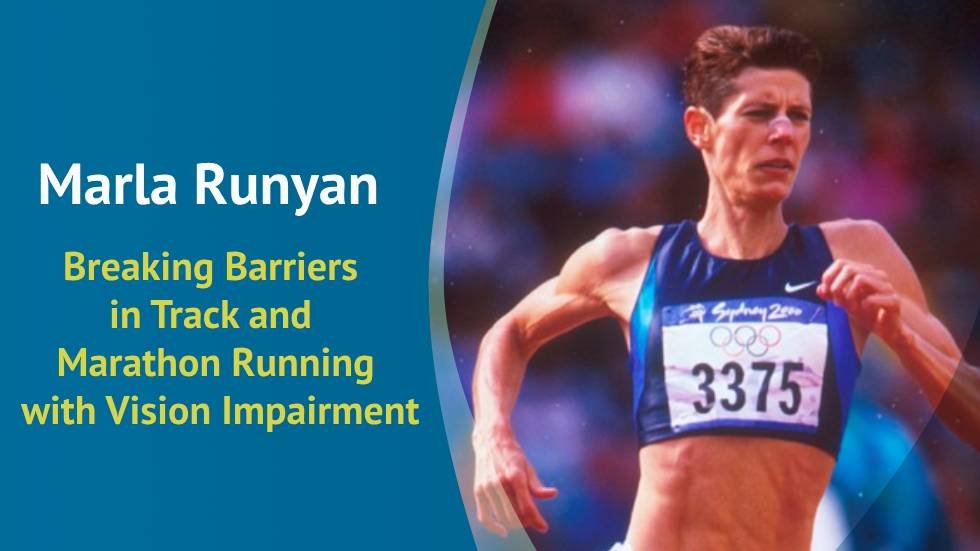
How Marla Runyan Turned Vision Loss Into a Journey of Sporting Excellence
Running at an elite level requires discipline, physical strength, confidence, and the ability to respond to challenges. For Marla Runyan, it also meant competing while living with progressive vision loss. Born in Santa Maria, California, in 1969, Runyan developed Stargardt disease during childhood, a condition that progressively affected her central vision. As her eyesight changed, activities that depended heavily on seeing moving objects became increasingly difficult. Yet running eventually became an area where she discovered that her visual impairment did not have to define her potential. Her story became extraordinary not simply because she competed as a visually impaired athlete, but because she succeeded across both Paralympic and Olympic competition. At the 1992 Barcelona Paralympic Games, she won gold medals in the 100m, 200m, 400m, and long jump. At the 1996 Atlanta Paralympics, she added gold in the pentathlon and silver in the shot put. Then came one of the defining moments of her career. In 2000, Marla Runyan qualified for the United States Olympic team in the 1,500 metres. She became the first legally blind athlete to compete at the Olympic Games, racing alongside fully sighted athletes in Sydney. She reached the Olympic final and finished eighth. Her journey demonstrates what can happen when talent is supported by determination, training, opportunity, and an environment that allows a person to compete at their full potential.
Marla Runyan's Early Life With Vision Loss
Marla Runyan began experiencing vision problems as a child. Her progressive retinal condition affected her central vision, making it increasingly difficult to see details, read, recognise faces, and participate in activities that required tracking objects visually. As a young athlete, she participated in activities including gymnastics and soccer. Eventually, her declining vision made it difficult to see the ball during sports such as soccer. Running offered a different possibility. Instead of depending on the same visual tracking required in ball sports, she found an activity in which she could use her physical abilities and competitive instincts. This transition is an important part of her story. Vision loss changed the way Runyan approached sport, but it did not eliminate her desire to compete. For visually impaired children today, access to sports can provide similar opportunities to discover strengths, build confidence, develop physical skills, and become part of a team or sporting community.
Discovering Her Potential Through Athletics
Runyan's athletic ability extended beyond one event. During her college years at San Diego State University, she competed in a range of events, including the heptathlon and individual track and field disciplines. Her versatility demonstrated that visual impairment did not prevent her from developing into a highly competitive athlete. Her progress also shows why opportunities matter. A child cannot discover their sporting potential without access to appropriate training, coaching, facilities, equipment, and encouragement. For visually impaired children, these requirements may also include accessibility adaptations and specialised guidance. Sports can offer benefits beyond competition. Regular physical activity can help children develop:
- Physical fitness
- Coordination
- Discipline
- Confidence
- Teamwork
- Communication
- Goal-setting skills
- Leadership
- Independence
When children are given opportunities to participate rather than being excluded because of disability, they can discover abilities that may otherwise remain hidden.
Marla Runyan at the Paralympic Games
Runyan made her Paralympic debut at the 1992 Barcelona Games. She won four gold medals, taking first place in the women's 100m, 200m, 400m, and long jump. She also competed in cycling during the Games. Four years later in Atlanta, she added another gold medal in the pentathlon and a silver medal in shot put. Her career total reached six Paralympic medals, including five golds. These achievements established her as a major figure in Paralympic athletics. But Runyan wanted to test herself beyond disability-specific competition. Her ambition was not limited to winning Paralympic medals. She wanted to compete at the highest level available to her. That determination eventually led her toward mainstream elite athletics.
Give Visually Impaired Children a Chance to Discover Their Talent
Marla Runyan's story began with an opportunity to participate. Many visually impaired children also have abilities and ambitions that need the right environment to develop. Your support can help Battle for Blind Foundation provide opportunities related to sports training, education, assistive technology, rehabilitation, mobility skills, and independent living for visually impaired children. A donation can help create access to experiences that build confidence, discipline, and independence. 👉 Donate Today and Help a Visually Impaired Child Discover Their Potential
Winning the 1500 Metres at the 1999 Pan American Games
Runyan's breakthrough in mainstream international competition came in 1999. At the Pan American Games in Winnipeg, she won the women's 1,500-metre race. Her victory demonstrated that she could compete successfully against elite athletes outside the Paralympic system. The achievement was significant for another reason. Runyan had a clear goal of reaching the Olympic Games, and her performance strengthened her belief that the goal was possible. Her visual impairment remained part of her daily life. She could not rely on normal visual detail to read signs, recognise faces, or see race information clearly. During races, however, her remaining peripheral vision allowed her to compete effectively. Her approach reflected an important principle for athletes with disabilities: the goal is not necessarily to ignore a disability, but to understand one's abilities, develop effective strategies, and receive the support necessary to perform.
The Historic Road to the 2000 Olympics
In 2000, Runyan faced the challenge of qualifying for the U.S. Olympic team in the 1,500 metres. Her Olympic qualification was historic. She became the first legally blind athlete to qualify for a U.S. Olympic team and later competed in the Sydney Olympic Games. The Olympic trials were not easy. Runyan had also been dealing with a serious leg injury that had interrupted her training. Despite the setback, she competed in the Olympic trials and finished third in the 1,500-metre final, securing her place on the U.S. team. Her achievement was therefore about more than visual impairment. It reflected the combination of athletic preparation, resilience, recovery, and determination required to reach the Olympic stage.
Competing at the Sydney 2000 Olympic Games
At the Sydney Olympics, Runyan competed in the women's 1,500 metres. She advanced through the rounds and reached the final, where she finished eighth. Her participation made history as she became the first legally blind athlete to compete in the Olympic Games. Her achievement challenged assumptions about what visually impaired athletes could accomplish. Runyan's experience also demonstrated that accessibility and opportunity can change expectations. Her vision loss affected how she experienced the world, but it did not prevent her from competing against some of the world's best runners. For visually impaired young people, stories like hers can provide an important message: disability does not automatically determine the limits of a person's ambitions.
From Track to Longer Distances
Runyan continued developing as a distance runner after the 2000 Olympics. She won three consecutive U.S. outdoor championships in the 5,000 metres from 2001 through 2003 and established herself as an elite distance runner. Her personal best in the 5,000 metres was 14:59.20, recorded in 2004. Her career gradually expanded from middle-distance track events into road racing and marathon competition. This transition required a different type of preparation. Marathon running demands endurance, pacing, physical resilience, and the ability to manage effort over a much longer distance. For Runyan, moving into longer races created another opportunity to test her capabilities.
The Beginning of Her Marathon Journey
In 2002, Runyan entered the New York City Marathon for the first time. She had already established herself as a world-class track athlete, but the marathon presented a new challenge. The distance required her to adapt her training and racing strategy to 26.2 miles. Her marathon debut followed preparation that included running part of the New York course. Runyan ultimately finished fourth in the 2002 New York City Marathon and was the top American woman, recording 2:27:10. Her marathon performance reinforced the same lesson that had defined her earlier career: when an athlete has the opportunity, preparation, and determination to compete, a visual impairment does not have to eliminate the possibility of excellence.
From Elite Track Racing to Marathon Running
Marla Runyan's transition from track events to marathon running showed another dimension of her athletic ability. Track races demanded speed, tactical awareness, and precise pacing, while marathon running required sustained endurance and careful energy management. Her successful marathon debut demonstrated that her ambitions extended beyond the events in which she had already achieved international recognition. Runyan continued competing at a high level and eventually represented the United States at the 2004 Athens Olympic Games in the marathon. She finished 16th with a time of 2:32:54. This made her the first American woman to compete in both the Olympic 1,500 metres and Olympic marathon. Her marathon career became another example of how athletes can continue redefining their goals rather than allowing one challenge to determine what they can achieve.
Overcoming the Challenges of Competing With Vision Loss
Elite competition requires athletes to process information quickly. For a visually impaired runner, certain aspects of racing can require additional adaptation. Runyan's visual impairment meant that she could not rely on the same level of visual information available to fully sighted competitors. Yet she developed strategies that allowed her to compete at an exceptionally high level. Her experience highlights an important distinction: accessibility does not mean lowering expectations. With appropriate training and support, visually impaired athletes can pursue demanding goals and compete according to their abilities. For young athletes, this can be a powerful lesson. Instead of focusing only on what they cannot see, they can learn to identify what they can do, what skills they can develop, and what support can help them move forward.
The Importance of Sports Opportunities for Visually Impaired Children
Marla Runyan's achievements did not happen simply because she was talented. She also had opportunities to participate in sport, receive training, compete, and develop her abilities. Many visually impaired children need similar opportunities today. Sports programmes can help children develop:
- Physical strength and endurance
- Balance and coordination
- Confidence
- Discipline
- Teamwork
- Communication
- Goal-setting
- Leadership
- Independence
For some children, sport can become more than a recreational activity. It can provide a way to discover abilities, make friends, develop confidence, and imagine new possibilities for the future.
Your Donation Can Help a Visually Impaired Child Participate in Sports
A child should not miss the opportunity to discover their sporting potential simply because they cannot afford training, equipment, or appropriate support. Your donation can help Battle for Blind Foundation provide visually impaired children with access to sports training and other developmental programmes alongside education, rehabilitation, assistive technology, and independent living support. Your contribution can help turn participation into confidence and opportunity. 👉 Donate Today to Help a Visually Impaired Child Access Sports and Training Opportunities
Building Confidence Through Competitive Sport
Competitive sport can teach lessons that extend far beyond the playing field. An athlete learns to:
- Set realistic goals.
- Follow a training routine.
- Handle setbacks.
- Accept constructive feedback.
- Work consistently.
- Manage pressure.
- Celebrate progress.
- Continue after disappointment.
These skills can be valuable in education, employment, and everyday life.
For visually impaired children, participation in sport can also provide an environment where they are recognised for their abilities rather than defined by their disability.
Marla Runyan as an Inspiration for Future Athletes
Runyan's career has become an important example of achievement in both Paralympic and Olympic sport. Her journey from a child experiencing progressive vision loss to an athlete competing on the world's biggest sporting stages demonstrates the importance of perseverance and opportunity. She did not allow her visual impairment to become the only story people told about her. Instead, her career became associated with:
- Athletic excellence
- Determination
- Adaptability
- Competitive courage
- Independence
- Resilience
Her example can be particularly meaningful for young visually impaired athletes who may still be discovering their own abilities.
Why Role Models Matter for Visually Impaired Children
Children often benefit from seeing people who have achieved goals that may initially appear difficult or impossible. For a visually impaired child, learning about successful blind and visually impaired athletes can help challenge limiting assumptions. Role models can demonstrate that people with vision loss can become:
- Athletes
- Students
- Professionals
- Leaders
- Coaches
- Entrepreneurs
- Advocates
- Community contributors
The purpose is not to suggest that every child must become an elite athlete. Instead, stories such as Runyan's can encourage children to believe that they have the right to set ambitious goals.
The Connection Between Education and Sports
Sports and education can complement each other. A visually impaired child who participates in sports can develop skills that also support academic and personal growth. For example, training can encourage:
- Discipline: Following a regular practice schedule can reinforce time-management skills.
- Confidence: Successfully learning a new physical skill can strengthen a child's belief in their abilities.
- Problem-solving: Athletes often need to adapt techniques and strategies to different situations.
- Communication: Team sports can encourage communication with coaches and other athletes.
- Independence: Travelling to training, managing equipment, and following routines can help develop practical skills.
This is why inclusive sports should be considered part of a broader approach to empowering visually impaired children.
Making Sports More Accessible
Inclusive sports programmes should be designed around the needs of the athletes rather than expecting every participant to adapt without support. Depending on the activity, accessibility can include:
- Verbal instructions.
- Audible signals.
- Tactile markers.
- Adapted equipment.
- Clear boundaries.
- Orientation before training.
- Individual coaching.
- Accessible transportation.
- Safe and consistent training environments.
The appropriate adaptations depend on the sport and the athlete.
A good programme should also allow children to develop skills progressively, beginning with fundamental movements and gradually introducing more advanced techniques.
The Role of Coaches in Supporting Blind Athletes
Coaches can have a significant influence on an athlete's development. For visually impaired athletes, coaches may need to adapt how they communicate instructions. Instead of relying exclusively on visual demonstrations, coaches can use:
- Clear verbal instructions.
- Step-by-step explanations.
- Physical demonstrations where appropriate and consented to.
- Tactile guidance when suitable.
- Consistent terminology.
- Audio signals.
- Individual feedback.
Coaches should also understand that visual impairment varies significantly between individuals.
A training approach that works for one athlete may not work for another.
Creating Opportunities, Not Just Competition
The purpose of inclusive sports should not be limited to producing elite athletes. Most children who participate in sports will not become Olympians or Paralympians, and that is perfectly acceptable. The value of sports also lies in helping children:
- Stay physically active.
- Build friendships.
- Develop confidence.
- Learn teamwork.
- Discover interests.
- Improve coordination.
- Become more independent.
For a visually impaired child, simply having a place where they can participate equally can be a meaningful experience.
How Donor Support Can Expand Sports Opportunities
Sports programmes require more than a playing area. Depending on the activity, children may need:
- Sports equipment.
- Training facilities.
- Qualified coaches.
- Accessible transportation.
- Appropriate clothing and gear.
- Competition opportunities.
- Rehabilitation support.
- Physical fitness guidance.
- Ongoing supervision.
For families facing financial difficulties, these additional costs can become a barrier to participation.
Donor support can help organisations create programmes where visually impaired children have opportunities to participate without being excluded because of financial limitations.
Help Give a Child the Opportunity to Compete
Marla Runyan's journey reminds us that talent needs opportunity. A visually impaired child may have a passion for running, swimming, athletics, cricket, or another sport but may lack access to training or equipment. Your donation can help Battle for Blind Foundation create opportunities for visually impaired children to participate in sports while also supporting education, rehabilitation, assistive technology, and independent living programmes. 👉 Donate Now and Help a Visually Impaired Child Discover What They Can Achieve
Lessons From Marla Runyan's Journey
Marla Runyan's story offers several lessons that extend beyond athletics.
Vision Loss Does Not Define Potential
A visual impairment can change how a person performs a task, but it does not automatically determine their ambitions or abilities.
Adaptation Can Create New Possibilities
When one approach becomes difficult, finding another way can open new opportunities.
Consistent Training Matters
Elite performance develops through preparation, repetition, discipline, and long-term commitment.
Support Makes a Difference
Athletes need coaches, training environments, resources, and opportunities to develop.
Success Can Take Different Forms
For one person, success may mean winning a medal. For another, it may mean completing their first race, joining a sports programme, or becoming confident enough to participate with others. Every achievement can have value.
Encouraging the Next Generation of Visually Impaired Athletes
The next generation of visually impaired athletes needs opportunities to begin. A child does not have to know at an early age that they want to become an Olympian. They simply need the opportunity to try. A first training session can lead to a new interest. A new interest can become a regular activity. Regular participation can build confidence. Confidence can encourage a child to set bigger goals. This progression is why accessible sports programmes matter. By providing children with opportunities to participate, organisations, families, coaches, and donors can help create an environment where potential has room to grow.
Frequently Asked Questions (FAQs)
1. Who is Marla Runyan?
Marla Runyan is an American athlete who competed at elite levels in both Paralympic and Olympic competition. She became known for her achievements in track and field and later competed in marathon running. She is also recognised as the first legally blind athlete to compete in the Olympic Games.
2. What happened to Marla Runyan's eyesight?
Marla Runyan developed Stargardt disease during childhood, a progressive eye condition that affected her central vision. Despite her changing vision, she continued developing her athletic abilities and eventually competed at the highest levels of international sport.
3. What sports did Marla Runyan compete in?
Runyan competed in several track and field events, including sprinting, middle-distance running, long-distance running, long jump, shot put, and the pentathlon. She later expanded her career into road racing and marathon running.
4. How many Paralympic medals did Marla Runyan win?
Marla Runyan won six Paralympic medals during her career, including five gold medals and one silver medal. Her first Paralympic appearance was at the 1992 Barcelona Games, where she won four gold medals.
5. Did Marla Runyan compete in the Olympics?
Yes. Marla Runyan competed in the 1,500 metres at the 2000 Sydney Olympic Games and reached the final, finishing eighth. Her participation was historic because she became the first legally blind athlete to compete in the Olympic Games.
6. Did Marla Runyan run marathons?
Yes. Runyan successfully transitioned from track and field into longer-distance road racing and marathon competition. She competed in the New York City Marathon and later represented the United States in the marathon at the 2004 Athens Olympic Games.
7. What can visually impaired children learn from Marla Runyan's story?
Her journey demonstrates the importance of opportunity, training, resilience, confidence, and support. It can encourage visually impaired children to explore their interests, develop their abilities, set goals, and understand that vision loss does not automatically determine what they can achieve.
8. Why are sports important for visually impaired children?
Sports can help visually impaired children develop physical fitness, coordination, confidence, teamwork, discipline, communication, leadership, and independence. Inclusive sports can also provide opportunities to build friendships and participate meaningfully in the community.
9. How can sports programmes be made accessible for visually impaired athletes?
Depending on the sport and individual needs, programmes can use verbal instructions, audible signals, tactile markers, adapted equipment, clear boundaries, orientation sessions, individual coaching, accessible transportation, and consistent training environments.
10. How can I support sports and education for visually impaired children?
You can support organisations such as Battle for Blind Foundation through donations, volunteering, sponsorship, CSR partnerships, and other forms of assistance. Your support can contribute to opportunities involving sports training, education, Braille literacy, assistive technology, rehabilitation, mobility training, and independent living skills.
Marla Runyan's Legacy: Turning Opportunity Into Achievement
Marla Runyan's journey is more than a story about medals, Olympic qualification, or marathon performances. It is a story about what can happen when a talented person receives the opportunity to develop their abilities despite significant barriers. Her career moved from childhood vision loss to Paralympic success, mainstream international competition, Olympic qualification, and marathon running. Along the way, she demonstrated that a disability does not have to be the final word on a person's ambitions. For visually impaired children, the lesson is especially meaningful. A child who is given access to education, sports, assistive technology, rehabilitation, mobility training, and encouragement has more opportunities to discover what they are capable of achieving. Not every child will become an Olympic athlete, and they do not need to. The real goal is to give every child the opportunity to explore their abilities and build a future based on their interests and potential.
Help Create Opportunities for the Next Generation
Marla Runyan had the opportunity to train, compete, and pursue ambitious goals. Today, many visually impaired children need access to similar opportunities to discover their own strengths. Your donation can help Battle for Blind Foundation support visually impaired children through education, sports training, assistive technology, rehabilitation, mobility training, healthcare, independent living programmes, and other developmental opportunities. 👉 Donate Today and Help Empower a Visually Impaired Child
Support Visually Impaired Children
Every child deserves the opportunity to learn, participate, develop their abilities, and dream about their future. Marla Runyan's story reminds us that opportunity can change the direction of a person's life. By supporting visually impaired children today, donors can help create opportunities for the next generation to discover their own strengths. ❤️ Donate Now and Help Build a More Inclusive Future for Visually Impaired Children
Support the Visually Impaired
People to make them Independent

Every little contribution you make will be a little flicker of light in the lives of visually impaired girls who dream of a brighter future.
Donate now

In case you have donated directly through UPI, Bank transfer, through cheque kindly WhatsApp your details on +91-8383933493

Every Contribution will be utilized with 100% transparency. The beneficiary photographs will be sent to you with an 80G Tax Benefit Certificate

Battle For Blindness Foundation committed to 93% go directly towards projects that directly benefit the Abandoned blind girls

