Libby Clegg’s Journey: Breaking Barriers in Track and Field with Paralympic Gold
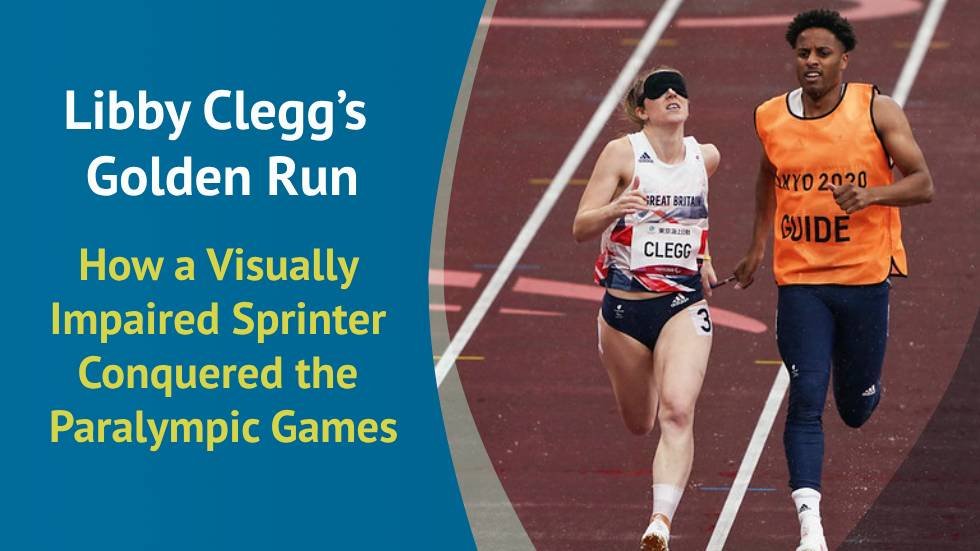
From Paralympic Gold to a Lasting Legacy
Libby Clegg's success at the Rio 2016 Paralympic Games was a major milestone, but her career was shaped by much more than medal-winning performances. Her journey demonstrates how visually impaired athletes can continue developing when they have access to appropriate coaching, guide support, training, competition, and encouragement. Her story also shows that elite sport involves both achievement and setbacks. Injuries, changes in training, personal responsibilities, and the pressure of international competition can all affect an athlete's journey.
Life After Rio 2016
Following her success at Rio 2016, Clegg continued to compete at an elite level. Her achievements had already established her as one of Britain's most successful visually impaired sprinters. However, maintaining elite performance required continued physical preparation and adaptation. For any athlete, success at one major competition does not guarantee success at the next. Each season brings new challenges. For a visually impaired athlete, those challenges can include maintaining effective communication with a guide, adapting training environments, managing injuries, and maintaining confidence while competing against experienced international athletes. Clegg's continued involvement in athletics demonstrated her commitment to the sport and her willingness to keep pursuing new goals.
Preparing for Tokyo 2020
The Tokyo 2020 Paralympic Games presented another important chapter in Clegg's career. The Games were postponed because of the COVID-19 pandemic and eventually took place in 2021. The delay created additional uncertainty for athletes who had spent years preparing for the competition. Clegg returned to the Paralympic stage and competed in the women's 200 metres as well as the mixed 4×100m universal relay. Her participation demonstrated her continuing commitment to elite sport while also reflecting the changing circumstances athletes faced during the pandemic. For athletes with disabilities, maintaining training during periods of disruption can be particularly challenging when access to specialised facilities, coaches, rehabilitation services, and competition opportunities is affected.
Balancing Elite Sport and Motherhood
One of the most meaningful parts of Clegg's later journey was balancing competitive athletics with motherhood. Becoming a parent can bring significant changes to an athlete's routine, priorities, recovery, and preparation. Returning to elite competition after becoming a mother requires physical preparation as well as careful management of time and responsibilities. Clegg's experience demonstrates that athletes can continue pursuing ambitious goals while also entering new stages of personal life. Her story can be particularly encouraging for women with disabilities who may wonder whether parenthood and professional or sporting ambitions can coexist.
Resilience Through Change
Resilience is not simply about winning. For Clegg, resilience involved continuing to train and compete while managing changes in her vision, the demands of elite sport, injuries, competition pressures, and major personal milestones. Her career illustrates several important forms of resilience:
- Adapting to progressive vision loss
- Continuing athletic development
- Building trust with guide runners
- Recovering from setbacks
- Returning to competition
- Managing changing personal responsibilities
- Continuing to pursue ambitious goals
These lessons extend well beyond athletics.
Why Sports Matter for Visually Impaired Children
Clegg's journey highlights why accessible sports opportunities are important for young people with visual impairments. Sports can provide children with opportunities to develop:
- Physical fitness
- Coordination
- Confidence
- Discipline
- Teamwork
- Communication
- Leadership
- Goal-setting
- Independence
A child does not need to become a Paralympic athlete for sport to have value.
Simply participating can help a child discover new abilities and become more comfortable working with others.
For some children, sports may also provide their first opportunity to experience structured competition and personal achievement.
❤️ Help a Visually Impaired Child Discover the Power of Sport
Libby Clegg had access to coaching, training, guide support, and competitive opportunities that helped her develop into a Paralympic champion. Many visually impaired children do not have the same access. Your donation can help Battle for Blind Foundation create opportunities through sports training, education, rehabilitation, assistive technology, mobility support, and independent living programmes. Your contribution can help give a child the resources and encouragement needed to participate, learn, and grow with confidence. 👉 Donate Today and Help Support Opportunities for Visually Impaired Children
The Role of Coaches in Developing Visually Impaired Athletes
Coaches have an important role in helping visually impaired athletes reach their potential. A coach working with a visually impaired athlete may need to adapt communication and training methods. Instead of relying only on visual demonstrations, coaches can use:
- Detailed verbal instructions
- Step-by-step explanations
- Demonstrations using appropriate physical guidance
- Consistent terminology
- Audible signals
- Repetition
- Individual feedback
Coaches should also understand that visual impairment differs from person to person.
Some athletes may have usable peripheral vision, while others may have little or no functional vision. Training strategies should therefore be based on the individual athlete's abilities and needs.
Creating a Safe Training Environment
Safety is an important consideration in athletics. A visually impaired athlete needs to understand the training environment and be able to move through it confidently. Sports organisations can help by:
- Keeping training areas organised
- Maintaining consistent layouts
- Clearly communicating changes
- Using appropriate verbal cues
- Providing guide support where required
- Ensuring equipment is positioned safely
- Giving athletes time to become familiar with new facilities
These practices can help athletes focus more effectively on training and performance.
The Importance of Accessible Sports Equipment
Equipment can also influence participation. Depending on the sport, visually impaired athletes may need adapted equipment or additional support. For athletics, accessibility may involve:
- Guide-running systems
- Tether equipment
- Audible signals
- Appropriate training surfaces
- Accessible communication systems
- Safety equipment
The specific requirements depend on the athlete and event.
Providing suitable equipment can remove barriers that might otherwise prevent a child from participating.
Sport as a Pathway to Confidence
Confidence is often developed through experience. A child who successfully completes a new physical activity may become more willing to try another. A child who learns to work with a coach can become more comfortable communicating their needs. A child who participates in a competition can learn how to manage both success and disappointment. These experiences can contribute to confidence outside sport as well. A visually impaired child who develops self-confidence through athletics may also become more willing to participate in classroom activities, social events, or community programmes.
Connecting Sports With Education
Sports and education can work together to support the overall development of visually impaired children. Education can provide academic knowledge and career preparation. Sports can support physical fitness, teamwork, communication, discipline, and confidence. Other programmes can strengthen these areas further through:
- Braille literacy
- Assistive technology
- Orientation and mobility training
- Independent living skills
- Rehabilitation
- Vocational preparation
A comprehensive approach can help children prepare for different aspects of adult life.
Why Early Opportunities Matter
Children develop skills progressively. When visually impaired children have access to appropriate opportunities at an early age, they can begin learning important skills before they face more complex challenges later. Early participation in sports can help children become familiar with:
- Following instructions
- Moving safely
- Working with coaches
- Communicating with peers
- Managing routines
- Setting goals
- Handling competition
These skills can contribute to greater independence as children grow.
Breaking Stereotypes About Visual Impairment
Stories like Clegg's can challenge assumptions about what visually impaired people can accomplish. A person with a visual impairment may be an athlete, student, professional, leader, parent, entrepreneur, artist, or community volunteer. Disability does not define a person's entire identity. Clegg's athletic career demonstrates this clearly. She became known not simply as a visually impaired athlete, but as a highly accomplished sprinter who competed successfully on the international stage.
The Importance of Representation
Representation can influence how young people see themselves. When visually impaired children see athletes such as Libby Clegg competing at elite levels, they can see an example of someone who has faced challenges similar to their own while pursuing ambitious goals. This does not mean every child needs to follow the same path. Instead, representation can encourage children to ask: “What could I achieve if I had the opportunity and support?” That question can be an important starting point for confidence and ambition.
How Donors Can Help Create Opportunities
Supporting visually impaired children requires more than providing financial assistance for one activity. Children may need a combination of services and resources, including:
- Education
- Braille materials
- Sports training
- Assistive technology
- Rehabilitation
- Mobility training
- Healthcare
- Safe accommodation
- Independent living programmes
- Vocational support
Donor contributions can help organisations provide these resources and create programmes that address the broader needs of visually impaired children.
❤️ Your Support Can Help Build a Child's Future
Libby Clegg's success was supported by years of training, guidance, opportunity, and determination. Every visually impaired child deserves a chance to discover their own strengths. Battle for Blind Foundation works to create opportunities for visually impaired children through education, sports, rehabilitation, assistive technology, mobility training, healthcare, and independent living support. Your donation can help provide the foundation a child needs to learn, participate, develop confidence, and prepare for a more independent future. 👉 Donate Now and Help Empower a Visually Impaired Child
What Libby Clegg's Journey Teaches Us
Libby Clegg's career offers several lessons that extend beyond athletics.
Vision Loss Does Not Define Potential
A visual impairment can create challenges, but it does not automatically determine a person's abilities or ambitions.
Adaptation Is a Strength
Learning new ways to train, compete, communicate, and navigate can help people continue pursuing their goals.
Partnerships Can Create Possibilities
The relationship between Clegg and her guide runners demonstrates how trust and collaboration can support competitive success.
Consistency Matters
Elite performance requires long-term preparation, commitment, and the willingness to continue after setbacks.
Opportunities Can Change Lives
A child who receives the opportunity to participate in sport may discover abilities, confidence, friendships, and ambitions that would otherwise remain unexplored.
Libby Clegg's Impact Beyond the Track
Libby Clegg's influence extends beyond her medals and sprinting achievements. Her career has helped demonstrate the potential of visually impaired athletes and the importance of creating inclusive sporting environments. Her journey from a young girl experiencing progressive vision loss to a Paralympic champion shows that disability does not have to prevent a person from pursuing ambitious goals. Her story also highlights the importance of the people and systems around an athlete. Coaches, guide runners, family members, medical professionals, sporting organisations, and supporters can all contribute to an athlete's development.
The Power of a Strong Guide-Athlete Partnership
One of the most distinctive aspects of Libby Clegg's sprinting career was her partnership with guide runners. For a visually impaired sprinter, the relationship with a guide can be critical. Sprinting takes place at high speed, leaving very little time for communication or correction. The athlete and guide need to establish a strong understanding of each other's movements and timing. A successful partnership can involve:
- Regular joint training
- Clear communication
- Consistent running rhythm
- Mutual trust
- Understanding of race strategy
- Strong coordination
- Quick responses during competition
Clegg's success demonstrates how the right partnership can help remove barriers and allow a visually impaired athlete to compete at an elite level.
Why Trust Matters in Visually Impaired Sports
Trust is especially important when an athlete cannot rely fully on visual information. A visually impaired runner must be able to trust their guide's communication while maintaining their own pace, technique, and competitive focus. This relationship develops through repeated training and shared experience. The lesson extends beyond athletics. Visually impaired children also benefit from supportive relationships with teachers, parents, coaches, mentors, and peers. When children know that people around them believe in their abilities, they may become more confident in trying new activities and expressing their needs.
Overcoming Barriers Through Accessibility
Accessibility is an important part of creating opportunities for people with visual impairments. A sports programme may technically be open to everyone, but participation can still be difficult if the environment is not designed with accessibility in mind. Common barriers can include:
- Lack of trained coaches
- Limited access to specialised equipment
- Inaccessible transportation
- Unfamiliar training environments
- Lack of guide support
- Insufficient information in accessible formats
- Financial limitations
Addressing these barriers can help transform an invitation to participate into a genuine opportunity to participate.
Making Athletics More Inclusive
Inclusive athletics should allow visually impaired athletes to train and compete safely while developing their skills to the fullest extent possible. Sports organisations can support inclusion by providing:
- Accessible training facilities
- Qualified and disability-aware coaches
- Guide runners when required
- Clear verbal instructions
- Accessible competition information
- Appropriate safety procedures
- Adapted training techniques
- Opportunities for regular competition
These measures can help athletes focus on improving their performance rather than constantly dealing with avoidable accessibility barriers.
Helping Young Girls With Visual Impairments Participate in Sports
For visually impaired girls, access to sports can provide benefits that extend beyond physical activity. Participation can help develop confidence, leadership, communication, discipline, and a sense of belonging. Sports can also give girls opportunities to challenge social expectations and demonstrate their abilities. A girl who learns to compete on a sports field may become more confident about speaking in class, travelling independently, participating in community activities, or pursuing future career opportunities. This is why sports programmes for visually impaired girls can be an important part of broader empowerment efforts.
Support Sports Opportunities for Visually Impaired Girls
Libby Clegg's journey demonstrates how the right opportunities can help a visually impaired girl develop into an international champion. Many girls with visual impairments still face barriers to education, sports, technology, mobility, and independent living. Your donation to Battle for Blind Foundation can help create opportunities for visually impaired girls through sports training, education, rehabilitation, assistive technology, mobility support, and independent living programmes. 👉 Donate Today and Help a Visually Impaired Girl Build Confidence Through Opportunity
Sports and Personal Development
The benefits of sports are not limited to physical health. For visually impaired children, sports can create opportunities to develop practical and social skills that can support everyday life. Through regular participation, children can learn to:
- Follow structured routines
- Communicate with others
- Work as part of a team
- Manage success and disappointment
- Set realistic goals
- Take responsibility for equipment
- Accept feedback
- Build confidence
These skills can support children in school, social environments, and future workplaces.
The Role of Education in Empowering Visually Impaired Children
Sports are only one part of a child's development. Education provides the knowledge and skills needed to prepare for future academic and professional opportunities. For visually impaired students, education may require additional resources such as Braille materials, screen readers, accessible digital content, assistive devices, and specialised teaching support. When sports and education are combined with rehabilitation and independent living training, children can receive more comprehensive support. This approach can help them develop academically, physically, socially, and practically.
Assistive Technology and Independence
Technology has transformed many aspects of life for people with visual impairments. Tools such as screen readers, magnification software, accessible smartphones, Braille displays, and voice-controlled applications can help people access information and communicate independently. For visually impaired children, access to appropriate assistive technology can support education and daily activities. However, technology is most effective when children also receive training on how to use it confidently. Providing a device is only the first step. Teaching a child how to use that device can help turn technology into a practical tool for independence.
Mobility Training and Confidence
Independent mobility can have a significant impact on a visually impaired person's confidence. Orientation and mobility training can help individuals learn how to move safely through different environments and use techniques that support independent travel. For children, developing these skills gradually can help them become more confident at school, at home, during sports activities, and in the community. Mobility skills can also make it easier for children to participate in sports programmes and other activities outside their homes.
Why Donor Support Matters
Creating an inclusive environment requires resources. Sports programmes may need coaches, equipment, transportation, facilities, guide support, and training materials. Education programmes may require Braille books, assistive technology, accessible learning resources, and specialised instruction. Independent living programmes may require mobility training, rehabilitation, and practical skills development. For families with limited financial resources, meeting all these needs can be difficult. Donations can help organisations provide programmes and resources that families may otherwise struggle to access.
From One Athlete's Story to a Bigger Mission
Libby Clegg's story is inspiring because it shows what one person can accomplish when determination is combined with opportunity and support. But the larger goal should be to make opportunities available to many more visually impaired children. Not every child will become a Paralympic champion, and they do not need to. Every child deserves the chance to discover their interests, develop their abilities, build confidence, and prepare for a meaningful future.
Creating Opportunities Before Limiting Potential
Sometimes, people make assumptions about what a child with a visual impairment can achieve before giving that child the chance to try. Inclusive programmes take a different approach. They provide opportunities first and allow the child's interests and abilities to develop naturally. A child who receives access to athletics may discover a passion for running. A child who receives access to technology may discover an interest in computers. A child who receives appropriate education and vocational guidance may discover a future career path. Opportunity creates the space for potential to become visible.
Building Confidence Through Small Achievements
Empowerment does not always begin with a major achievement. It can begin with small milestones. Learning to complete a training exercise. Travelling independently to a familiar location. Reading a Braille page. Using an assistive device. Participating in a team activity. Speaking confidently in front of others. Each achievement can contribute to a child's growing sense of independence. Over time, these small successes can create the confidence needed to pursue larger goals.
What Libby Clegg's Journey Means for the Future
Libby Clegg's career demonstrates that visually impaired athletes can compete, achieve, lead, and inspire. Her success at the Paralympic Games has helped challenge outdated assumptions about disability and athletic performance. But her greatest legacy may be the opportunities her story represents for future generations. A young visually impaired girl reading about Clegg's journey may begin to imagine herself as an athlete. Another child may discover an interest in sport after seeing a visually impaired athlete compete. Someone else may simply gain confidence from knowing that disability does not automatically determine the boundaries of their future.
A Future Where Every Child Gets a Chance
The goal of inclusion should be simple: give every child a fair opportunity to learn, participate, develop, and dream. For visually impaired children, achieving that goal may require additional support and resources. Education, sports, assistive technology, rehabilitation, mobility training, healthcare, and independent living support can work together to create a stronger foundation for the future. When communities invest in these opportunities, they are not simply providing services. They are helping children build skills that can influence the rest of their lives.
Help Create the Next Generation of Success Stories
Libby Clegg's journey began with a young girl discovering her ability to run. With training, support, guide partnerships, and determination, that journey eventually reached the Paralympic podium. There are many other visually impaired children who have their own abilities waiting to be discovered. Your donation can help Battle for Blind Foundation provide opportunities that support education, sports training, rehabilitation, assistive technology, mobility, healthcare, and independent living for visually impaired children. Donate Now and Help Give a Visually Impaired Child the Opportunity to Thrive
Frequently Asked Questions About Libby Clegg
1. Who is Libby Clegg?
Libby Clegg is a British Paralympic sprinter who competed internationally in track and field. She is known for her success in visually impaired sprinting and for winning Paralympic gold medals in the 100 metres and 200 metres.
2. What is Libby Clegg's visual impairment?
Libby Clegg has Stargardt disease, a genetic eye condition that affects central vision. Her vision progressively deteriorated during childhood, but she continued developing her abilities as an athlete.
3. When did Libby Clegg compete in her first Paralympic Games?
Libby Clegg made her Paralympic debut at the Beijing 2008 Paralympic Games. She competed in the T12 classification and won a silver medal in the women's 100 metres.
4. How many Paralympic gold medals has Libby Clegg won?
Clegg won two individual Paralympic gold medals at the Rio 2016 Games, taking first place in the T12 100 metres and 200 metres. Her Paralympic career also includes other medals and international achievements.
5. Why does Libby Clegg compete with a guide runner?
Visually impaired sprinters may require guide runners to help them navigate the track safely while maintaining competitive speed. The athlete and guide must develop strong communication, timing, coordination, and trust.
6. What is the role of a guide runner in Para athletics?
A guide runner runs alongside the visually impaired athlete and helps with navigation and race coordination. The partnership requires extensive training so both runners can maintain rhythm, speed, positioning, and communication during competition.
7. What can children learn from Libby Clegg's story?
Children can learn that vision loss does not automatically define their potential. Clegg's journey highlights the value of determination, training, adaptation, supportive relationships, and access to opportunities.
8. Why are sports important for visually impaired children?
Sports can help visually impaired children develop physical fitness, coordination, confidence, discipline, teamwork, communication, leadership, and independence. Inclusive sports can also help children build friendships and discover new interests.
9. How can sports programmes become more accessible for visually impaired children?
Programmes can improve accessibility through trained coaches, guide support, verbal instructions, appropriate equipment, safe facilities, accessible transportation, consistent training environments, and individualised support based on each child's needs.
10. How can I support visually impaired children through Battle for Blind Foundation?
You can support Battle for Blind Foundation through donations, volunteering, sponsorship, CSR partnerships, and other forms of assistance. Your support can contribute to programmes involving education, sports training, rehabilitation, assistive technology, mobility training, healthcare, and independent living.
Libby Clegg's Lasting Legacy
Libby Clegg's journey from childhood vision loss to Paralympic success demonstrates what can happen when talent is given the opportunity to develop. Her career was built through years of training, competition, adaptation, and strong partnerships with guide runners and coaches. Her achievements show that visual impairment does not have to prevent a person from pursuing demanding goals. Her story also reminds us that success is not limited to medals. For a young visually impaired child, success may begin with learning a new skill, joining a sports programme, gaining confidence, using assistive technology, learning Braille, or becoming more independent. These achievements may appear small compared with an international sporting medal, but they can have a meaningful impact on a child's future.
Turning Inspiration Into Opportunity
Stories about Paralympic athletes can inspire people, but lasting change requires opportunities for children to participate and develop. A visually impaired child with an interest in athletics may need a coach and suitable equipment. Another child may need Braille learning materials or assistive technology. Someone else may need orientation and mobility training to travel independently. These needs can be different for every child. Providing appropriate support can help children develop skills according to their individual interests, abilities, and goals.
Help Empower a Visually Impaired Child
Battle for Blind Foundation works to create opportunities for visually impaired children through education, sports training, Braille literacy, rehabilitation, assistive technology, mobility training, healthcare, independent living skills, residential support, and vocational preparation. Your donation can help provide the resources and opportunities children need to learn, participate, build confidence, and prepare for a more independent future. Donate Today and Help Empower a Visually Impaired Child
Support a More Inclusive Future
Libby Clegg's journey shows that a visual impairment does not have to determine the limits of a person's ambition. With training, encouragement, accessibility, and the right support, visually impaired individuals can pursue their interests and achieve remarkable goals. Every visually impaired child deserves the opportunity to discover their strengths. Supporting that opportunity can help children build confidence today and develop skills that may contribute to greater independence in the future. Donate Now and Help Create Opportunities for Visually Impaired Children
Support the Visually Impaired
People to make them Independent

Every little contribution you make will be a little flicker of light in the lives of visually impaired girls who dream of a brighter future.
Donate now

In case you have donated directly through UPI, Bank transfer, through cheque kindly WhatsApp your details on +91-8383933493

Every Contribution will be utilized with 100% transparency. The beneficiary photographs will be sent to you with an 80G Tax Benefit Certificate

Battle For Blindness Foundation committed to 93% go directly towards projects that directly benefit the Abandoned blind girls

