Daniel Kish’s Extreme Adventures: Biking and Hiking Without Sight
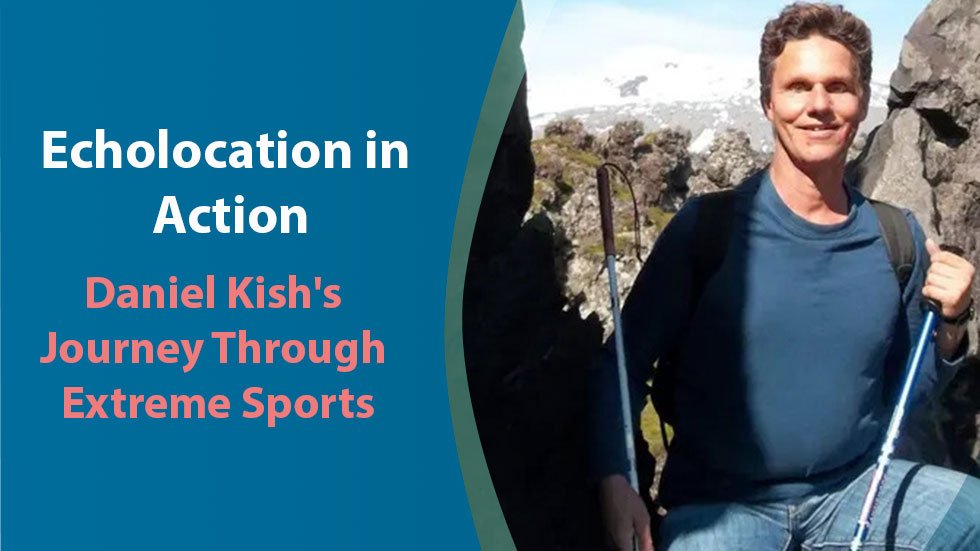
How a blind adventurer uses echolocation, confidence, and determination to explore the world independently
What if losing your sight did not mean giving up your sense of adventure? For Daniel Kish, blindness did not end his ability to explore the world. Instead, he developed new ways to understand his surroundings and built a life that includes activities many people might consider difficult even with full vision. Blind since infancy, Kish became known for using human echolocation, a technique that allows him to interpret sounds and echoes to understand objects and spaces around him. Through this ability, combined with a long process of learning, practice, and adaptation, he has been able to navigate different environments with remarkable independence. His adventures have included hiking and mountain biking without sight, activities that require awareness, physical preparation, balance, concentration, and confidence. His story challenges the common assumption that blindness automatically prevents people from enjoying outdoor activities or pursuing adventurous goals. Daniel Kish's journey is ultimately about much more than adventure. It is about independence, accessibility, courage, and the importance of giving people with visual impairments opportunities to discover what they can accomplish. Every person deserves the opportunity to develop their abilities and live with greater independence. Your donation can help Battle for Blindness Foundation support visually impaired people through meaningful programs and resources. Donate to Battle for Blindness Foundation and help create more opportunities.
Losing Sight at an Early Age
Daniel Kish lost his sight when he was an infant after being diagnosed with retinoblastoma, a form of eye cancer. Growing up without sight meant that Kish had to learn about his surroundings in ways that differed from most children. Everyday activities required adaptation, exploration, and a willingness to understand the world through other senses. Rather than being taught that blindness should restrict his independence, Kish developed methods that helped him interact with his environment. One of the most important abilities he developed was echolocation.
What Is Human Echolocation?
Human echolocation is a technique in which a person produces sounds and listens carefully to the echoes that return from nearby objects. Kish is particularly known for making clicking sounds with his tongue. The returning sound waves can provide information about the environment, helping him recognize the presence, distance, size, and position of objects. For a sighted person, vision provides immediate information about a pathway, wall, tree, bicycle, or other obstacle. Kish learned to gather some environmental information through sound instead. This does not mean that echolocation gives a blind person vision. Rather, it can provide another source of spatial information that may complement other mobility techniques. For Kish, echolocation became an important part of how he moved through the world.
Learning to Navigate With Sound
Developing echolocation requires practice, attention, and a strong understanding of how sound behaves in different environments. Kish learned to interpret subtle differences in returning sounds. Open spaces, walls, trees, objects, and other surroundings can produce different acoustic information. Over time, this ability helped him build greater awareness of his environment. His experience demonstrates an important principle about blindness: losing one sense does not mean losing the ability to learn, adapt, or develop new skills. People who are blind or visually impaired can use a combination of mobility techniques, assistive devices, environmental awareness, training, and other sensory information to navigate their surroundings. The right support can make a significant difference in helping someone develop these skills. A visually impaired person's journey toward independence can begin with access to the right resources and training. Support Battle for Blindness Foundation with a donation and help provide opportunities that can contribute to greater confidence and independence.
From Mobility Skills to Adventure
Kish's abilities eventually extended beyond everyday navigation. He became known for participating in outdoor adventures, including hiking and mountain biking. These activities require much more than simply knowing where an object is located. They require physical coordination, decision-making, environmental awareness, and the ability to respond to changing conditions. For someone without sight, outdoor adventure can involve additional challenges. A hiking trail may contain uneven ground, rocks, roots, slopes, narrow passages, and unexpected obstacles. A mountain biking route can introduce sharp turns, changes in elevation, uneven surfaces, and rapidly changing surroundings. Kish developed ways to approach these challenges by combining his sensory awareness with physical skills and careful preparation. His experiences show that independence does not necessarily mean doing everything without assistance. It can mean having the skills, confidence, tools, and support needed to make informed decisions and participate more fully.
Hiking Without Sight
Hiking can be an unpredictable activity. Trails can change from one section to another, and the terrain may require constant attention. For Kish, hiking involves using echolocation alongside other mobility techniques. A cane can provide important information about the ground immediately ahead, while sound can provide additional information about surrounding objects and spaces. This combination allows him to gather information from different sources. The experience also requires concentration. A person navigating a trail without sight needs to pay close attention to changes in terrain, sound, direction, and physical surroundings. Kish's hiking adventures demonstrate how people with visual impairments can develop personalized approaches to outdoor activities. They also challenge a common misconception: that blindness necessarily means avoiding unfamiliar environments. With appropriate training, preparation, accessibility, and support, people with visual impairments can participate in a wide range of experiences.
Mountain Biking Without Sight
Mountain biking takes Kish's story to an even more challenging level. Cycling on uneven terrain requires balance, coordination, speed control, and rapid responses. Mountain trails may include rocks, slopes, turns, obstacles, and changes in surface conditions. For a blind cyclist, understanding the environment is especially important. Kish has used echolocation to gather information about his surroundings while riding. His ability to process environmental information through sound, combined with his cycling skills and experience, allows him to approach challenging routes in a very different way. His mountain biking adventures demonstrate that adaptation can open doors to experiences that may initially appear impossible. They also show the importance of confidence. Adventure requires a willingness to explore uncertainty while still making careful, informed decisions. Daniel Kish's story is therefore not simply about riding a bicycle without sight. It is about developing the skills and confidence needed to participate in activities that society may not traditionally associate with blindness.
The Preparation Behind the Adventures
Daniel Kish's outdoor adventures are not simply about courage. They also reflect preparation, practice, physical conditioning, and a strong understanding of personal abilities. Hiking and mountain biking require physical fitness. They involve balance, coordination, endurance, and the ability to respond to changing terrain. For Kish, preparation also involves understanding how to interpret environmental sounds and combine that information with movement. This is an important lesson for anyone living with a disability. Independence is often built gradually. It can come from learning a mobility technique, practicing a new skill, using an assistive device, receiving guidance from a trained professional, or simply having the opportunity to try. The process may involve mistakes and setbacks, but each experience can contribute to greater confidence.
Challenging Common Perceptions About Blindness
Daniel Kish's adventures challenge a common stereotype about blindness: the idea that people who cannot see must live within a very limited range of experiences. Blindness can create genuine challenges, particularly when environments are not accessible. But the challenges created by blindness and the limitations created by society are not always the same. An inaccessible trail, lack of transportation, unavailable information, or limited access to training can prevent participation even when a person has the ability and desire to participate. Kish's story encourages a different way of thinking. Instead of asking whether a blind person can participate, we can ask what support, accessibility, training, or adaptation would make participation possible. That shift is important because opportunity can change what people believe is possible for themselves.
Teaching Others to Explore With Confidence
Daniel Kish has also worked to share his knowledge of echolocation and mobility with other blind and visually impaired people. His work has helped bring greater attention to the possibilities of independent mobility and alternative ways of understanding the environment. The value of this work goes beyond teaching a specific technique. It is also about confidence. When people are encouraged to explore, make decisions, solve problems, and understand their surroundings, they can develop a stronger sense of independence. For children who are blind or visually impaired, these opportunities can be particularly important. Learning mobility and daily living skills at an early age can help build confidence that carries into education, employment, travel, and adult life. Your support can help create opportunities for visually impaired people to learn, grow, and become more independent. Donate to Battle for Blindness Foundation and help support a future built around ability and opportunity.
What Daniel Kish's Story Teaches Us
Daniel Kish's life offers several lessons that extend beyond adventure sports and echolocation.
Independence Can Be Learned
Independence is not always something a person either has or does not have. It can be developed through education, practice, mobility training, accessible resources, and encouragement.
Adaptation Creates Possibilities
When one method does not work, people can look for another. Kish's use of echolocation is an example of adapting to an environment rather than allowing one limitation to determine every possibility.
Confidence Comes From Experience
Trying new things can be difficult, especially when there is uncertainty. Repeated experience can help people understand their abilities, make better decisions, and become more confident.
Accessibility Matters
People with disabilities should not have to rely on exceptional circumstances simply to participate in everyday life. Accessible education, transportation, technology, mobility resources, and supportive environments can make independence more achievable for many visually impaired people.
Blindness Does Not Remove Curiosity
Kish's adventures demonstrate that people who are blind can have the same desire to explore, learn, travel, compete, and experience the outdoors as anyone else.
Why Support for Visually Impaired People Matters
Daniel Kish had the opportunity to develop skills that helped him navigate the world independently. Many visually impaired people, especially children and individuals from underserved communities, may not have access to the same opportunities. They may need:
- Braille learning and educational resources
- Mobility training and support
- White canes and other mobility aids
- Assistive technology
- Accessible learning environments
- Skill development opportunities
- Safe and supportive accommodation
- Sports and recreational opportunities
These resources can do more than solve practical problems. They can help people build confidence, develop skills, participate in society, and work toward greater independence.
Supporting visually impaired people therefore means investing in opportunity, not simply providing assistance.
From One Adventurer's Story to a Larger Mission
Daniel Kish's story shows what can happen when a person is encouraged to explore their abilities instead of being defined by a disability. But not every blind or visually impaired person has access to the resources needed to discover those abilities. This is where community support becomes important. Donations can help organizations working with visually impaired communities provide resources, programs, and opportunities that may otherwise remain out of reach. The goal is to create an environment where a person's visual impairment does not automatically determine the limits of their education, mobility, confidence, or future. You can help support this mission. Make a donation to Battle for Blindness Foundation and help provide meaningful opportunities for visually impaired people.
Explore Real Stories of Change
Daniel Kish's journey is one example of how determination, adaptation, and opportunity can change perceptions about blindness. There are many other real experiences that show how support can influence the lives of visually impaired people. Explore Real stories or case studies from Battle for Blindness Foundation to learn more about stories of change and the impact of opportunity and community support.
How You Can Turn Inspiration Into Action
Daniel Kish's story can inspire us to look differently at disability. A person who cannot see may still have ambitions, talents, curiosity, and dreams. What they need is often access to the right opportunities and resources. You can contribute to that change. A donation to Battle for Blindness Foundation can help support initiatives focused on education, mobility, learning resources, independence, and opportunities for visually impaired people. Even a contribution that feels small can become part of a larger effort to create meaningful support. If Daniel Kish's journey inspired you, turn that inspiration into action. Donate to Battle for Blindness Foundation and help create more opportunities for visually impaired people to learn, explore, and live with greater independence.
Conclusion: Seeing Possibilities Beyond Sight
Daniel Kish's story challenges the way many people think about blindness. He lost his sight as an infant, but he did not lose his curiosity about the world. Through echolocation, mobility skills, training, and determination, he developed ways to explore environments that many people would consider difficult to navigate without vision. His hiking and mountain biking adventures demonstrate that blindness does not have to eliminate a person's desire for exploration. More importantly, his journey reminds us that independence grows when people have access to knowledge, training, resources, encouragement, and opportunity. Not every visually impaired person will become an extreme adventurer, and they do not need to. The greater lesson is that every person should have the chance to discover their own abilities and pursue meaningful goals. Help make that opportunity possible for more visually impaired people. Support Battle for Blindness Foundation with your donation.
Frequently Asked Questions About Daniel Kish and Blind Adventures
1. Who is Daniel Kish?
Daniel Kish is a blind adventurer, educator, and advocate who is widely known for using human echolocation and participating in activities such as hiking and mountain biking without sight.
2. How did Daniel Kish become blind?
Daniel Kish lost his sight as an infant after being diagnosed with retinoblastoma, a form of eye cancer.
3. What is Daniel Kish's echolocation technique?
Daniel Kish uses human echolocation by making clicking sounds with his tongue and interpreting the returning echoes to gather information about objects and spaces around him.
4. Can blind people use echolocation for navigation?
Some blind people can learn to use echolocation as an additional source of environmental information. It can complement other mobility techniques, such as using a cane.
5. Does Daniel Kish use a cane?
Yes. Kish has used a cane as part of his mobility approach, including while navigating outdoor environments. Echolocation and a cane can provide different types of information about the surrounding environment.
6. Does Daniel Kish ride a bicycle without sight?
Yes. Kish is known for participating in mountain biking and other cycling activities despite being blind.
7. How does Daniel Kish navigate while mountain biking?
He uses echolocation and his developed environmental awareness alongside cycling skills, experience, and physical preparation to understand aspects of his surroundings while riding.
8. What can visually impaired people learn from Daniel Kish?
His story highlights the value of independence, mobility training, adaptation, confidence, exploration, and access to opportunities that allow people with visual impairments to develop their abilities.
9. How can I support visually impaired people?
You can support visually impaired people through donations, volunteering, awareness, accessibility initiatives, educational support, mobility resources, and programs that promote independence and inclusion.
10. How can I support Battle for Blindness Foundation?
You can support Battle for Blindness Foundation by making a donation and helping raise awareness about the needs and potential of visually impaired people. Donate to Battle for Blindness Foundation to support its mission.
Support the Visually Impaired
People to make them Independent

Every little contribution you make will be a little flicker of light in the lives of visually impaired girls who dream of a brighter future.
Donate now

In case you have donated directly through UPI, Bank transfer, through cheque kindly WhatsApp your details on +91-8383933493

Every Contribution will be utilized with 100% transparency. The beneficiary photographs will be sent to you with an 80G Tax Benefit Certificate

Battle For Blindness Foundation committed to 93% go directly towards projects that directly benefit the Abandoned blind girls

