Brad Snyder’s Unstoppable Spirit: From War Hero to Paralympic Gold in Swimming and Triathlon
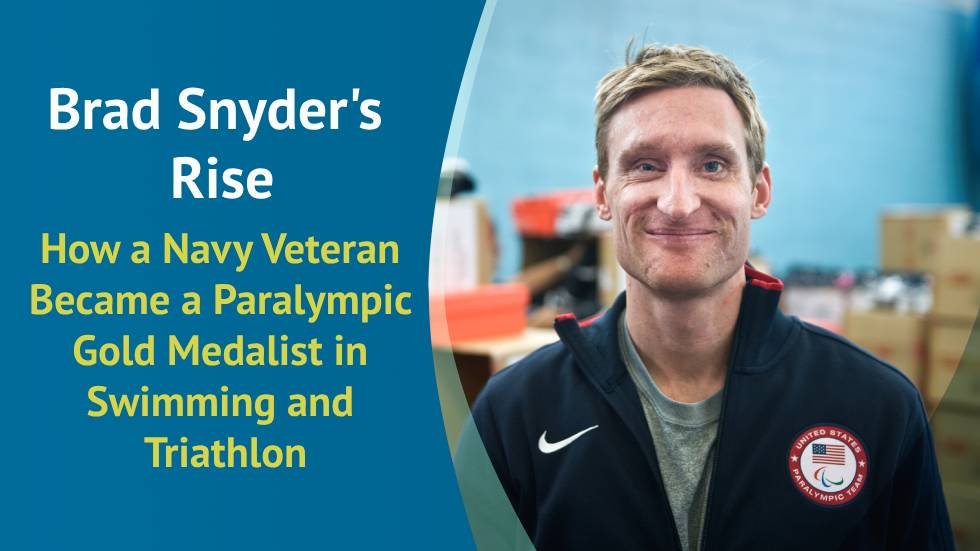
From Elite Swimming to Para Triathlon
Brad Snyder's success in swimming was already remarkable, but his athletic journey did not end in the pool. After establishing himself as a Paralympic swimming champion, he eventually accepted a new challenge by moving into Para triathlon. Triathlon combines three demanding disciplines:
- Swimming
- Cycling
- Running
For a blind athlete, completing a triathlon requires more than physical endurance. It also requires communication, coordination, trust, navigation, and close cooperation with guides.
Snyder's transition demonstrated that losing his sight had not reduced his desire to challenge himself. Instead, he continued looking for new ways to test his abilities.
Why Triathlon Was a New Challenge
Swimming had been familiar to Snyder since childhood, but triathlon required him to develop skills across three different sports. Each discipline presented different requirements. Swimming required him to maintain direction and pace without relying on sight. Cycling introduced the need to work closely with a guide while travelling at high speed. Running required coordination between Snyder and his guide, particularly when changing direction or navigating unfamiliar courses. The transition therefore required significant preparation. For a visually impaired athlete, the right support system can be just as important as physical training. Communication with guides, coaches, teammates, and support staff can help an athlete understand the environment and respond safely during competition.
Training With a Guide
One of the distinctive aspects of Para triathlon for athletes with severe visual impairment is the relationship between the athlete and guide. The guide can play an essential role in helping the athlete navigate the course while the athlete remains responsible for performing their part of the race. For Snyder, this meant developing trust and communication with his guide. Successful guide-athlete partnerships require:
- Clear communication
- Trust
- Timing
- Coordination
- Consistent training
- Understanding of each other's strengths
- The ability to respond quickly during competition
This relationship demonstrates that accessibility is not simply about equipment. Sometimes, meaningful participation also depends on human support and well-designed systems.
The Transition From Swimming to Triathlon
Moving from swimming to triathlon required Snyder to become comfortable outside the environment in which he had already achieved international success. He had to develop cycling and running abilities while continuing to maintain the swimming skills that formed the first part of the race. The transition required patience. An athlete who is highly experienced in one sport may still need time to develop proficiency in another. For Snyder, the challenge was also connected with competing without sight. His experience demonstrates the importance of allowing people with disabilities to try new activities rather than assuming that a disability automatically limits them to a narrow range of possibilities.
Tokyo 2020: A New Paralympic Goal
Snyder eventually reached another major milestone at the Tokyo 2020 Paralympic Games, which were held in 2021 after the Games were postponed because of the COVID-19 pandemic. This time, he competed in Para triathlon rather than swimming. Snyder won the gold medal in the men's PTVI triathlon event, completing the race in 1:01:16. His victory added another Paralympic sport to an already extraordinary career. The achievement was significant because it showed that his athletic career could continue evolving even after he had already reached the highest level in swimming. From military service to blindness, rehabilitation, Paralympic swimming, and then triathlon, Snyder repeatedly demonstrated an ability to adapt to new circumstances.
Help Visually Impaired Children Discover Their Abilities
Brad Snyder's journey shows what can happen when a person has access to training, rehabilitation, coaching, and opportunities to participate. Many visually impaired children may have interests in sports but lack access to suitable training, equipment, transportation, or specialised support. A donation to Battle for Blind Foundation can help support programmes that provide visually impaired children with opportunities in sports, education, rehabilitation, assistive technology, mobility, and independent living. Your support can help a child move from simply having potential to having the opportunity to develop it. 👉 Donate Today and Help Create Opportunities for Visually Impaired Children
The Importance of Rehabilitation After Vision Loss
Snyder's story also highlights the importance of rehabilitation after a person loses their sight. Vision rehabilitation can involve learning practical skills that help a person navigate everyday life more independently. Depending on individual needs, support may include:
- Orientation and mobility training
- Assistive technology
- Communication skills
- Independent living skills
- Accessible education
- Physical activity
- Vocational preparation
- Emotional and social support
Rehabilitation is not about trying to recreate exactly the life someone had before vision loss.
Instead, it can help a person discover effective ways to live, learn, work, travel, communicate, and participate after their circumstances have changed.
Sport as a Tool for Rehabilitation
For Snyder, sport became an important part of rebuilding his life after blindness. Physical activity can provide structure and motivation during rehabilitation. It can also help individuals reconnect with abilities they may have questioned after a major injury or disability. For visually impaired children, sports can similarly support development. Participation can help improve:
- Balance
- Coordination
- Strength
- Fitness
- Confidence
- Concentration
- Social interaction
- Independence
Sports can also create opportunities to meet other people who understand the experience of living with visual impairment.
The Role of Accessible Sports Programmes
An inclusive sports programme should not simply invite visually impaired participants and expect them to adapt to an environment designed for sighted athletes. Accessibility may require thoughtful planning. Depending on the activity, this can include:
- Verbal instructions
- Audible signals
- Tactile markings
- Adapted sports equipment
- Trained coaches
- Guides
- Accessible transportation
- Safe training areas
- Consistent routines
- Individualised instruction
The specific support required will depend on the participant and the sport.
The most effective approach is to understand the individual's needs rather than making assumptions based solely on their visual impairment.
Building Confidence Through Sport
Confidence often develops through repeated experiences of achievement. A child who successfully completes a training exercise may become more willing to try something new. A child who learns to navigate a sports facility independently may become more confident about navigating other environments. A child who participates in a competition may learn how to manage pressure and disappointment. These experiences can extend beyond sport. The confidence developed through athletics can support a child's education, social relationships, communication, and future employment.
Brad Snyder's Message of Adaptability
One of the strongest lessons from Snyder's journey is adaptability. His life changed dramatically when he lost his eyesight. The path he had imagined for himself was no longer possible in the same form. Instead of stopping, he adapted. He learned to live without sight. He returned to competitive swimming. He became a Paralympic champion. He transitioned to triathlon. He won another Paralympic gold medal. Each stage required him to learn something new. For visually impaired children, adaptability can be an important life skill. Accessible education, mobility training, assistive technology, and supportive environments can help children learn different ways of accomplishing everyday tasks.
Beyond Medals: The Human Side of Brad Snyder's Story
It can be easy to focus only on Snyder's medals and sporting records. His achievements at the Paralympic Games are remarkable, but the deeper meaning of his journey can be found in everything that happened between those victories. There was rehabilitation, learning, physical training, emotional adjustment, and the challenge of creating a new identity after losing his eyesight. Snyder's journey shows that rebuilding a life after vision loss can involve discovering new interests, setting new goals, developing practical skills, and finding environments where a person can continue to contribute and succeed. This perspective is important because blindness is not simply a sporting challenge. For many people, vision loss can affect education, mobility, employment, communication, social participation, and everyday independence.
Inspiring Young Visually Impaired Athletes
Young visually impaired people need role models who demonstrate different possibilities. Brad Snyder provides an example of someone who continued pursuing ambitious goals after losing his sight. His story can encourage young athletes to explore activities such as:
- Running
- Swimming
- Cycling
- Athletics
- Cricket
- Goalball
- Yoga
- Fitness training
- Other adapted sports
The purpose of inclusive sports is not to make every child a Paralympic champion.
It is to give children the opportunity to discover what they enjoy, develop their abilities, build friendships, and gain confidence through participation.
The Connection Between Sports and Independence
Sports can contribute to independence in ways that extend beyond physical fitness. A visually impaired child who learns to follow a training routine can develop better time-management skills. A child who learns to navigate a sports facility can become more comfortable moving through other environments. A child who communicates with a coach can develop stronger self-advocacy skills. These experiences can support everyday independence. Participation in sports can help children practise:
- Following instructions
- Managing routines
- Communicating needs
- Working with others
- Solving problems
- Managing challenges
- Taking responsibility
- Setting personal goals
For this reason, accessible sports can be part of a broader approach to developing independent living skills for visually impaired children.
Creating Equal Opportunities Through Support
Talent can exist anywhere, but opportunities are not always equally available. A visually impaired child may have an interest in athletics but lack access to a qualified coach. Another may want to swim but not have access to an accessible training programme. Someone else may need assistive technology to continue their education or mobility training to travel independently. These barriers can affect a child's ability to participate and develop. Support from NGOs, donors, families, coaches, educators, rehabilitation professionals, and communities can help reduce these barriers. Creating opportunities is not about guaranteeing a particular outcome. It is about giving children the resources and support they need to explore their potential.
Help Give a Visually Impaired Child an Opportunity to Grow
Brad Snyder's journey demonstrates the importance of having access to rehabilitation, training, support, and opportunities after vision loss. Battle for Blind Foundation works to support visually impaired children through education, sports training, assistive technology, rehabilitation, mobility training, healthcare, and independent living programmes. Your contribution can help provide resources and opportunities that allow children to build confidence, develop practical skills, and prepare for a more independent future. 👉 Donate Now and Help Empower a Visually Impaired Child Through Education, Sports, and Support
What We Can Learn From Brad Snyder's Journey
Brad Snyder's story offers several lessons that extend beyond sport.
1. A Major Setback Does Not Have to End Your Journey
Losing his eyesight changed Snyder's life, but it did not eliminate his ambitions. He found new ways to pursue meaningful goals and build a future after his injury.
2. Rehabilitation Can Open New Doors
Learning new skills can help people adapt to major changes and regain greater independence. Rehabilitation can provide practical tools while also helping individuals identify new opportunities.
3. Sport Can Rebuild Confidence
Training and competition can provide structure, motivation, physical activity, and a sense of achievement. For people adjusting to vision loss, these experiences can contribute to rebuilding confidence.
4. Support Systems Matter
Coaches, guides, family members, rehabilitation professionals, teammates, and wider communities can all contribute to an athlete's development. Success is often supported by a network of people working together.
5. Goals Can Change Over Time
Snyder moved from swimming to triathlon, showing that achieving one goal does not mean a person's journey has to stop. New goals can emerge as skills, interests, and circumstances change.
6. Disability Does Not Eliminate Ambition
A person can continue setting challenging goals while adapting the methods used to achieve them. The right support can help make participation and achievement more accessible.
Why Inclusive Sports Matter for Visually Impaired Children
Inclusive sports programmes can help create opportunities for children who might otherwise be excluded from physical activities. For visually impaired children, participation can provide:
- Regular physical activity
- Improved fitness
- Greater confidence
- Social interaction
- Teamwork experience
- Leadership opportunities
- Goal-setting skills
- Greater independence
Sports can also help children understand that their abilities are not limited to what they can see.
With appropriate adaptations, a child can learn to compete, train, practise, and participate alongside others.
Making Sports Training More Accessible
Creating an inclusive sports environment requires careful planning. Coaches and organisations can consider:
- Providing clear verbal instructions.
- Using audible signals when appropriate.
- Maintaining consistent training environments.
- Providing tactile or physical orientation where suitable.
- Using adapted equipment when necessary.
- Training staff in disability inclusion.
- Providing appropriate guide support.
- Ensuring safe access to training facilities.
- Listening to the individual athlete's needs.
Accessibility should be individualised because visual impairment affects people differently.
Some athletes may have partial vision, while others may have little or no functional vision. Their training methods, communication preferences, and support requirements may therefore differ.
The Role of Families in Supporting Young Athletes
Families can play an important role in encouraging visually impaired children to participate in sports. Parents and caregivers can help children by:
- Encouraging them to explore different activities.
- Communicating with coaches.
- Understanding their accessibility needs.
- Supporting regular practice.
- Celebrating progress rather than focusing only on competition results.
- Encouraging independence.
- Helping children develop confidence.
Families can also work with schools, NGOs, coaches, and rehabilitation professionals to identify suitable opportunities.
Education, Sports, and a More Independent Future
Education and sports can work together to prepare visually impaired children for adulthood. Academic learning can develop knowledge and career-related skills, while sports can support physical fitness, confidence, teamwork, communication, and independence. When combined with assistive technology, mobility training, rehabilitation, and independent living education, these areas can provide a more comprehensive foundation for the future. This is particularly important because the needs of a visually impaired child extend beyond the classroom. A child may need support learning how to travel independently, use digital devices, communicate effectively, participate in social environments, and prepare for employment. Providing these opportunities early can help children develop skills progressively as they grow.
Supporting the Next Generation of Visually Impaired Children
Brad Snyder's journey should not be viewed only as an extraordinary story about one Paralympic champion. It can also raise a broader question: How many talented visually impaired children could discover their abilities if they had access to the right opportunities? A child needs more than encouragement. They may need accessible education, sports training, assistive technology, rehabilitation, mobility skills, appropriate equipment, qualified professionals, and a supportive environment. When these resources are available, children have a better chance to develop their abilities and make independent choices about their futures. That is why supporting visually impaired children is about more than providing immediate assistance. It is about creating opportunities that can influence their education, confidence, independence, and future.
Building a Future of Opportunity
Brad Snyder's transformation from a Navy officer who lost his eyesight in Afghanistan to a Paralympic champion in swimming and triathlon demonstrates the power of determination combined with opportunity. His story does not suggest that every person with vision loss must become an elite athlete. Instead, it reminds us that people deserve the opportunity to decide what they want to achieve and receive appropriate support while pursuing those goals. For visually impaired children, that opportunity can begin with something as simple as access to a sports programme, a Braille book, an assistive device, mobility training, or a supportive educational environment. Small opportunities can become important milestones in a child's development. And with continued support, those milestones can contribute to greater confidence and independence.
Frequently Asked Questions About Brad Snyder
1. Who is Brad Snyder?
Brad Snyder is a former U.S. Navy officer and Paralympic athlete who lost his eyesight during military service in Afghanistan in 2011. He later returned to competitive swimming and became a Paralympic champion before moving into Para triathlon.
2. How did Brad Snyder lose his eyesight?
Brad Snyder lost his vision after being seriously injured by an explosion while serving in Afghanistan in September 2011. Following his injury, he began a major rehabilitation journey and eventually returned to competitive sport.
3. What sport did Brad Snyder compete in after losing his sight?
Snyder initially returned to swimming, a sport he had practised before his injury. He later expanded his athletic career into Para triathlon, combining swimming, cycling, and running.
4. How many Paralympic medals did Brad Snyder win?
Brad Snyder won multiple Paralympic medals during his swimming career. At the London 2012 Paralympic Games, he won two gold medals and one silver. At Rio 2016, he added three gold medals and one silver before later winning Para triathlon gold at Tokyo 2020.
5. What did Brad Snyder achieve at the London 2012 Paralympics?
At London 2012, Snyder won gold in the men's 100-metre freestyle and 400-metre freestyle and silver in the 50-metre freestyle. His 400-metre freestyle gold came one year after the accident that caused his blindness.
6. When did Brad Snyder switch from swimming to triathlon?
After establishing himself as a leading Paralympic swimmer, Snyder transitioned into Para triathlon. The sport allowed him to take on new challenges involving swimming, cycling, and running.
7. Did Brad Snyder win a Paralympic gold medal in triathlon?
Yes. Snyder won gold in the men's PTVI Para triathlon event at the Tokyo 2020 Paralympic Games, which took place in 2021 after the Games were postponed.
8. Why is Brad Snyder's story important for visually impaired people?
His journey demonstrates how rehabilitation, training, support, and opportunity can help a person adapt after vision loss. His sporting achievements also challenge assumptions about what visually impaired people can accomplish.
9. How can sports benefit visually impaired children?
Sports can support physical fitness, coordination, confidence, discipline, communication, teamwork, social participation, and independence. Accessible sports programmes can also give visually impaired children opportunities to discover their interests and abilities.
10. How can I support visually impaired children through Battle for Blind Foundation?
You can support Battle for Blind Foundation through donations, volunteering, sponsorship, CSR partnerships, and other forms of assistance. Donations can help support programmes involving education, sports training, assistive technology, rehabilitation, mobility training, healthcare, and independent living skills.
Brad Snyder's Lasting Message of Resilience
Brad Snyder's journey is a powerful example of what can happen when a person responds to a life-changing event with determination, adaptability, and a willingness to pursue new goals. He lost his eyesight while serving his country, but he did not allow blindness to end his pursuit of an active and meaningful life. Through rehabilitation and sport, he returned to competitive swimming, won Paralympic gold medals, and eventually took on the demanding challenge of Para triathlon. His story is particularly meaningful because it demonstrates that achievement is not always about returning to the exact life someone had before disability. Sometimes, it means discovering a new path and building a different future. For visually impaired children, the same principle can apply. Their future should not be limited by assumptions about what they can or cannot do. With accessible education, sports opportunities, assistive technology, rehabilitation, mobility training, and encouragement, children can develop skills that support greater confidence and independence.
From Inspiration to Action
Stories of athletes such as Brad Snyder can inspire us, but inspiration becomes more meaningful when it leads to action. A visually impaired child may dream of becoming an athlete, but that dream may require access to a coach, equipment, training facilities, transportation, rehabilitation, or an inclusive environment. Another child may need Braille learning materials or assistive technology to succeed in school. Someone else may need orientation and mobility training to become more independent. Supporting these needs can help create opportunities for children to develop their abilities and make informed choices about their futures.
Help Empower the Next Generation
Battle for Blind Foundation works to support visually impaired children through education, sports training, Braille literacy, assistive technology, rehabilitation, orientation and mobility training, healthcare, independent living skills, residential support, and vocational preparation. Your donation can help provide resources and opportunities that enable visually impaired children to learn, participate, develop confidence, and prepare for a more independent future. 👉 Donate Today and Help Empower a Visually Impaired Child
Support a More Inclusive Future
Brad Snyder's journey reminds us that vision loss does not have to end a person's ambitions. With determination, appropriate support, accessible opportunities, and the freedom to pursue meaningful goals, people with visual impairments can achieve remarkable things. Every child deserves the opportunity to discover their strengths. Your support can help make that opportunity possible for visually impaired children who need access to education, sports, technology, rehabilitation, and independence-building programmes. ❤️ Donate Now and Help Create Opportunities for Visually Impaired Children
Support the Visually Impaired
People to make them Independent

Every little contribution you make will be a little flicker of light in the lives of visually impaired girls who dream of a brighter future.
Donate now

In case you have donated directly through UPI, Bank transfer, through cheque kindly WhatsApp your details on +91-8383933493

Every Contribution will be utilized with 100% transparency. The beneficiary photographs will be sent to you with an 80G Tax Benefit Certificate

Battle For Blindness Foundation committed to 93% go directly towards projects that directly benefit the Abandoned blind girls

